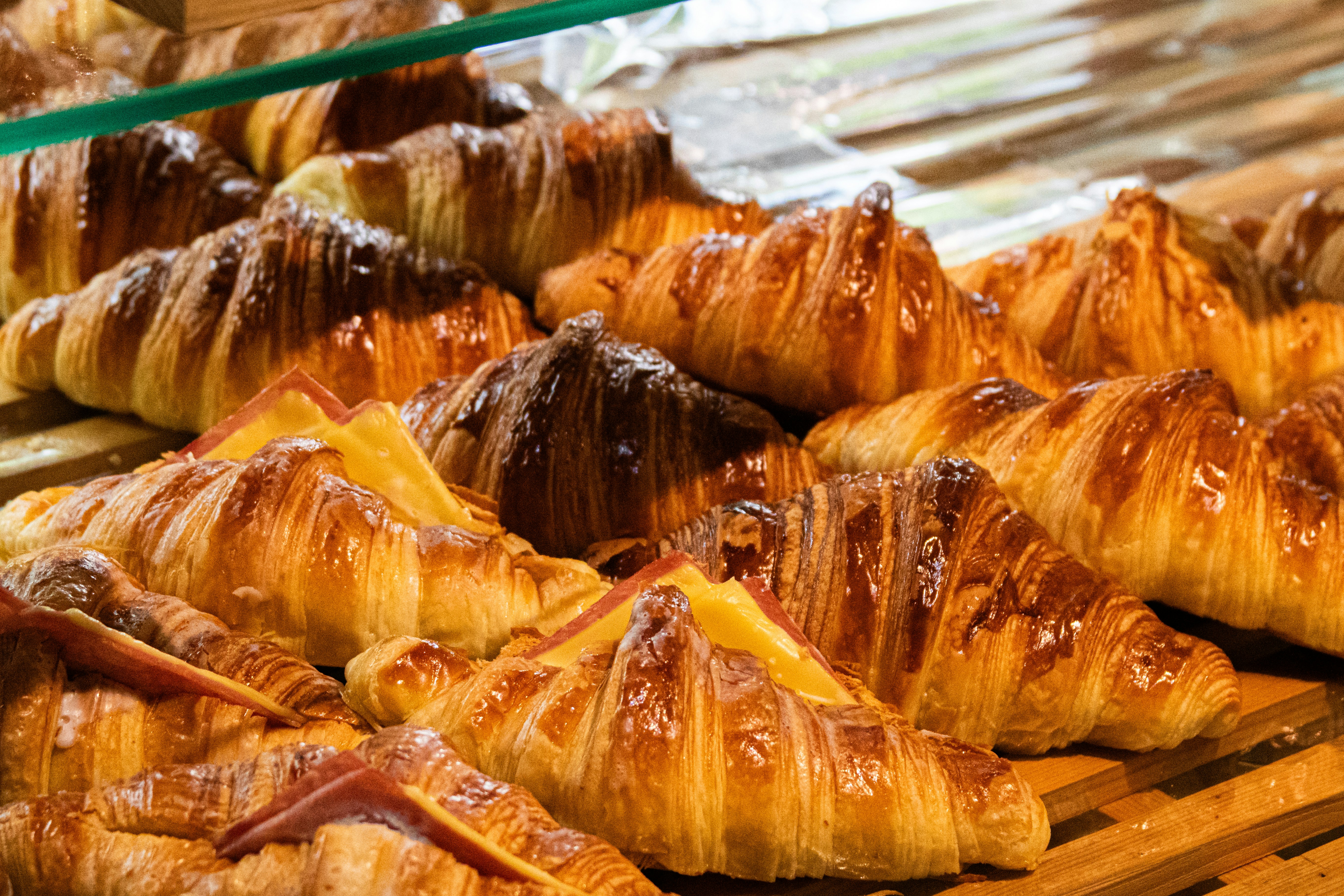
The Butter Croissant
Croissant au Beurre
The croissant au beurre is the quintessential French breakfast staple: a crescent-shaped laminated pastry made with pure butter (not margarine), creating its characteristic golden, flaky layers. A true croissant shatters when you bite it, releasing buttery steam. Straight croissants are 'ordinaire' (margarine), curved croissants are 'au beurre' (butter)—always choose curved. Best eaten warm from the bakery within hours of baking.
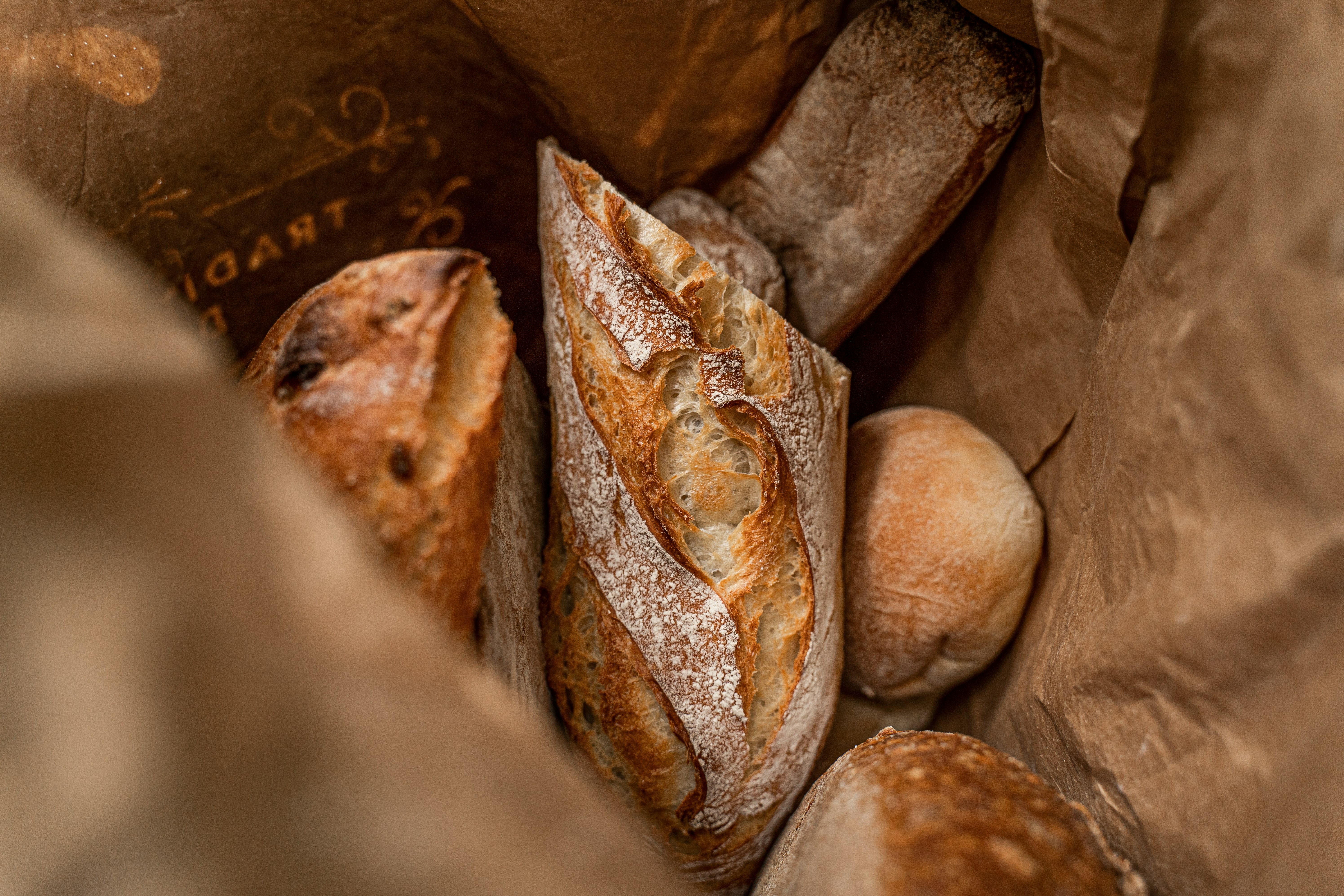
The Baguette
La Baguette Tradition
The baguette tradition is a long, thin loaf with a golden, crackly crust and a soft, airy interior with irregular holes. 'Tradition' means it's made by law with only four ingredients (flour, water, salt, yeast) and no additives—superior to regular baguettes. Locals buy them twice daily (morning and evening) because they go stale within hours. The perfect baguette sounds hollow when tapped, cracks when squeezed, and has a wheaty aroma.
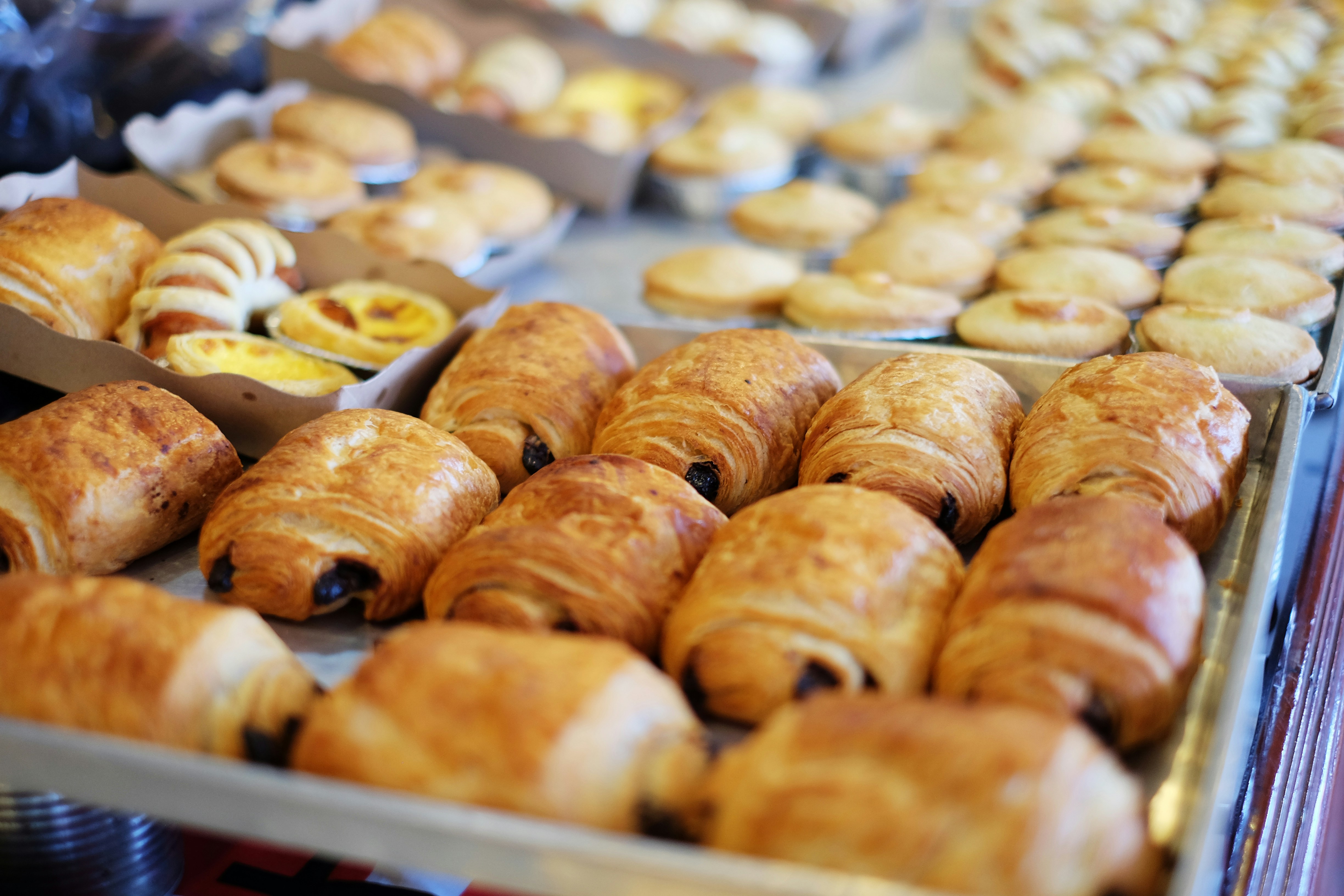
Pain au Chocolat
Pain au Chocolat / Chocolatine
Pain au chocolat is a rectangular croissant dough pastry with two sticks of dark chocolate baked inside. The dough is the same laminated butter dough as croissants, but shaped differently. When pulled apart, the chocolate should be melted and gooey, the dough flaky and buttery. It's France's second most popular breakfast pastry after croissants. In southwest France, it's controversially called 'chocolatine'—a divide that sparks genuine debates.
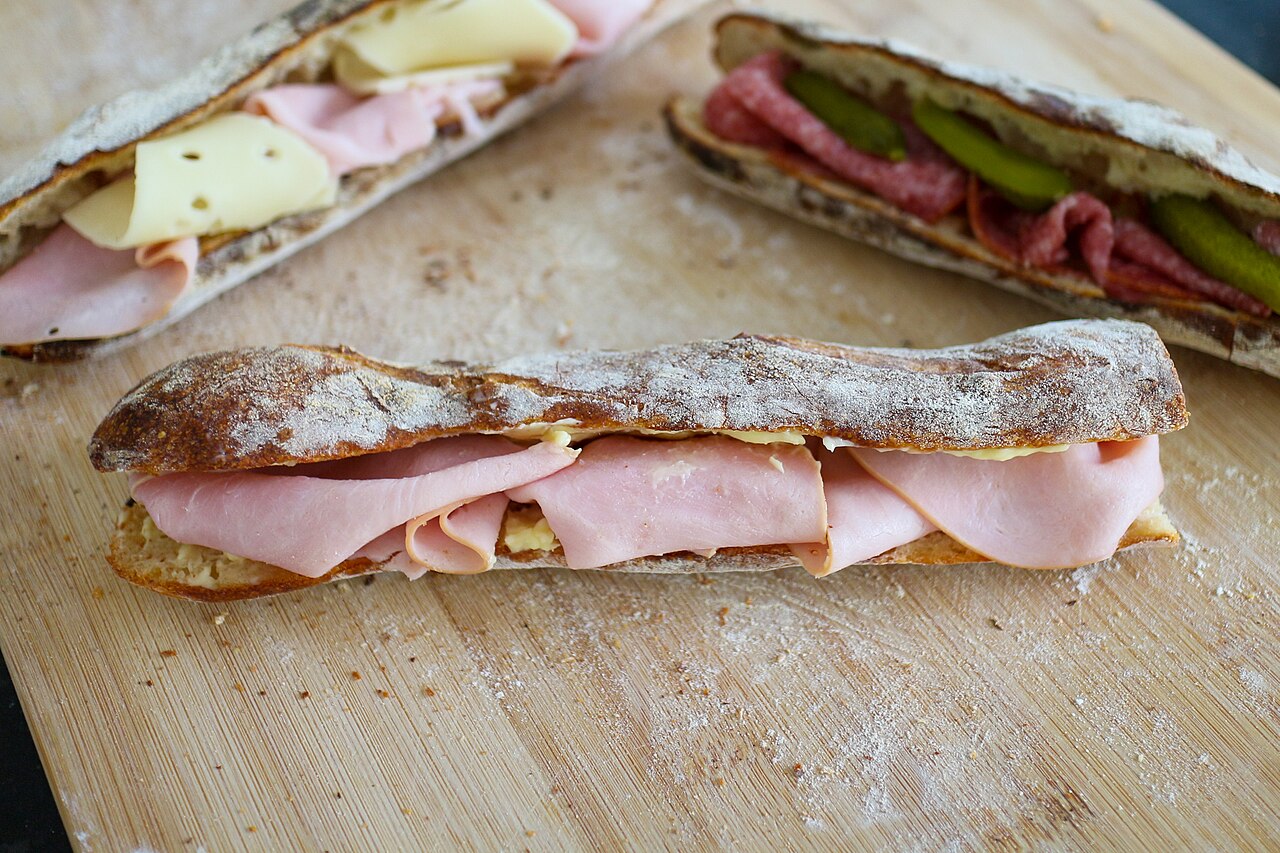
Parisian Ham Sandwich
Jambon-Beurre
The jambon-beurre is France's most popular sandwich: a baguette sliced lengthwise, spread with salted butter, filled with high-quality Paris ham (jambon de Paris—lightly cooked, tender, pink ham). That's it. No lettuce, no cheese, no condiments. The quality comes from three perfect ingredients. Over 1 billion are sold annually in France. It's the true Parisian lunch, eaten on park benches, at desks, on the go.
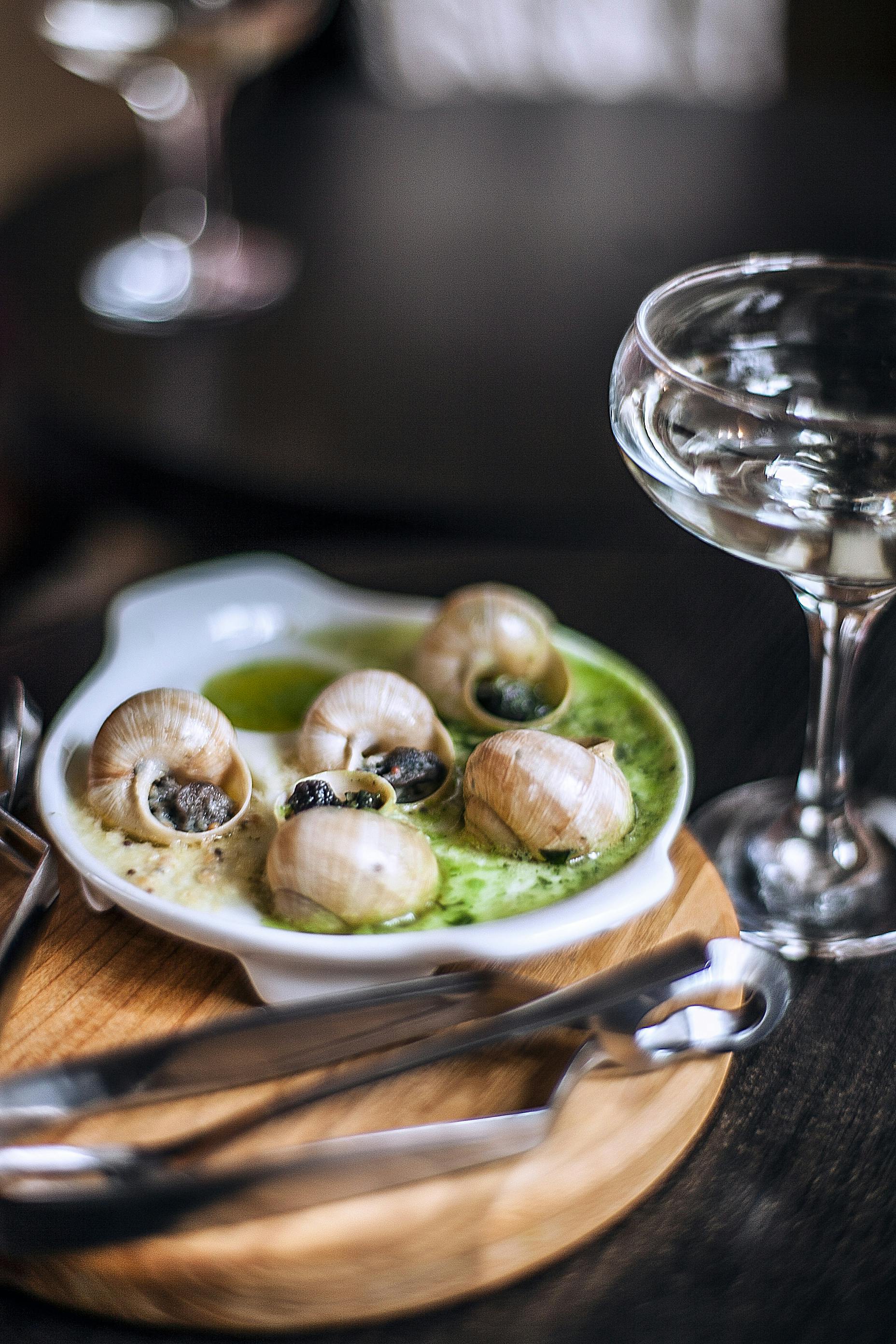
Escargots de Bourgogne
Escargots
Escargots are land snails (Burgundy snails) baked in their shells with garlic-parsley butter (beurre d'escargot). Served as a starter (6 or 12 snails) in traditional brasseries. You use a special fork and tongs to extract the snail, then soak up the garlicky butter with bread. The snails themselves taste like earthy mushrooms; the butter is the star. More common at dinner than lunch.
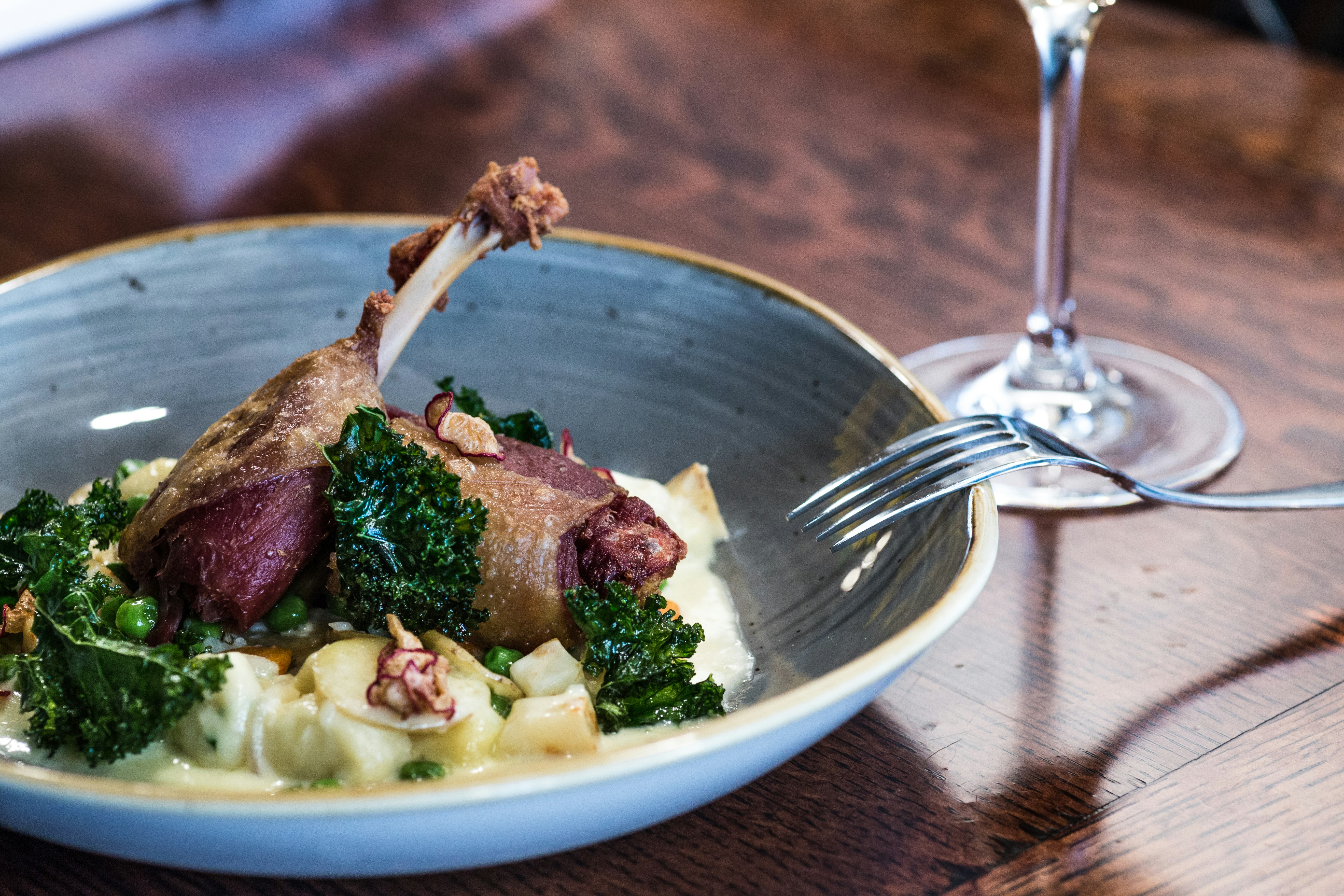
Confit de Canard
Confit de canard is duck leg slow-cooked in its own fat until the meat is fall-off-the-bone tender and the skin is crispy. It's a preservation technique from southwest France. The duck is salted, aged, then submerged in fat and cooked slowly for hours. Served as a main course with potatoes cooked in duck fat (pommes sarladaises) or green salad. The meat is rich, savory, and deeply flavorful.
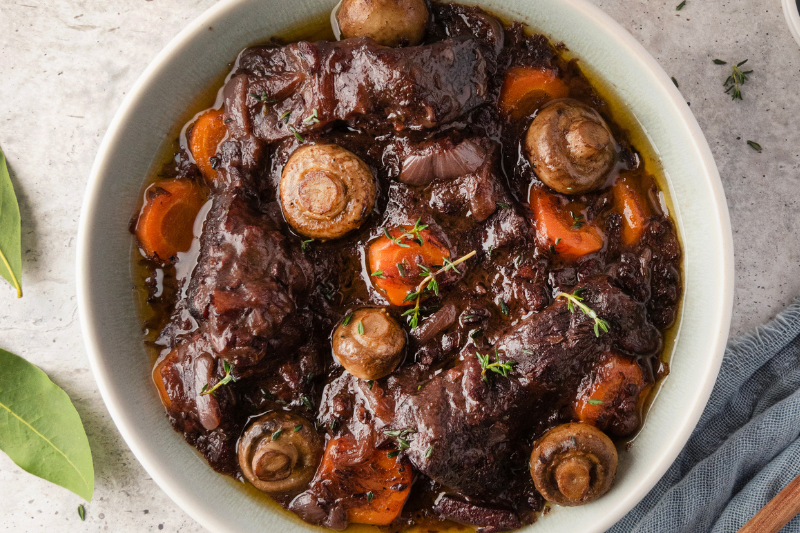
Boeuf Bourguignon
Bœuf Bourguignon
Boeuf bourguignon is beef braised in red wine (traditionally Burgundy wine) with carrots, onions, mushrooms, and lardons (bacon). The beef (usually chuck or brisket) is cooked for 2-3 hours until tender and the wine reduces into a rich, velvety sauce. It's a rustic bistro classic, often served with mashed potatoes or egg noodles. Best eaten in colder months as a hearty, warming meal.
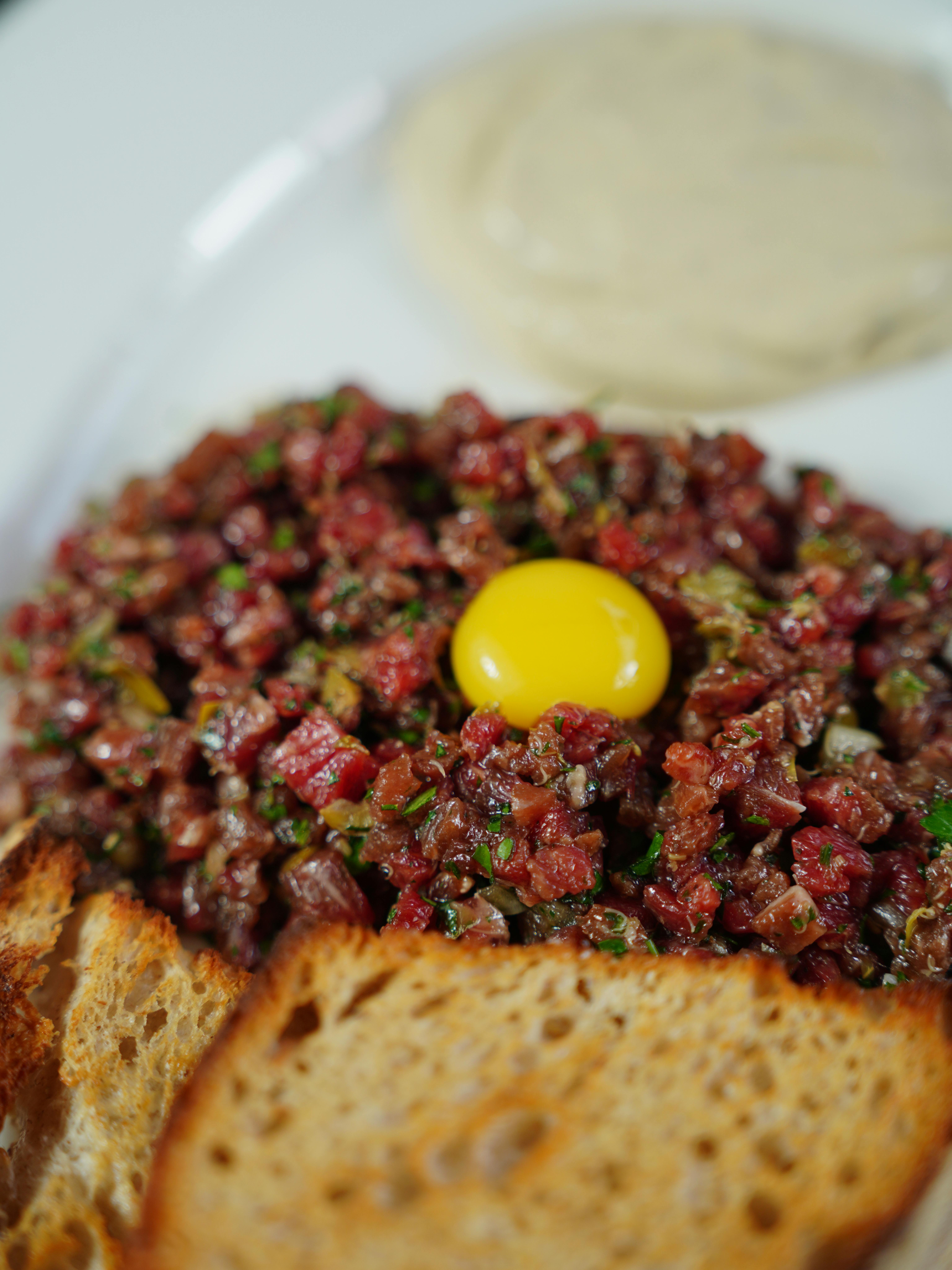
Steak Tartare
Steak tartare is raw minced beef (usually high-quality sirloin or filet) seasoned with capers, onions, Worcestershire sauce, Dijon mustard, and a raw egg yolk on top. It's served cold with fries (frites) or salad. Some restaurants prepare it tableside, others serve it pre-mixed. You mix the egg yolk into the meat yourself. It's rich, savory, and surprisingly delicate. Trust the beef quality—good restaurants use fresh, high-grade meat.
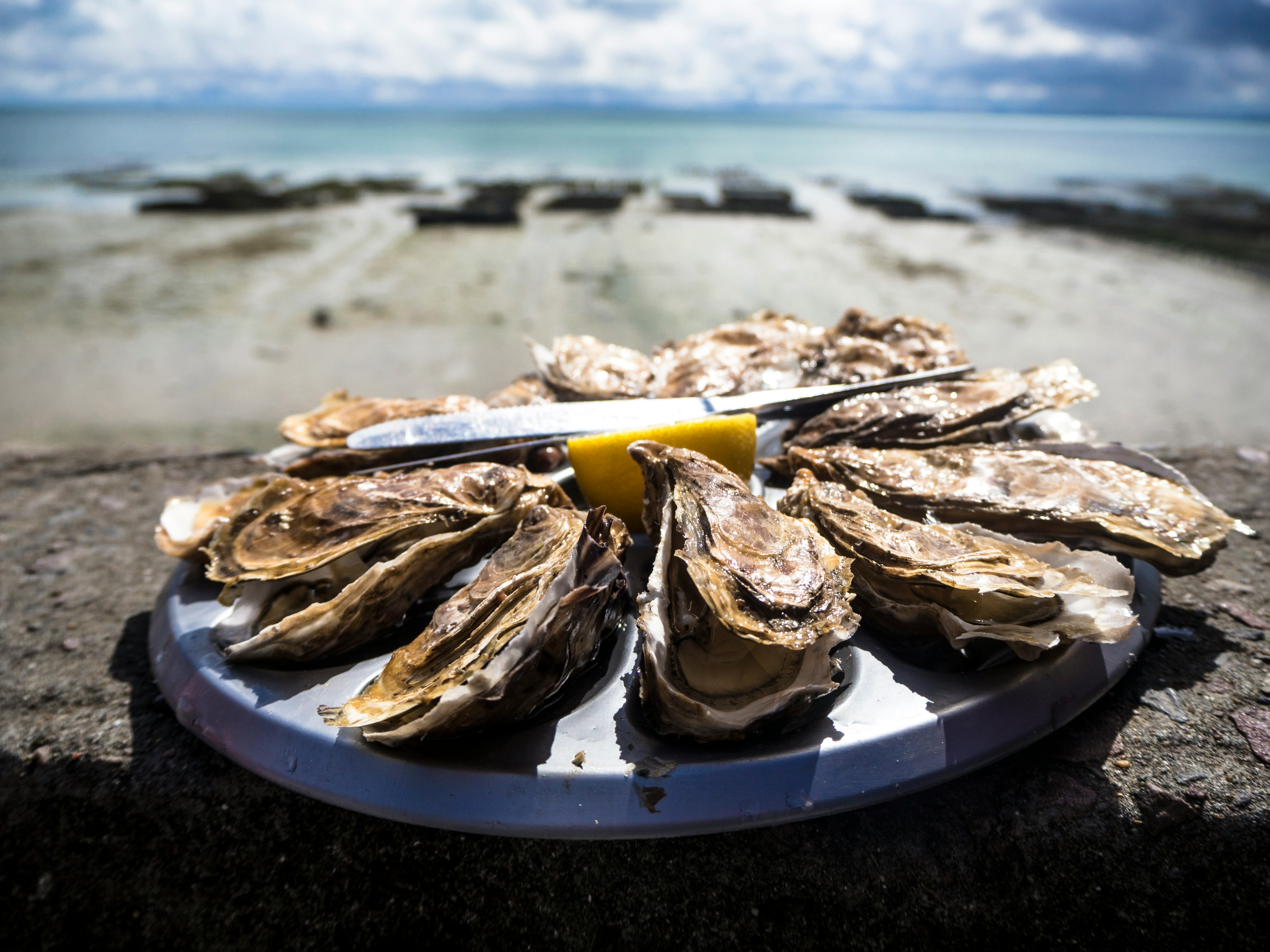
Oysters & Seafood
Huîtres et Fruits de Mer
French oysters (huîtres) are served raw on ice with lemon, shallot vinegar, or mignonette sauce. Eaten straight from the shell, slurped down in one go. Sizes range from 0 (largest) to 5 (smallest)—beginners should start with 3 or 4. Oysters are the star of 'plateau de fruits de mer' (seafood platters) which include clams, whelks, prawns, crab, and langoustines on ice. Best season is months with 'R' (September-April).
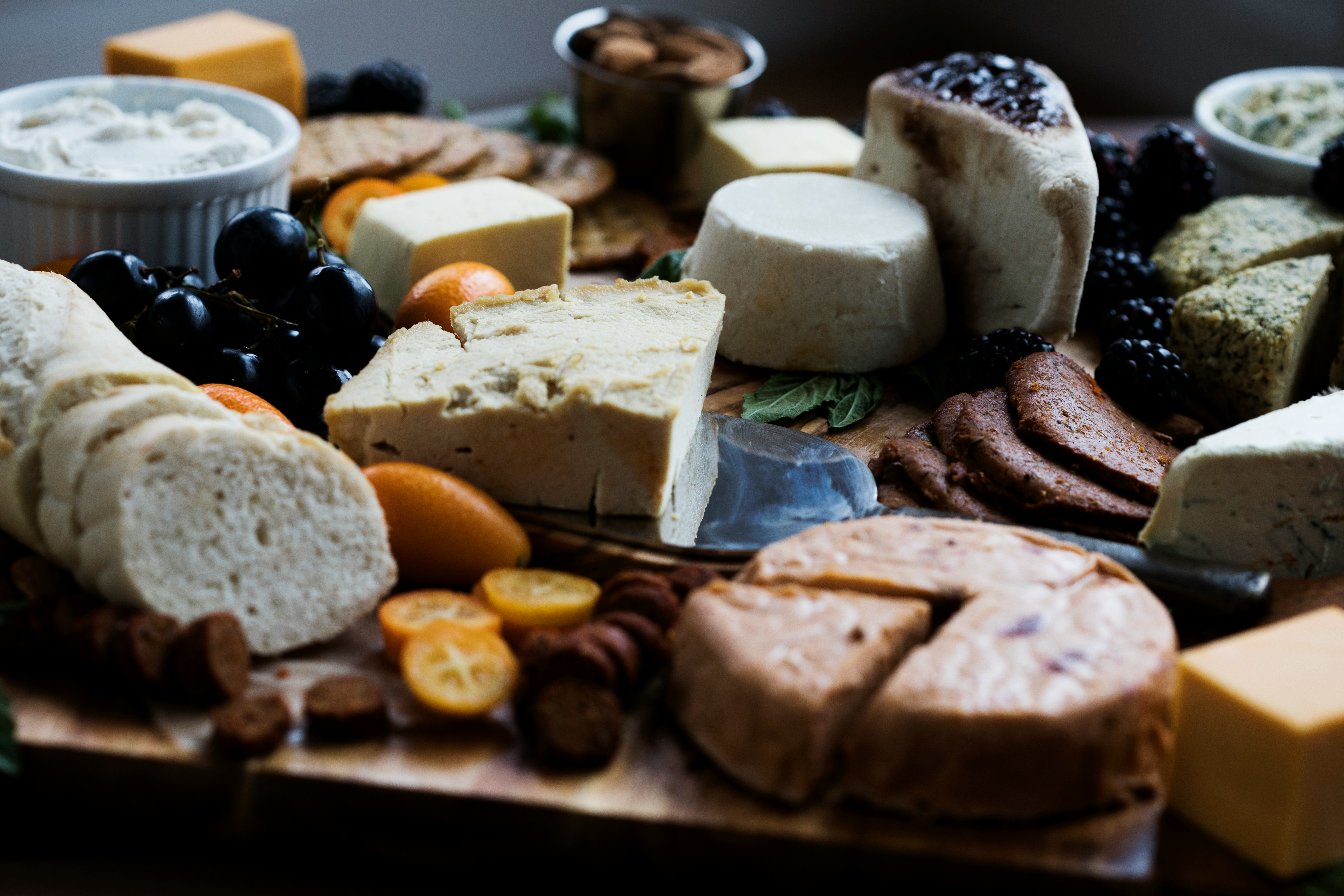
Cheese & Charcuterie Board
Planche Mixte
A planche mixte (mixed board) features regional French cheeses (Camembert, Brie, Comté, Roquefort, chèvre) and charcuterie (dried sausages, pâté, rillettes, prosciutto). Served as a shared appetizer or pre-dinner apéro with wine. Cheese is eaten with bread, never crackers. It's the perfect introduction to French cheese culture without committing to the full cheese course. Meant to be shared, eaten slowly with conversation.
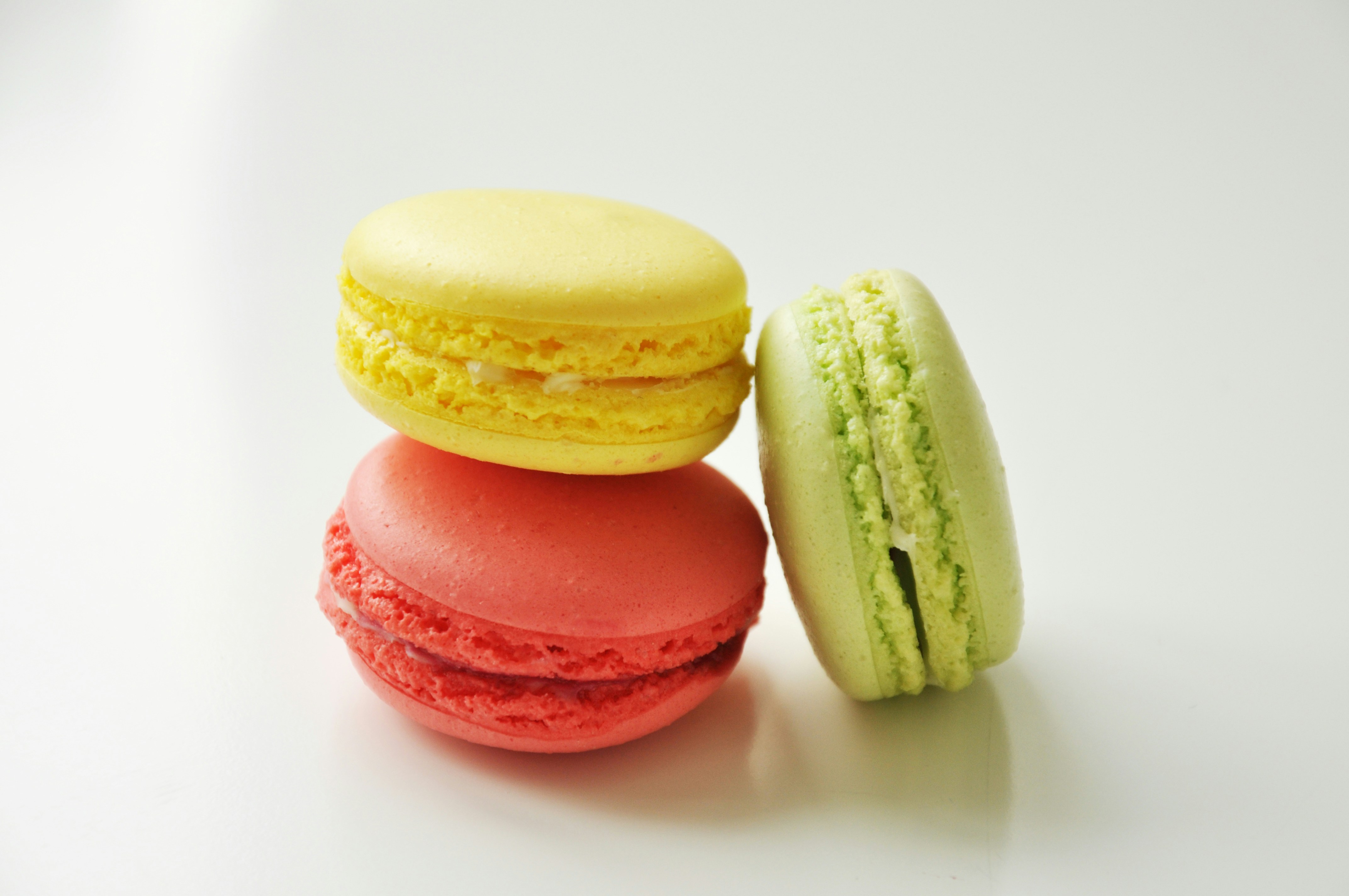
The Macaron
Macaron
The macaron is a delicate almond-based meringue cookie sandwich: two crisp-chewy shells with smooth ganache, buttercream, or jam filling. Not to be confused with coconut macaroons (American). Perfect macarons have a smooth, shiny shell, crisp exterior, chewy interior, and 'feet' (ruffled base). Flavors range from classic (vanilla, chocolate, pistachio) to seasonal (rose, salted caramel, yuzu). They're expensive (€2-3 each) but iconic.
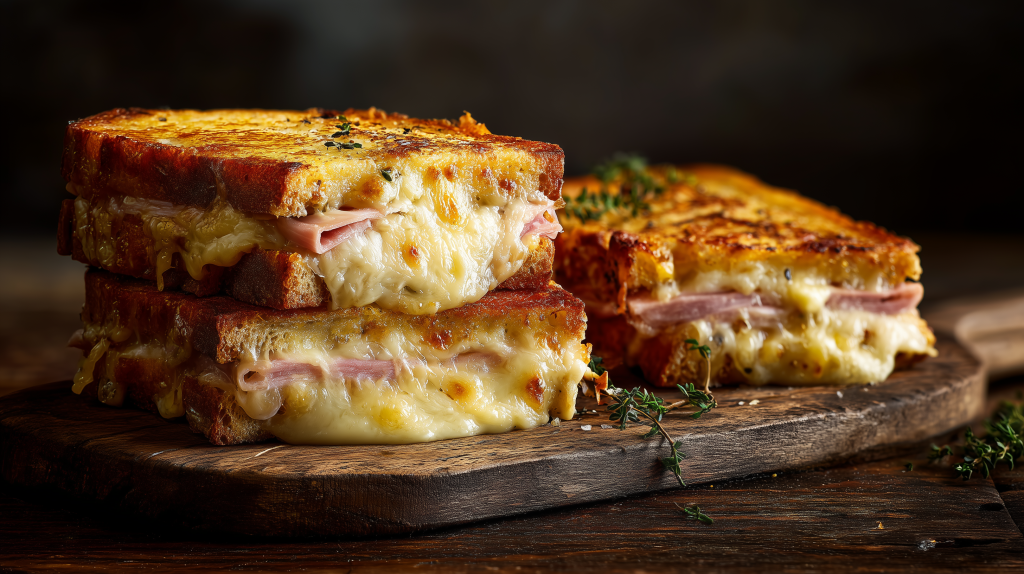
Croque-Monsieur
The croque-monsieur is France's ultimate comfort food: a hot sandwich made with ham and Gruyère cheese between toasted bread, topped with béchamel sauce and more grated cheese, then grilled until bubbling and golden. It's rich, gooey, and decadent. Add a fried egg on top to make it a 'croque-madame.' Served in cafés and bistros as a lunch or casual dinner. Eaten with a knife and fork, not hands.
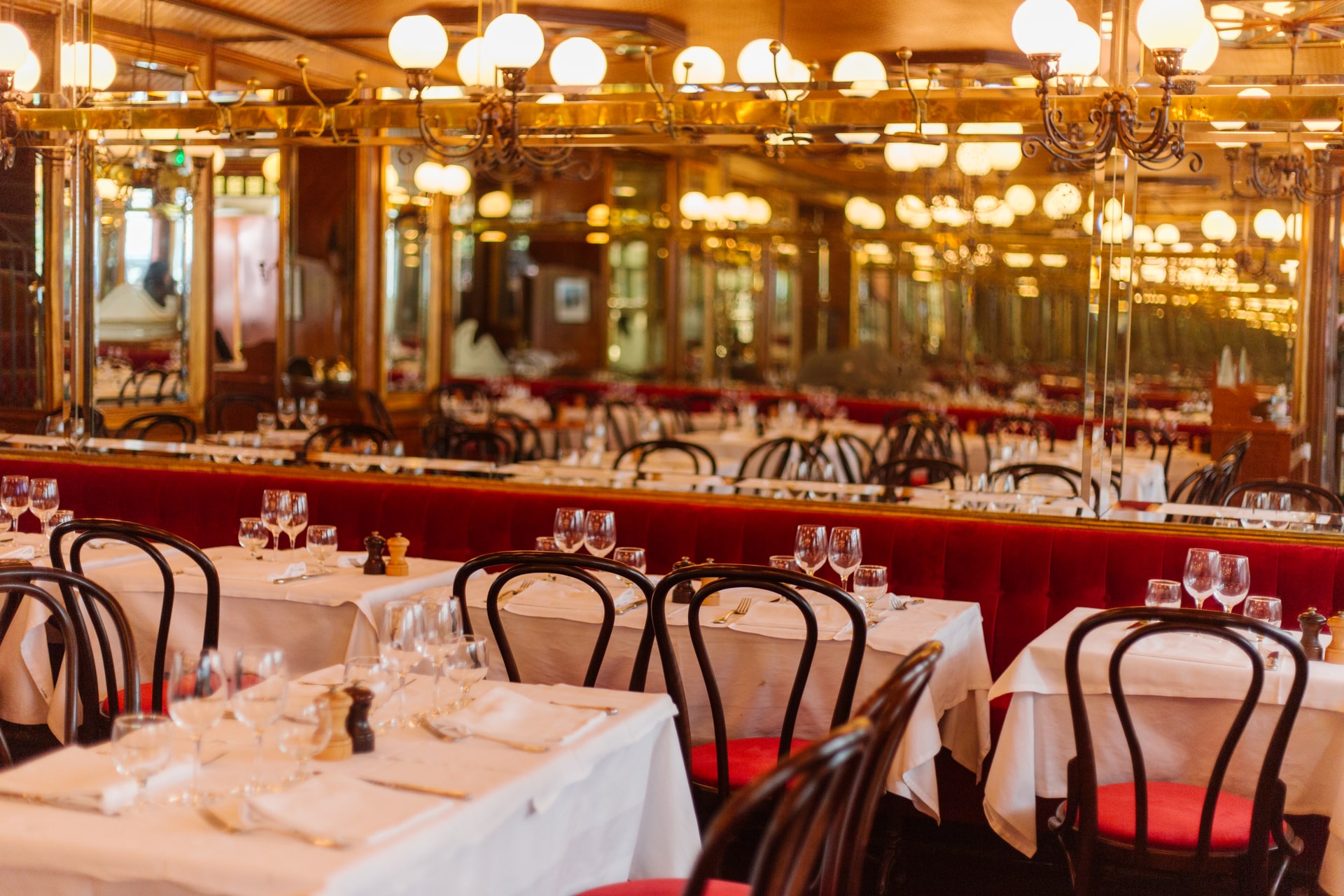
The Paris Bistro
Le Bistrot
The Paris bistro is a cultural institution: small, casual restaurants with zinc-topped bars, bentwood chairs, chalkboard menus, and handwritten daily specials. They serve classic French comfort food (boeuf bourguignon, pot-au-feu, confit de canard, steak-frites) in a convivial atmosphere. Service is fast and efficient, not chatty. Bistros are neighborhood anchors where regulars eat weekly. It's not gourmet—it's honest, well-executed French cooking at fair prices.
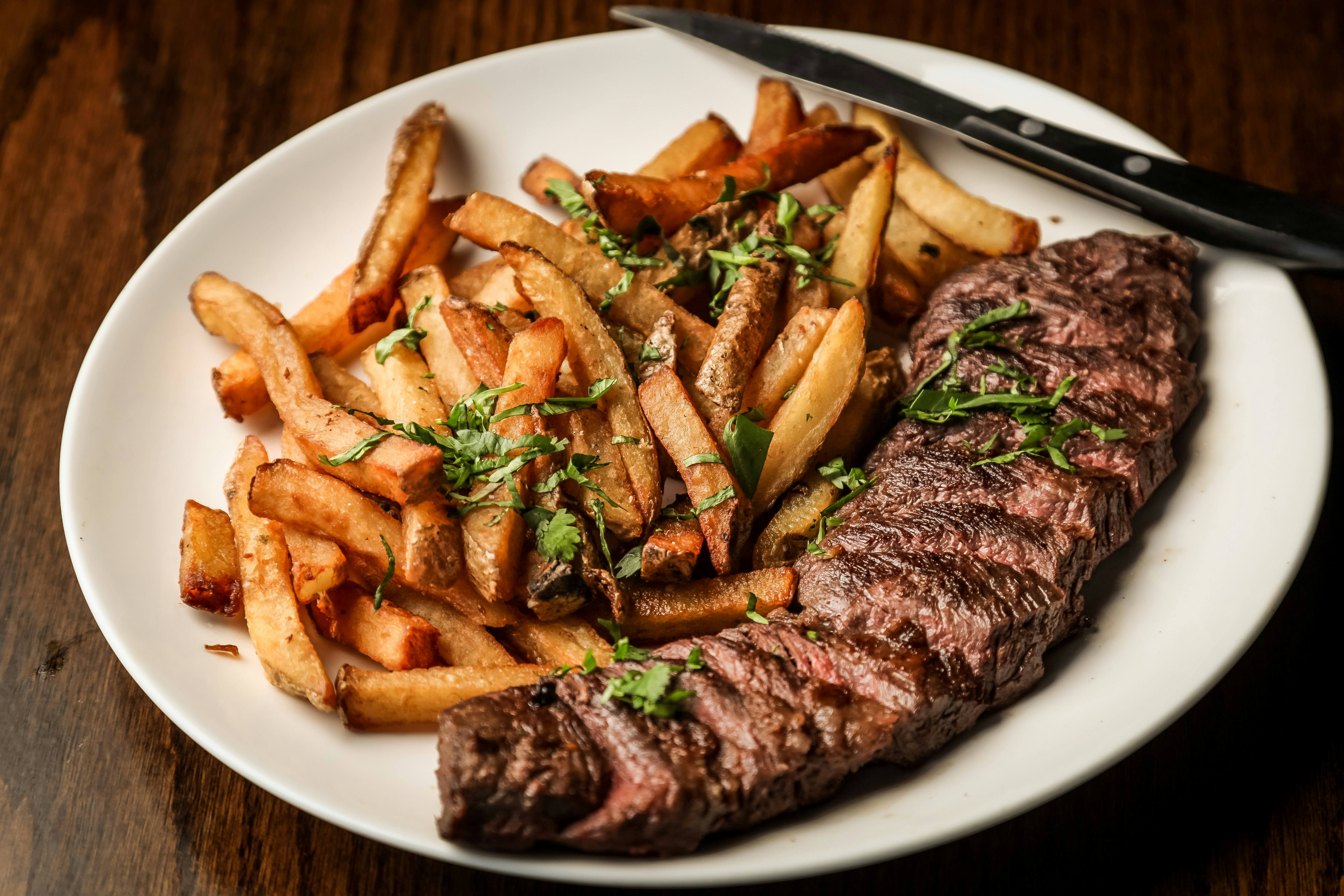
Steak-Frites
Steak-frites is the quintessential French bistro dish: a seared steak (usually sirloin, entrecôte, or bavette) served with crisp, thin French fries and a choice of sauce (béarnaise, pepper sauce, or herb butter). The steak is cooked rare to medium-rare ('saignant' or 'à point'). Fries are golden, crispy outside and fluffy inside. Simple but executed perfectly—the test of a good bistro. Always served with green salad on the side.
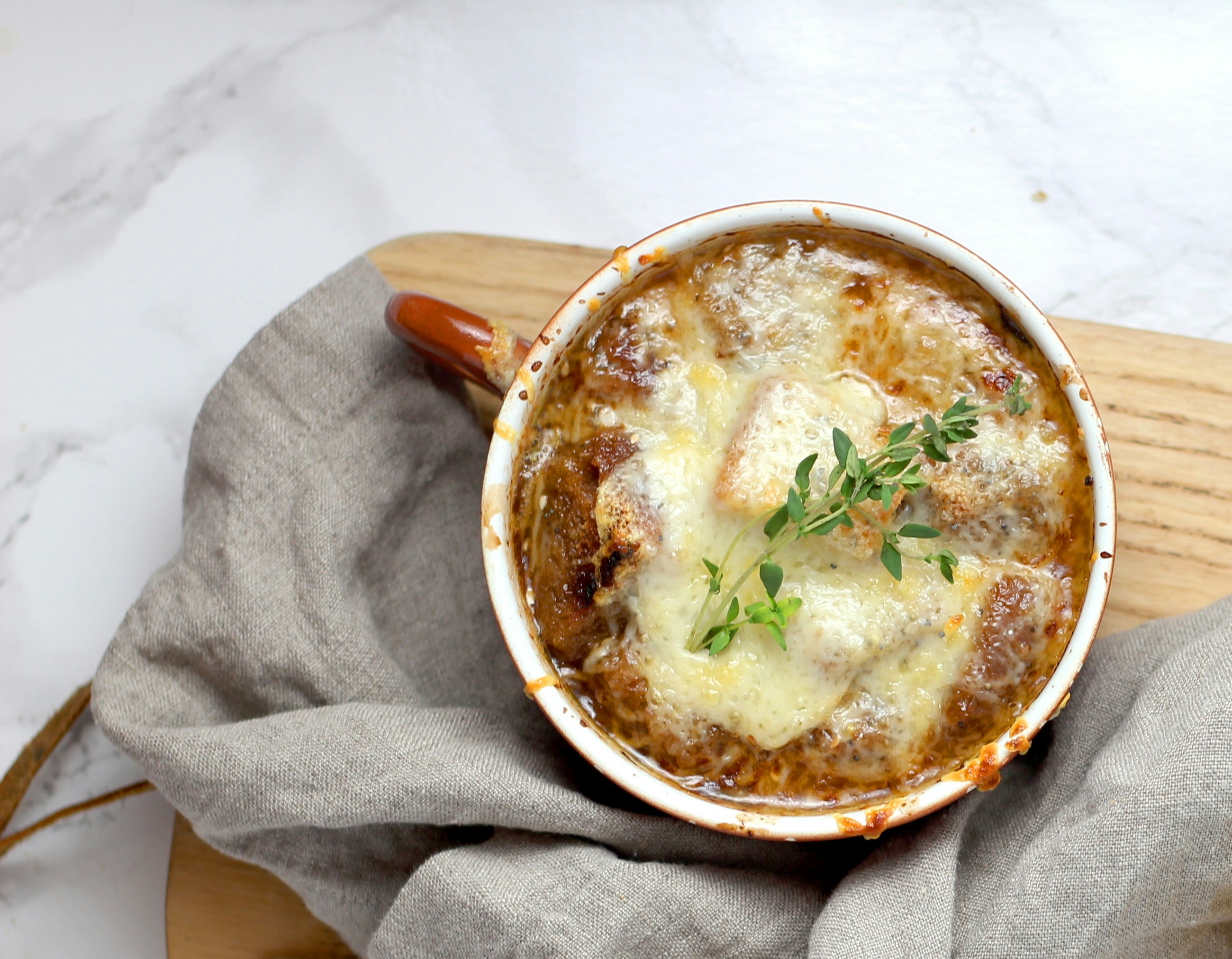
French Onion Soup
Soupe à l'Oignon
French onion soup is a deeply caramelized onion broth (beef or chicken stock) topped with a thick slice of toasted bread and a generous layer of melted Comté or Gruyère cheese. The onions are slowly cooked for 30-40 minutes until sweet and golden. The cheese melts over the bread, forming a gooey, stringy cap. It's warming, savory, and intensely flavorful. Often eaten late at night as post-party comfort food.
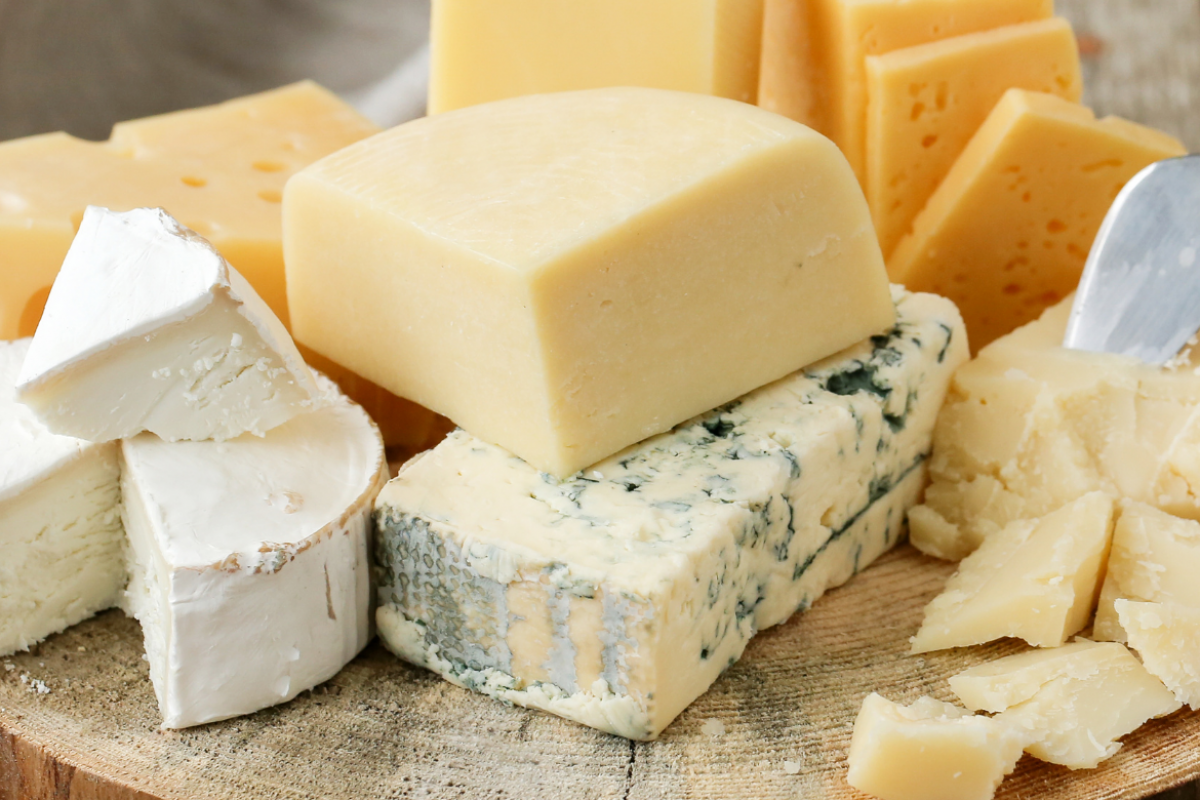
French Cheese Course
Fromage
In traditional French meals, cheese is served after the main course and before dessert—not as an appetizer. A cheese plate features 3-5 varieties representing different textures and flavors: fresh (chèvre goat cheese), soft (Brie, Camembert), hard (Comté, Beaufort), and blue (Roquefort). Eaten with bread, never crackers. The progression goes from mild to strong. It's meant to cleanse the palate and extend the wine course before dessert.

French Wine
Vin
Wine is an essential part of French meals, not an add-on. House wine ('vin de la maison') by the carafe is common, affordable (€8-15 per carafe), and often excellent quality. French wine culture emphasizes regional pairing: Loire whites, Bordeaux reds, Burgundy Pinot Noirs, Rhône blends. Paris is experiencing a massive natural wine ('vin nature') boom—minimal-intervention wines that are funky, cloudy, and trendy. Wine bars ('bars à vin') are everywhere.
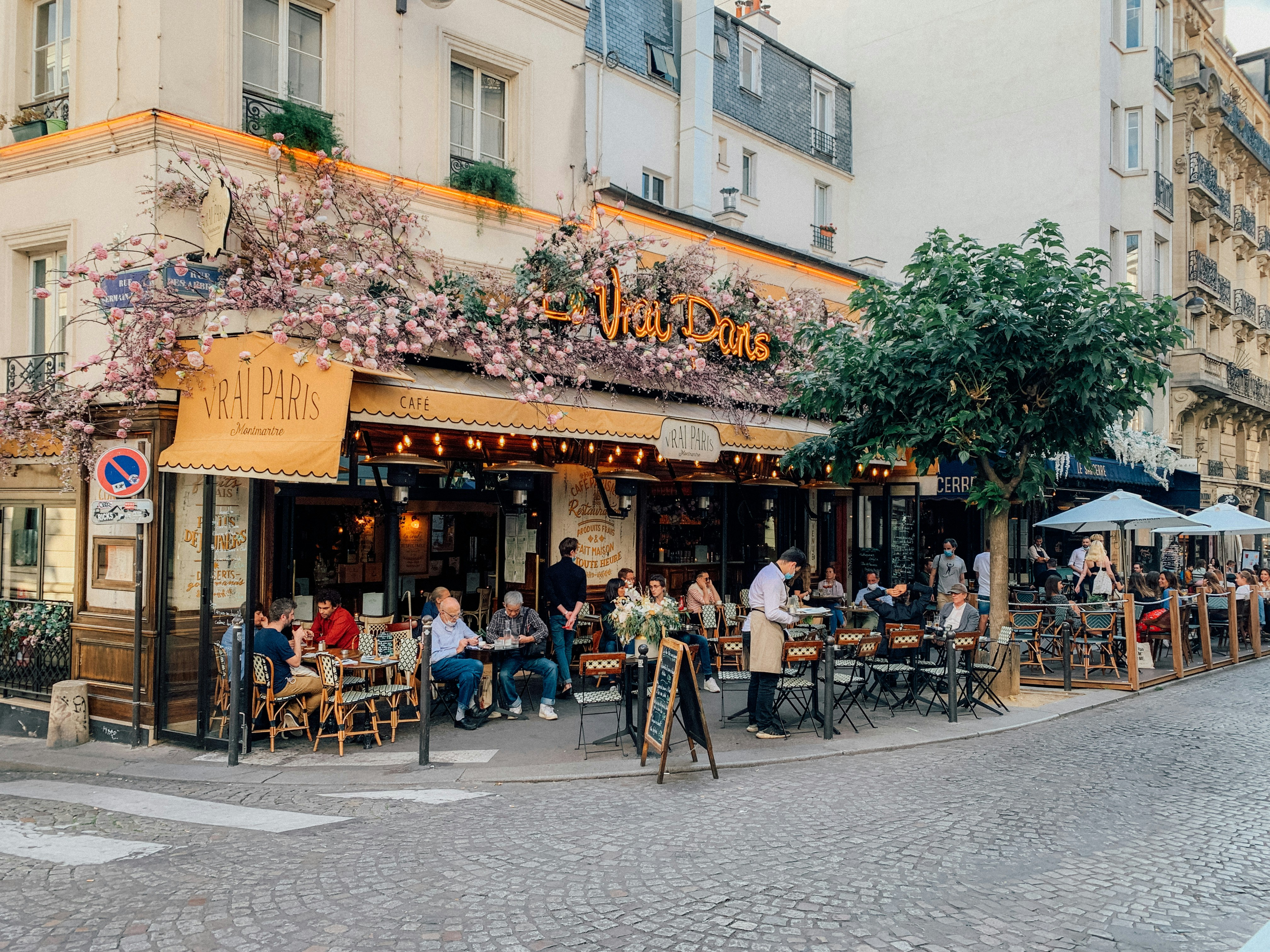
Café Culture
Le Café
Parisian café culture is about lingering over a single espresso ('un café') or glass of wine for hours, watching life pass by from a terrace table. It's a social institution, not just coffee service. Seating is strategic: 'en terrasse' (outside sidewalk) costs more than 'en salle' (inside), and 'au comptoir' (standing at the bar) is cheapest. The café is your office, living room, and people-watching theater. Ordering once buys you hours of space—no one rushes you.
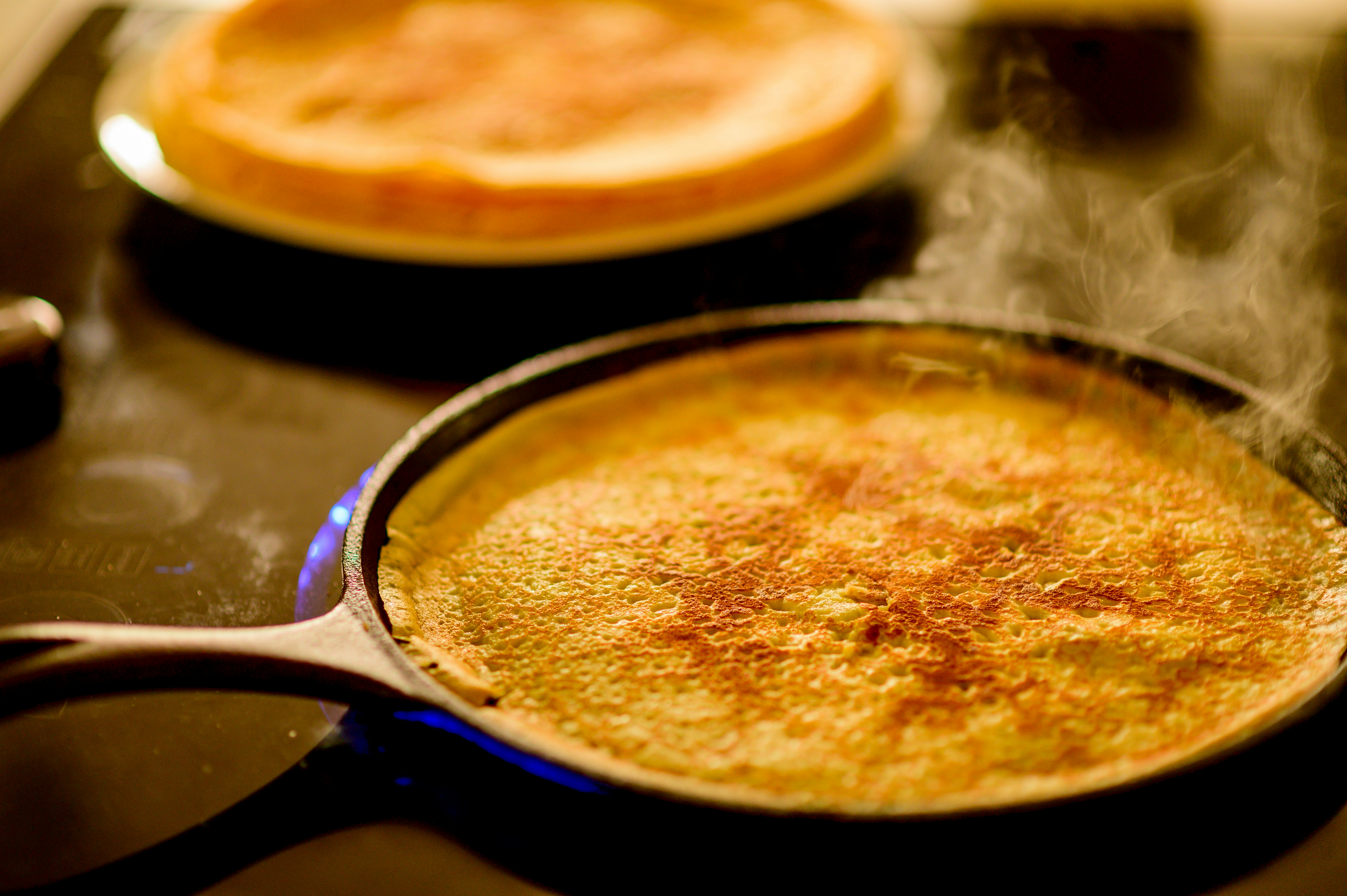
Paris Crêpes
Crêpes
Crêpes are thin pancakes folded into triangles or rolled into cones, filled with sweet (Nutella, sugar and lemon, jam) or savory (ham and cheese, egg). Savory buckwheat crêpes are called 'galettes' (from Brittany). They're street food sold from walk-up windows ('guichets') or crêperies. Watching the crêpe-maker spread batter on the hot griddle with a wooden rake is part of the experience. Cheap (€4-8), filling, and perfect on-the-go food.
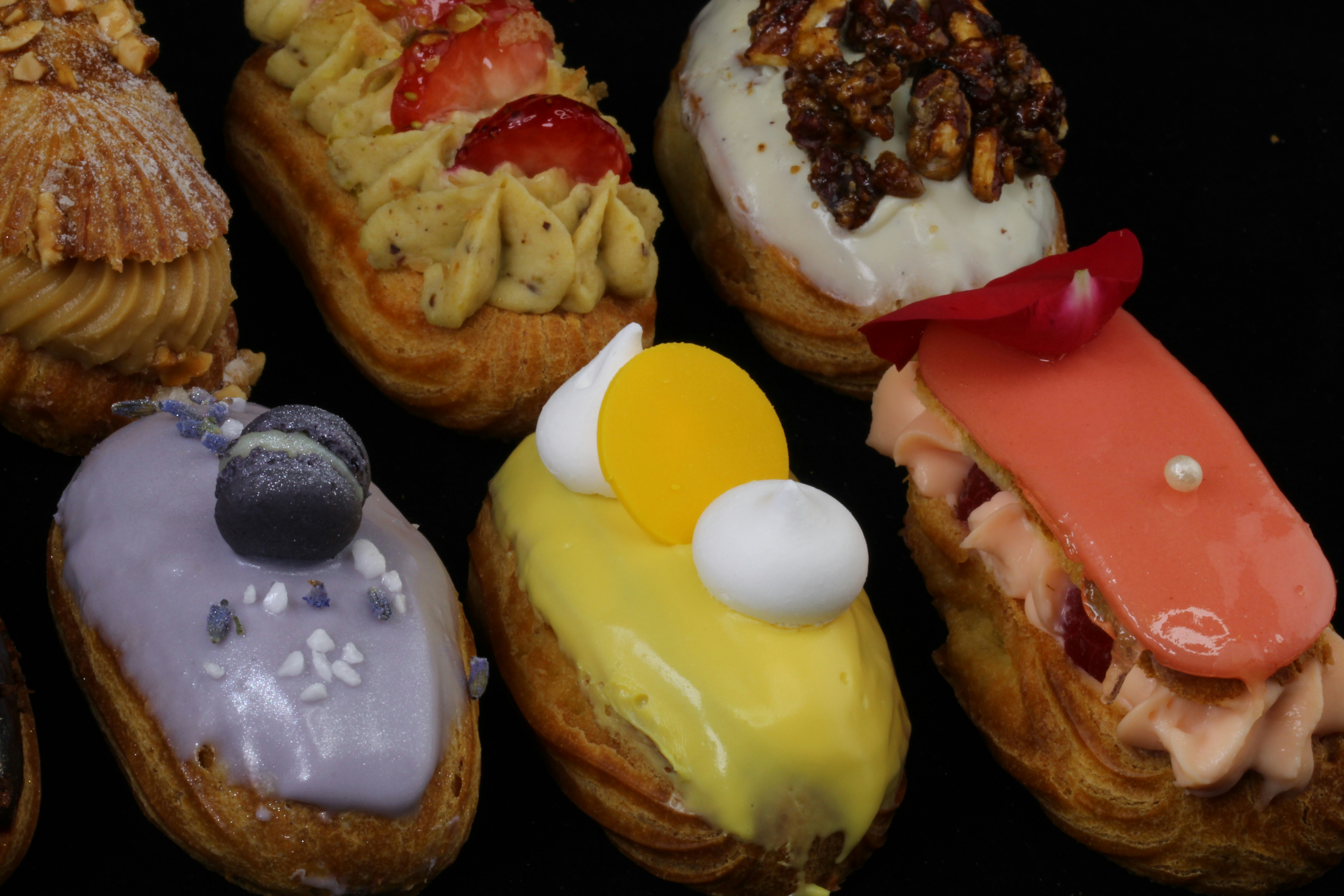
The Éclair
Éclair
An éclair is an oblong choux pastry (same dough as cream puffs) filled with vanilla, chocolate, or coffee pastry cream and topped with glossy fondant icing. It's light, airy, and not overly sweet. Modern pâtisseries offer creative flavors (pistachio, salted caramel, passion fruit) with colorful glazes. A proper éclair has a crisp shell, creamy filling, and shiny glaze. It's eaten in 2-3 bites, never with utensils.
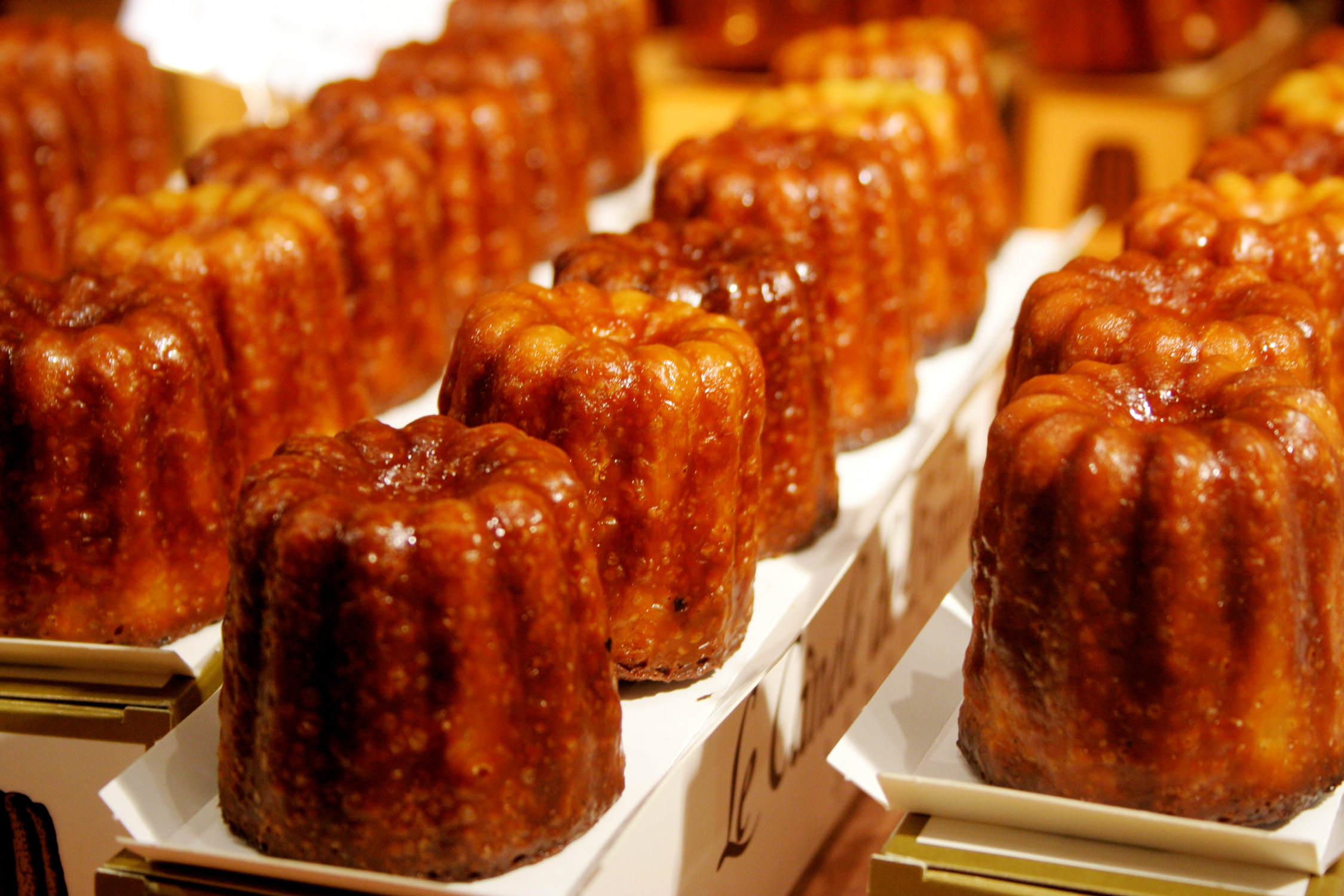
The Canelé
Canelé de Bordeaux
The canelé is a small ridged cake from Bordeaux with a dark, thick caramelized crust and a soft, custardy interior. It's flavored with rum and vanilla, with a hint of caramel from the burnt sugar coating. The contrast between crunchy exterior and creamy interior is the appeal. About 2 inches tall, eaten in 3-4 bites. Originally from Bordeaux but now a Paris pâtisserie staple.
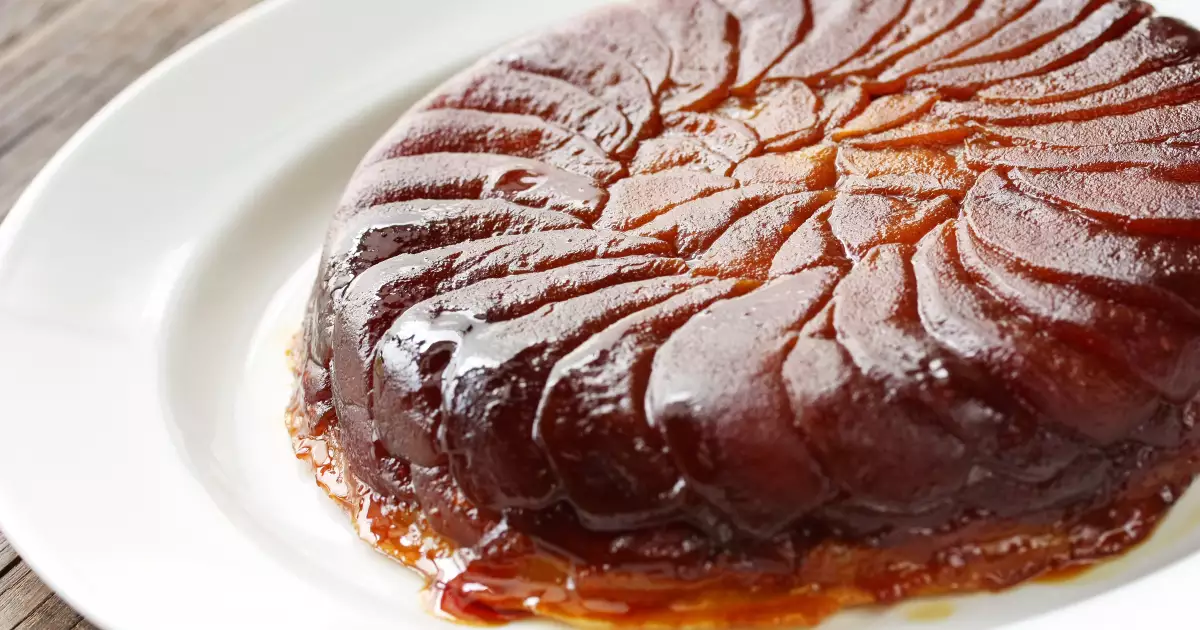
Tarte Tatin
Tarte Tatin is an upside-down caramelized apple tart: apples are cooked in butter and sugar until golden, covered with pastry, baked, then flipped so the caramelized apples are on top. The apples are tender, deeply caramelized, and sweet with a buttery puff pastry base. Served warm with crème fraîche, vanilla ice cream, or whipped cream. It's rustic, elegant, and quintessentially French dessert.