Essential Info
Survival Kit
Best Time
Spring / Fall
Currency
EUR
Language
Local Language
Jan
1°C - 7°CHeavy coat, scarf, waterproof shoes
Very few tourists
Short days
Feb
1°C - 8°CInsulating layers, warm hat
Romantic atmosphere
Cold snaps
Mar
4°C - 12°CLight jacket + umbrella
Spring blooms
Unpredictable rain
Apr
8°C - 16°CLayers, waterproof jacket
Cherry blossoms
April showers
May
11°C - 20°CBreathable layers, sunhat
Long days
Higher hotel prices
Jun
14°C - 24°CSummer clothes + light jacket
Music Festival
High season rates
Jul
16°C - 27°CVery light clothes, sandals
Bastille Day
Crowded
Aug
15°C - 26°CSummer clothes
Quiet streets (locals leave)
Independent shops/bakeries closed
Sep
12°C - 22°CSmart casual layers
Perfect walking weather
Fashion Week prices
Oct
9°C - 17°CWarm mid-layers, boots
Autumn foliage
Shorter days
Nov
6°C - 12°CWarm coat, umbrella
Museum exhibitions
Grey & gloom
Dec
3°C - 8°CThermals, heavy coat, gloves
Christmas Markets
Cold & Dark
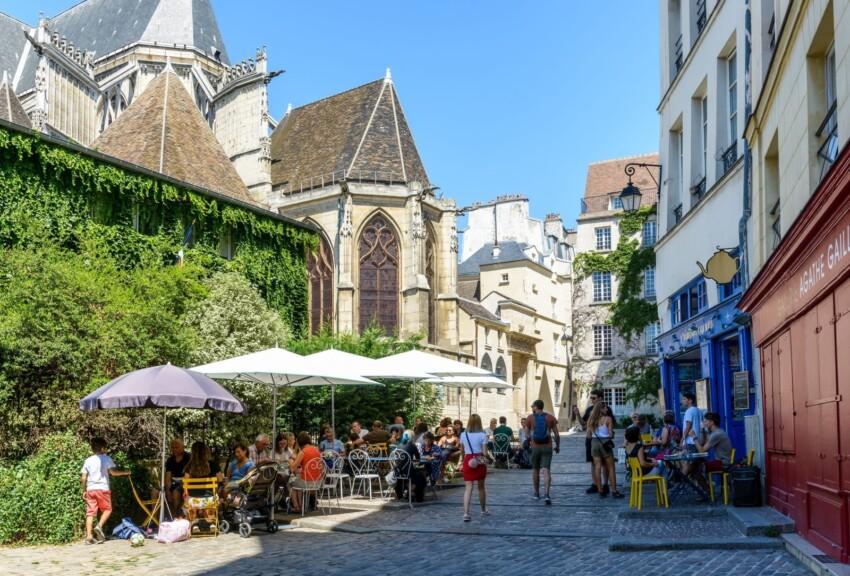
Le Marais
Tight cobbled streets, hôtels particuliers, and a mix of Jewish heritage and LGBTQ+ nightlife.
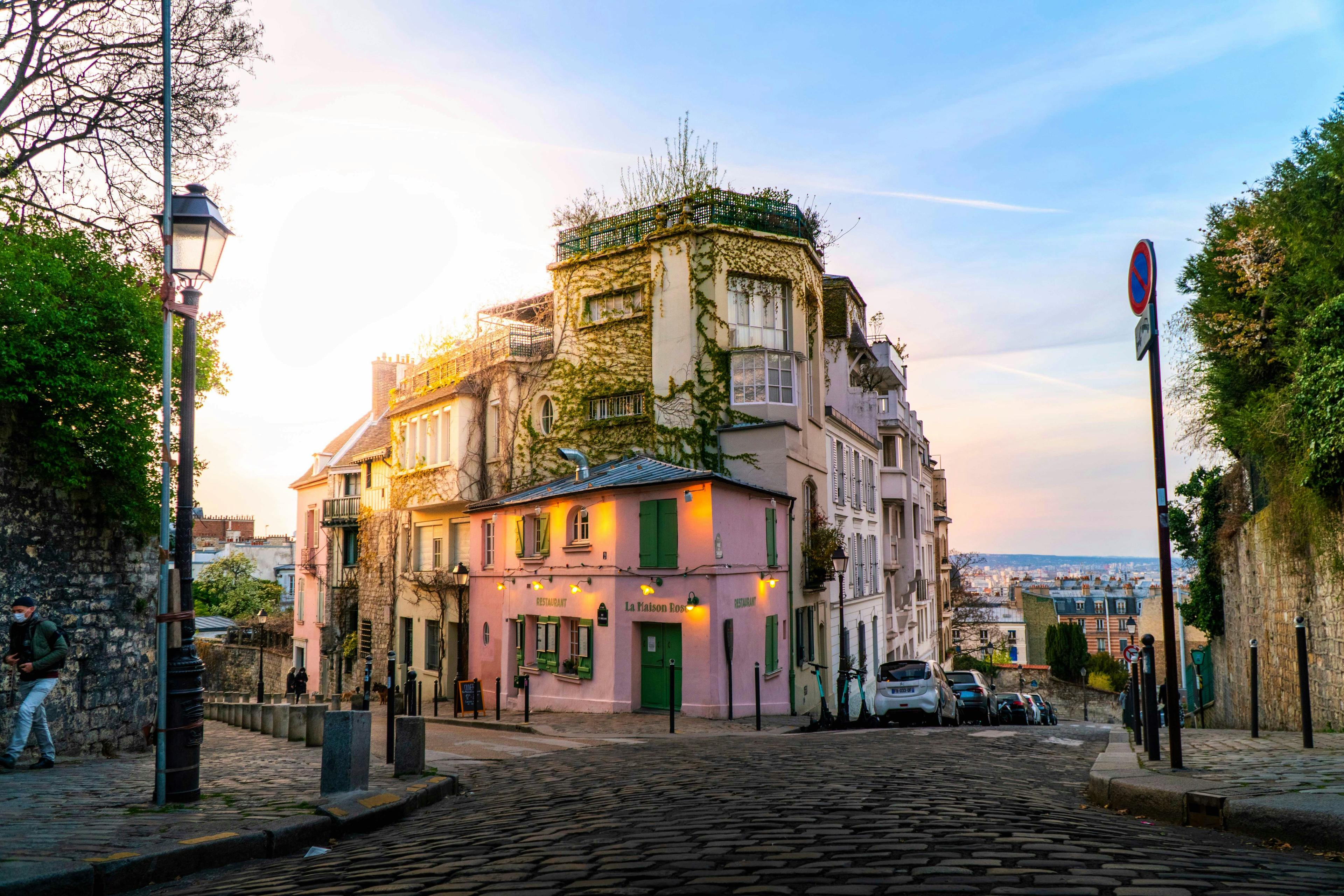
Montmartre
Perched on a hill, it retains a village atmosphere with artists, vineyards, and winding streets.
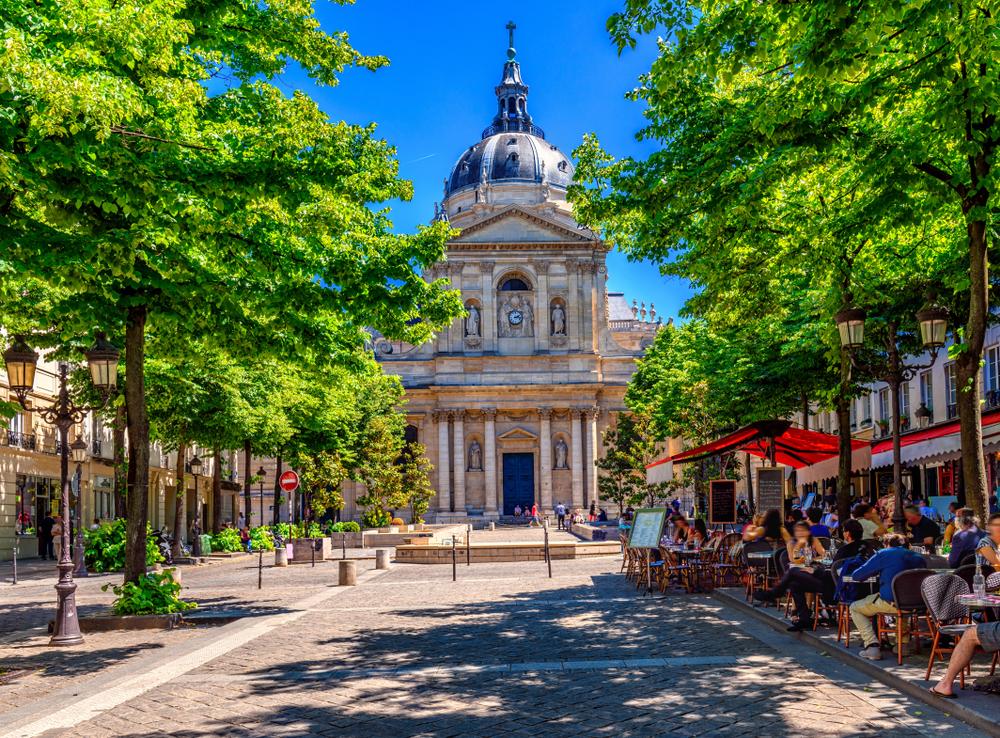
Latin Quarter
Home to the Sorbonne, filled with bookshops, student cafes, and medieval history.
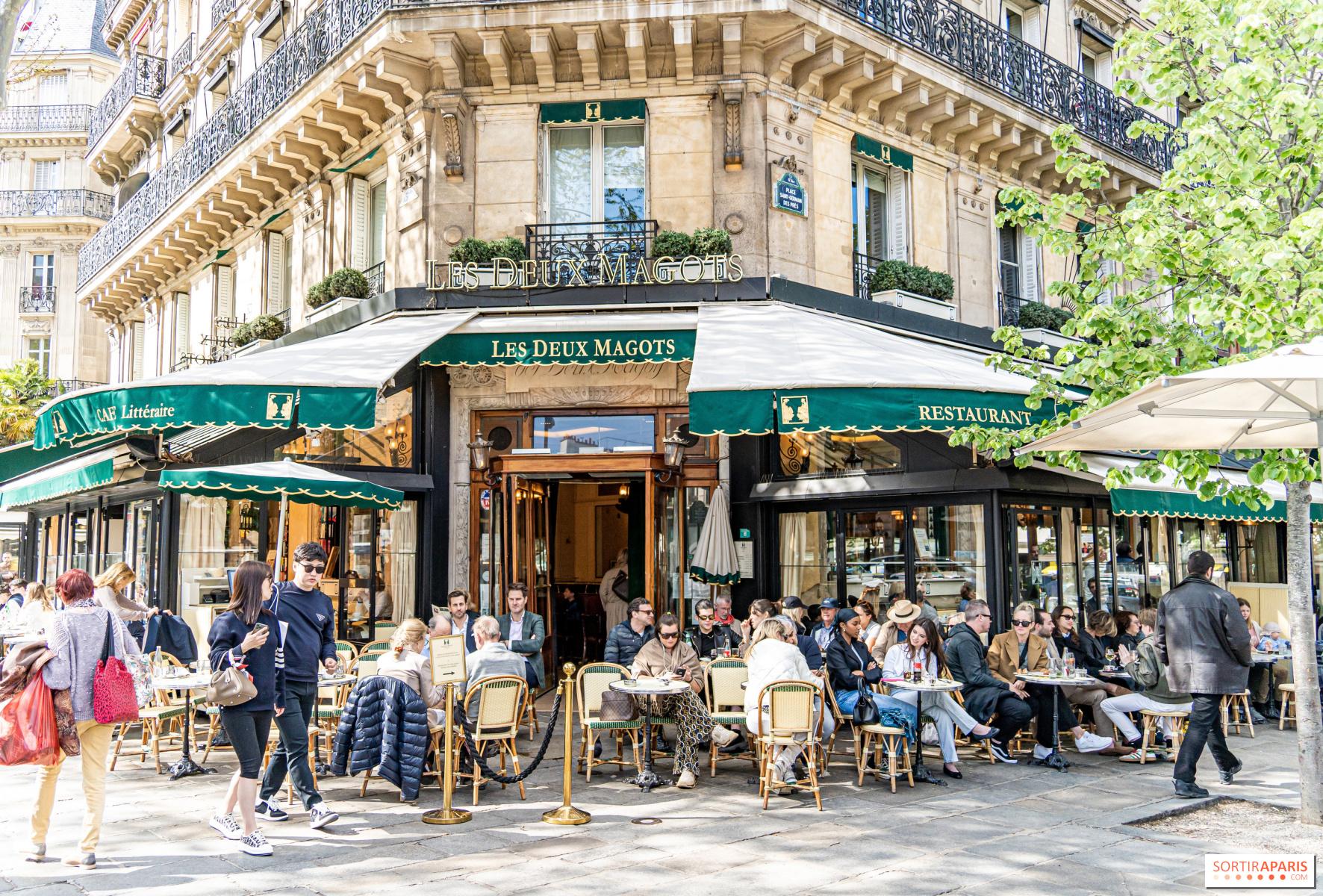
Saint-Germain
Famous for historic literary cafes like Les Deux Magots and high-end galleries.
Dos & Don'ts
- The 'Bonjour' Rule: It is not just politeness, it is a social key. Skipping it feels like barking an order. Always say Bonjour when entering a shop. Eye contact is normal during this greeting. Saying Bonjour instead of Bonsoir is not a big deal, french people make that 'mistake' all the time.
- Service is Included: There is no 15-20% tipping culture. 'Service Compris' is the law. Rounding up slightly is polite, but large tips are seen as strange, not generous.
- The Coffee Price Tier: Know that a coffee has three prices. 'Au comptoir' (standing at the bar) is cheapest. 'En salle' (inside table) is standard. 'En terrasse' (outside) is the most expensive—you are paying rent for the view.
- No Small Talk: Efficiency > Friendliness. Shopkeepers and waiters are professional, not chatty. Silence is neutral, not rude. Do not expect random smiles from strangers.
- Butter Reality: Butter is not automatically served with bread at dinner. It is for breakfast or specific dishes (like oysters). Asking for butter with your bread basket marks you as a tourist.
- Buying Bread Ritual: Say 'une baguette tradition, s'il vous plaît', pay (cash is fast), and never accept a bag unless offered. Tearing the end off ('le quignon') outside is culturally approved.
- The Lunch Formula (Formule Midi): Between 12:00-14:00, look for the 'Formule'. It's how locals eat affordably (approx €15-20).
- Sunday Reality: Most shops are closed, except in Marais or tourist zones. Plan museums or parks. Note that Public Holidays often function like Sundays.
- Water Rules: Tap water is safe. Ask for 'une carafe d'eau' for free water. If you just ask for 'water', you will be charged for a bottle.
- Dining Pace: Meals are slow. You must ask for the bill ('L'addition'). Leaving quickly is seen as rushing the pleasure.
Key Phrases
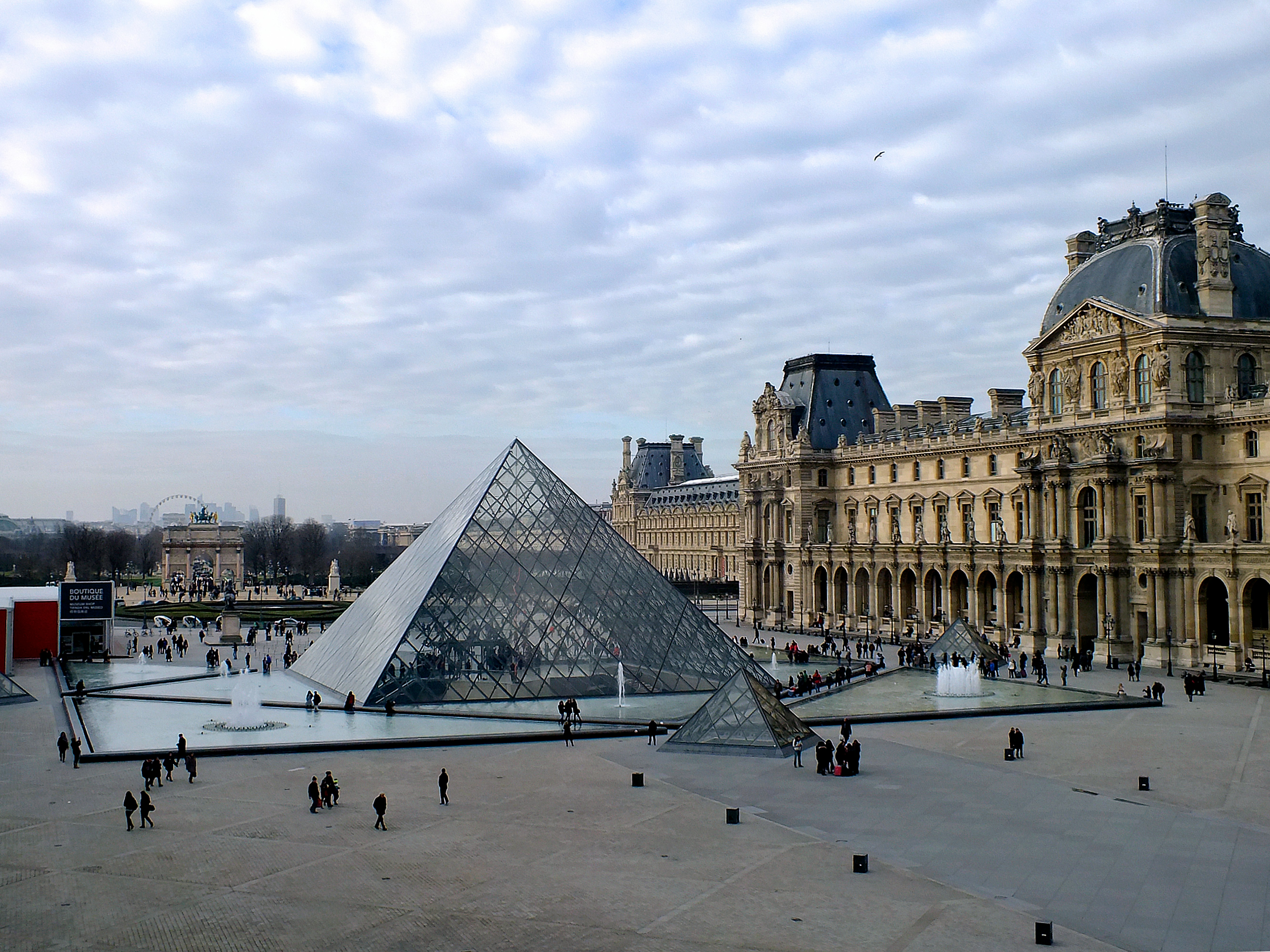
Musée du Louvre
The Louvre is the world's largest art museum and a historic monument in Paris. Originally a medieval fortress built in the 12th century, it became a royal palace before opening as a museum in 1793. Houses 38,000+ artworks spanning 9,000 years, including the Mona Lisa, Venus de Milo, and Winged Victory. The glass pyramid entrance (1989) is iconic. It's vast—you cannot see everything in one visit.
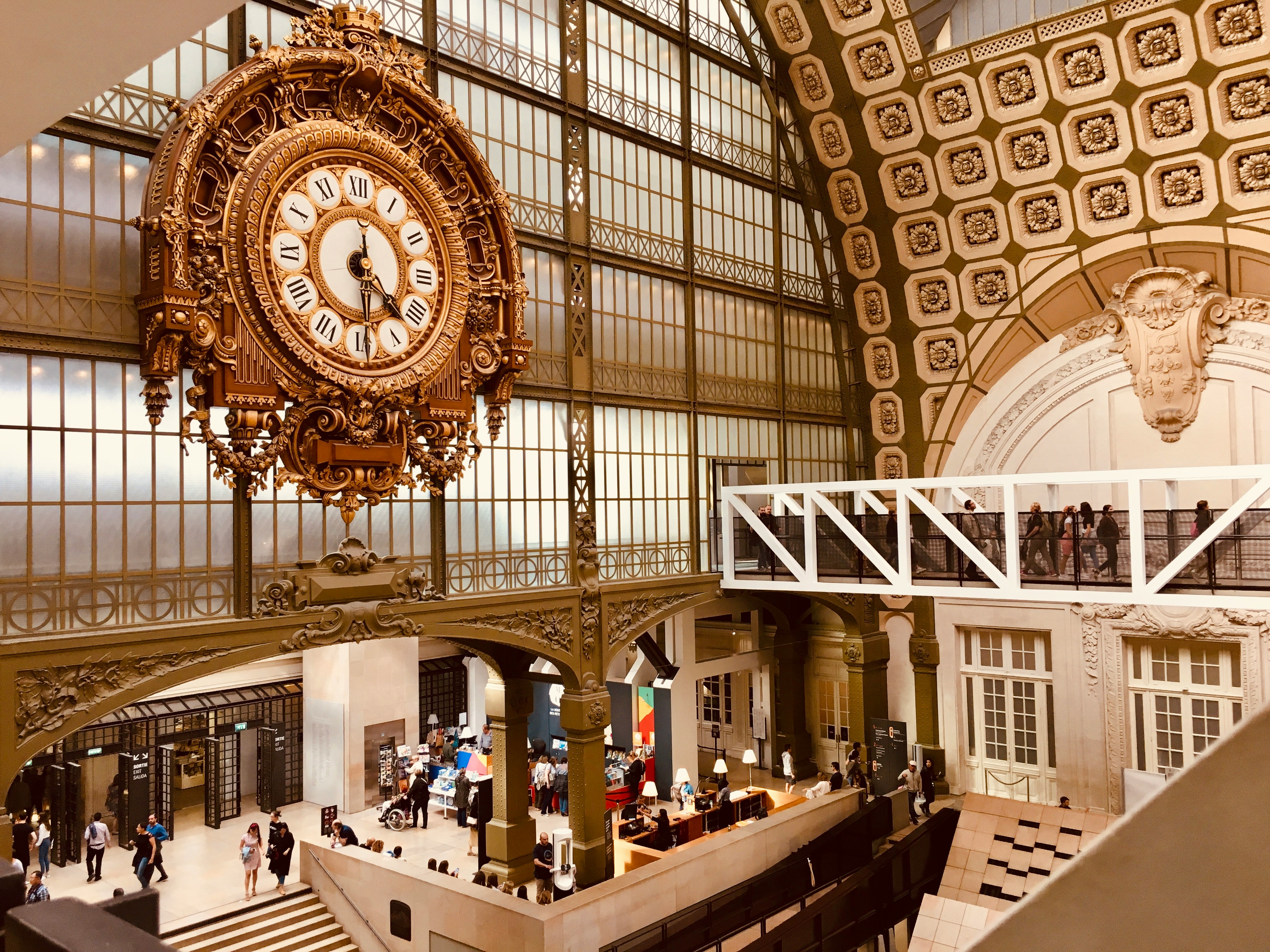
Musée d'Orsay
Musée d'Orsay is housed in a stunning Beaux-Arts former railway station (Gare d'Orsay, built 1900). It's the world's premier collection of Impressionist and Post-Impressionist art: Monet, Renoir, Degas, Van Gogh, Cézanne, Gauguin. The top floor galleries feature Water Lilies, Starry Night Over the Rhone, and Ballet Dancers. The building itself—with its massive ornate clock and glass roof—is an artwork. Smaller and more manageable than the Louvre.
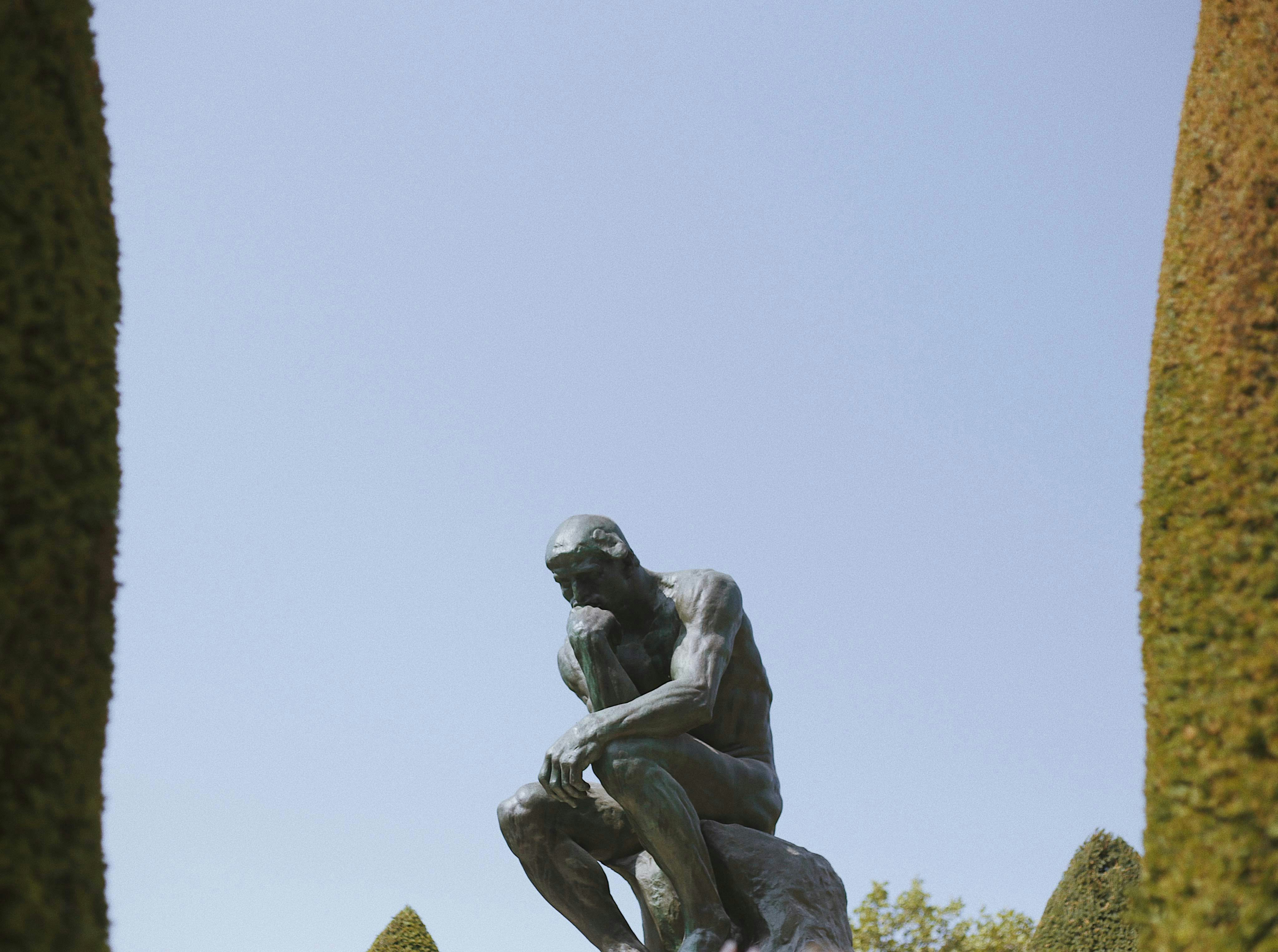
Musée Rodin
Musée Rodin is a serene sculpture museum in an 18th-century mansion (Hôtel Biron) with beautiful gardens. It houses the largest collection of Auguste Rodin's work, including The Thinker, The Kiss, The Gates of Hell, and Balzac. The sculpture garden is the highlight—bronze statues scattered among rose bushes and tree-lined paths. It's peaceful, intimate, and often overlooked by tourists rushing to bigger museums. Perfect for a calm afternoon.
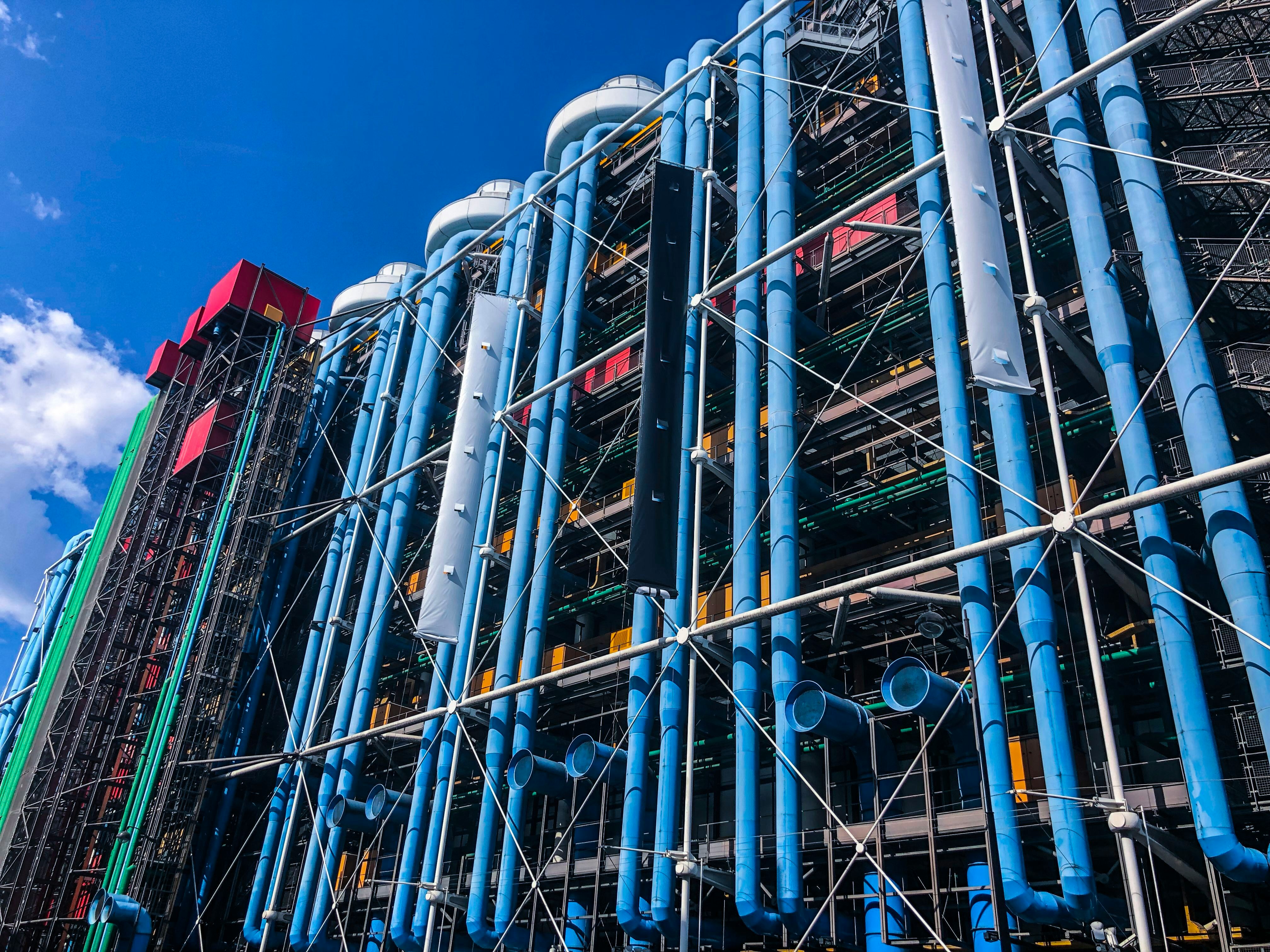
Centre Pompidou
Centre Pompidou is a radical inside-out building with exposed pipes, ducts, and escalators color-coded on the exterior (blue=air, green=water, yellow=electrical, red=circulation). Houses Europe's largest modern art collection: Picasso, Matisse, Kandinsky, Duchamp, Warhol. The rooftop terrace offers panoramic Paris views. The surrounding plaza hosts street performers and is a social hub. Controversial when built (1977), now beloved.
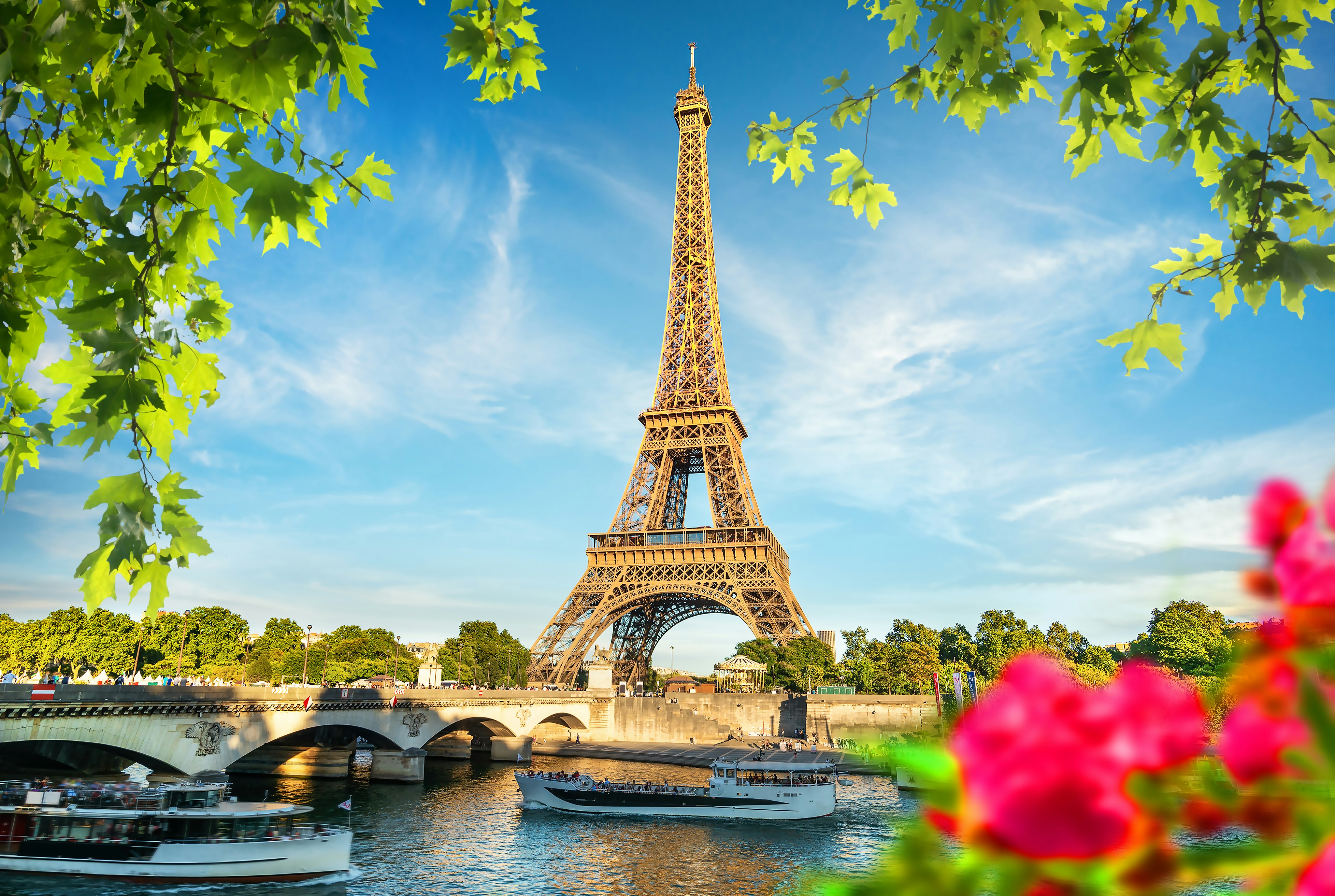
Eiffel Tower
Tour Eiffel
The global symbol of France, this 330-meter iron lattice tower offers the most famous skyline views in the world.
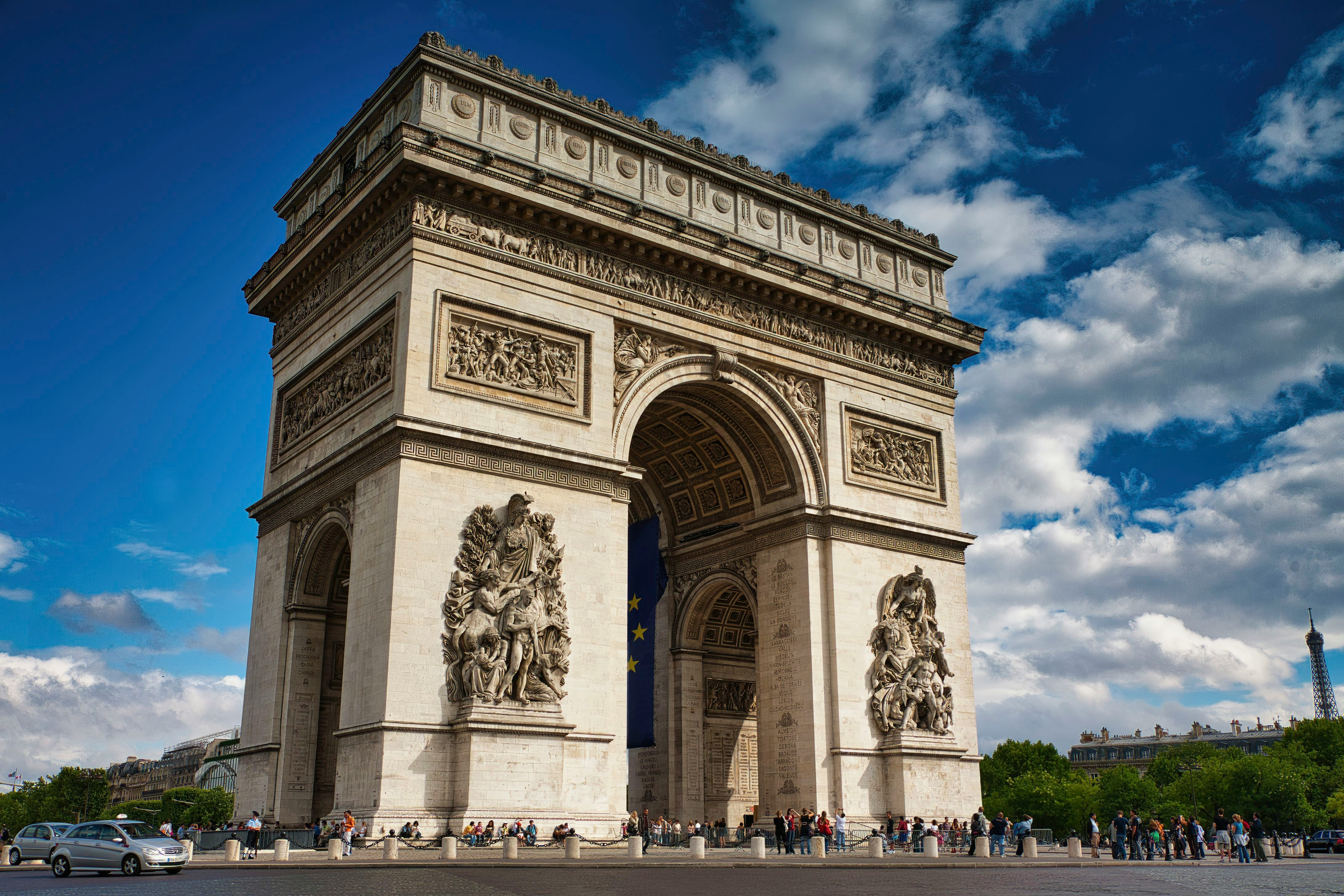
Arc de Triomphe
A massive Neoclassical triumphal arch honoring those who fought for France, standing at the center of the world's most chaotic traffic circle.
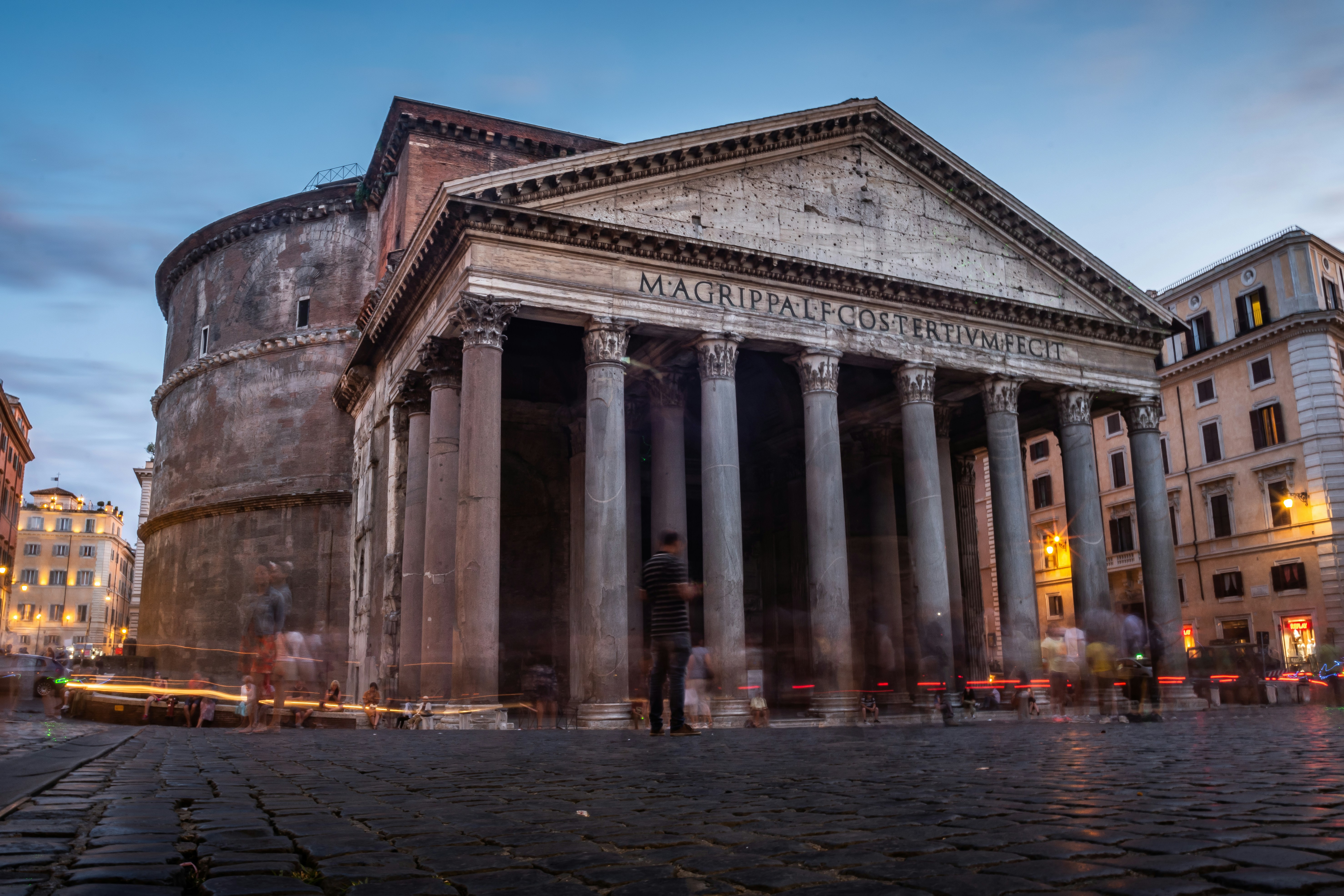
Panthéon
A secular mausoleum in the Latin Quarter housing the remains of France's greatest citizens, featuring a massive dome and Foucault’s pendulum.
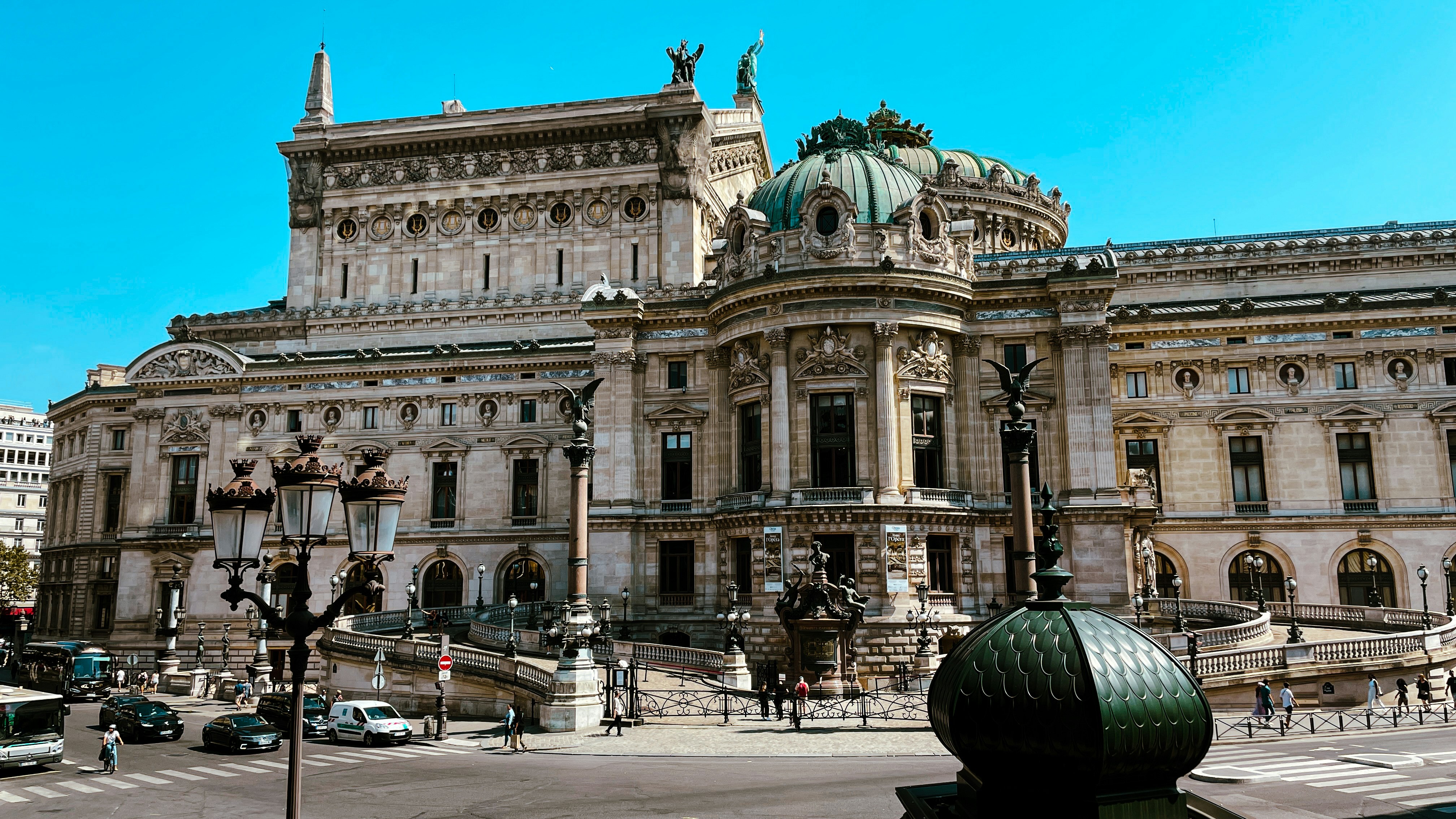
Opéra Garnier
Palais Garnier
An architectural masterpiece of the Second Empire, this opulent opera house is famous for its grand staircase and Chagall-painted ceiling.
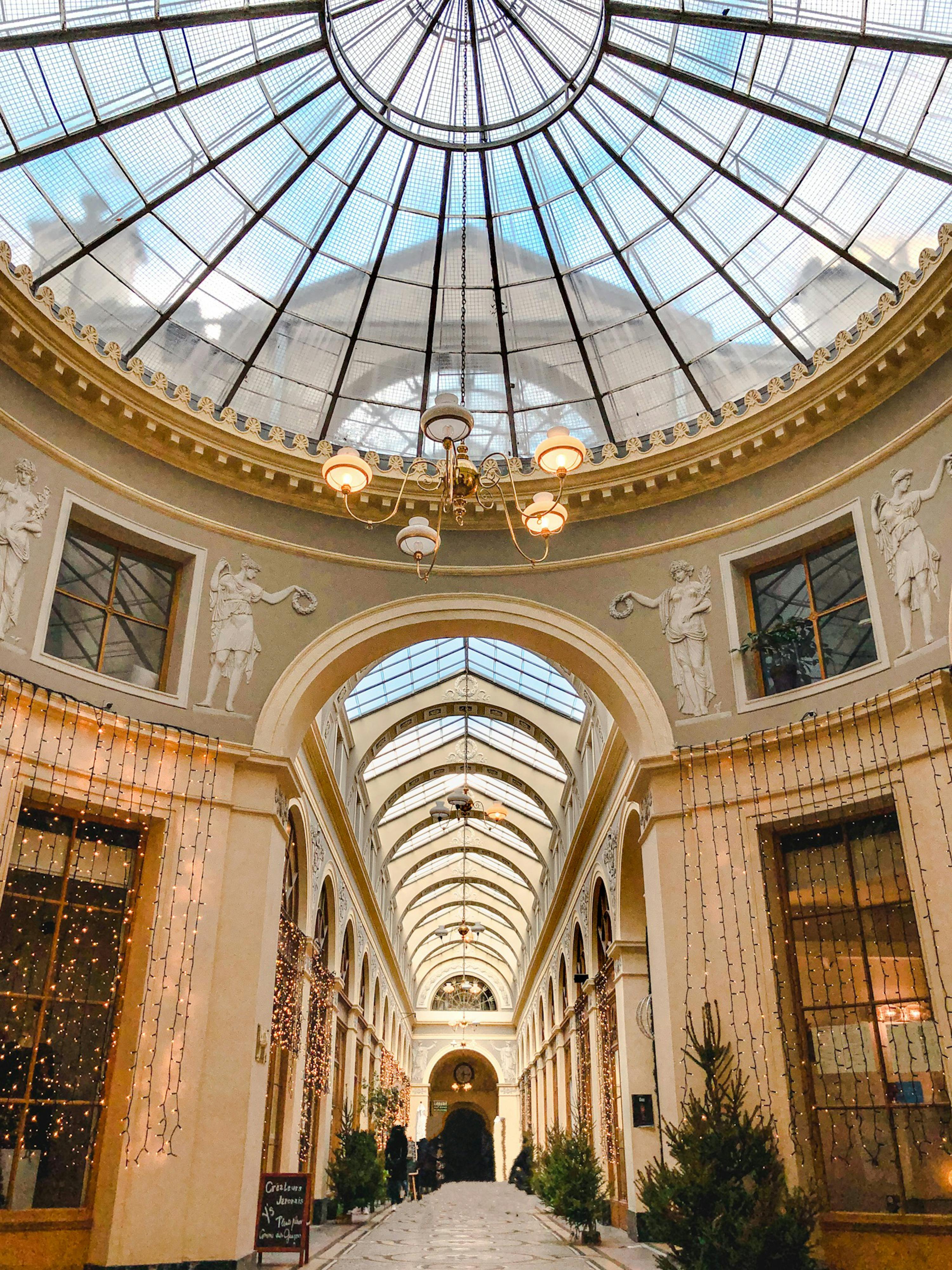
Galerie Vivienne
The most elegant of Paris's surviving 19th-century shopping arcades, featuring intricate mosaic floors and a stunning glass roof.
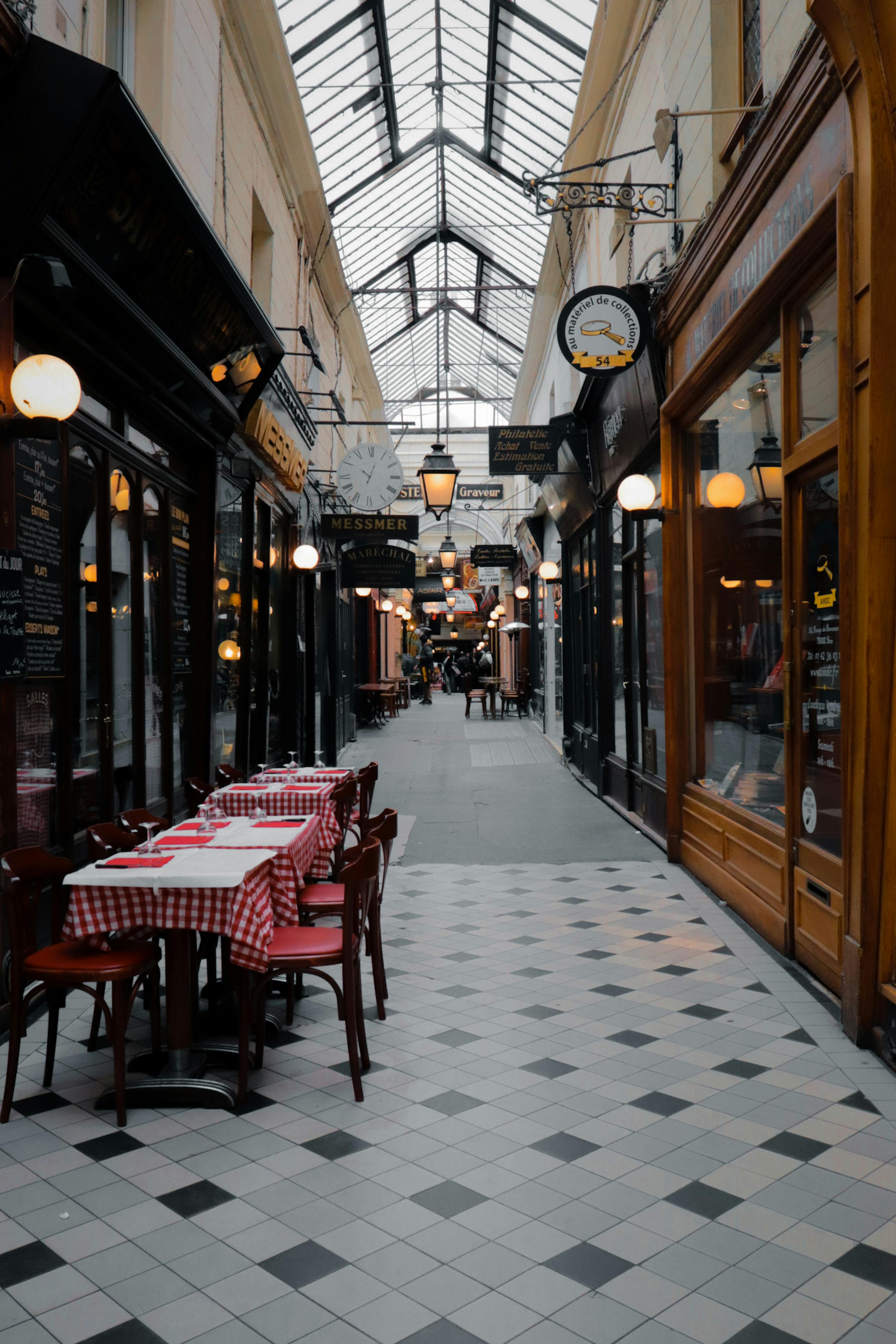
Passage des Panoramas
The oldest covered passage in Paris, now a bustling hub for foodies, stamp collectors, and vintage postcard hunters.
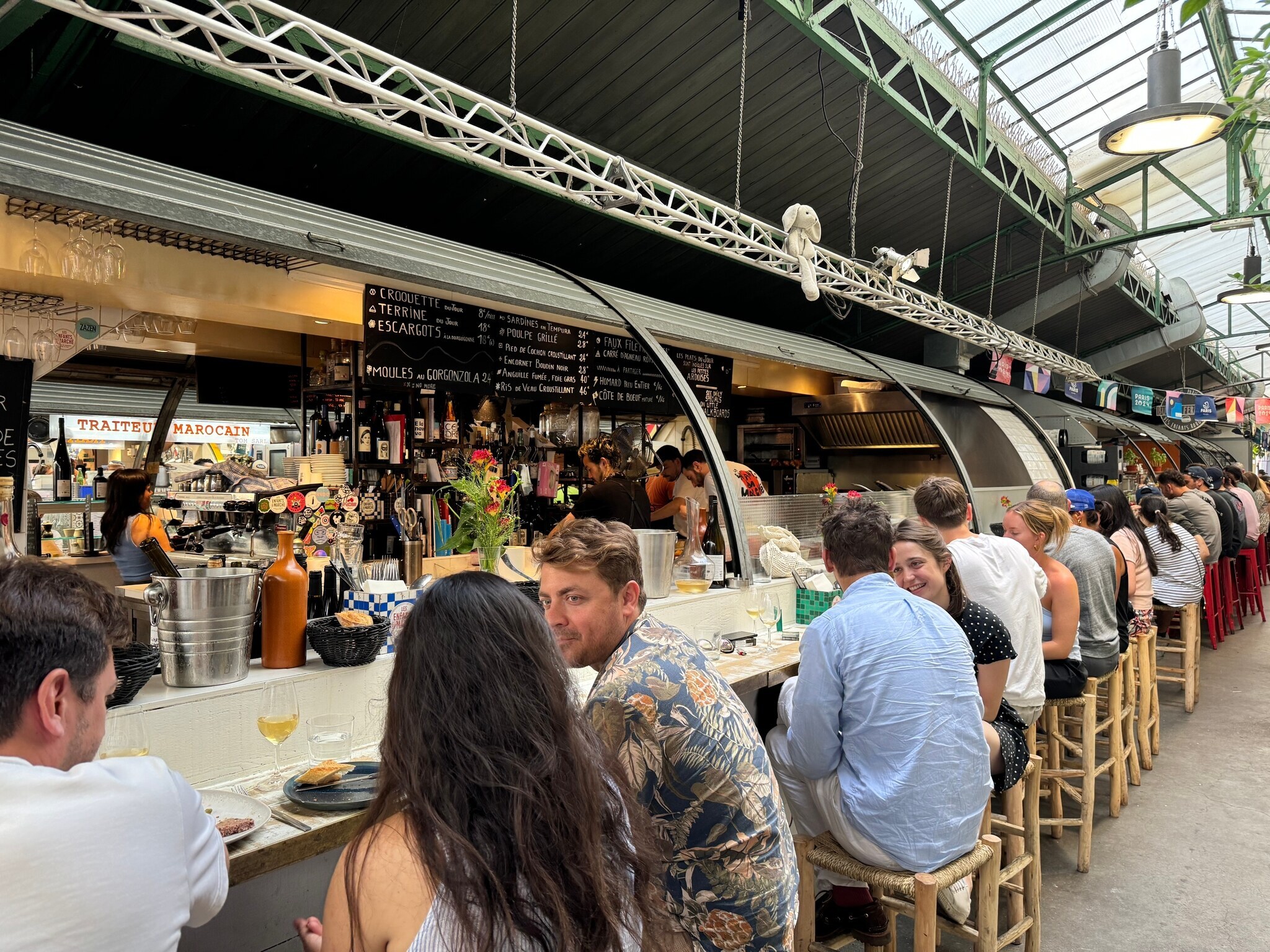
Marché des Enfants Rouges
The oldest covered food market in Paris, located in the Marais, serving a mix of fresh produce and ready-to-eat international street food.
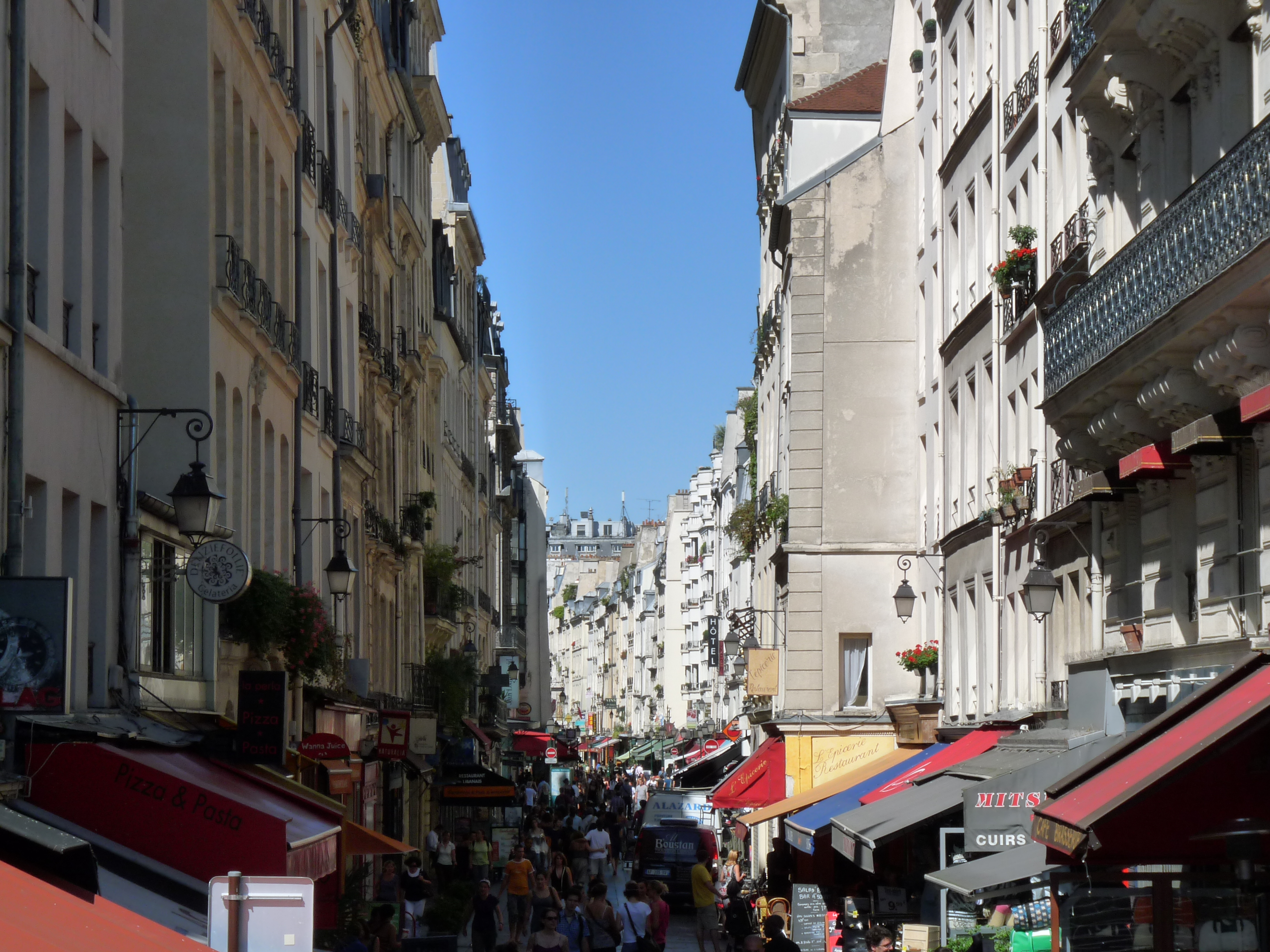
Rue Montorgueil
A vibrant pedestrian market street lined with the city's best bakeries, fishmongers, florists, and historic cafes.
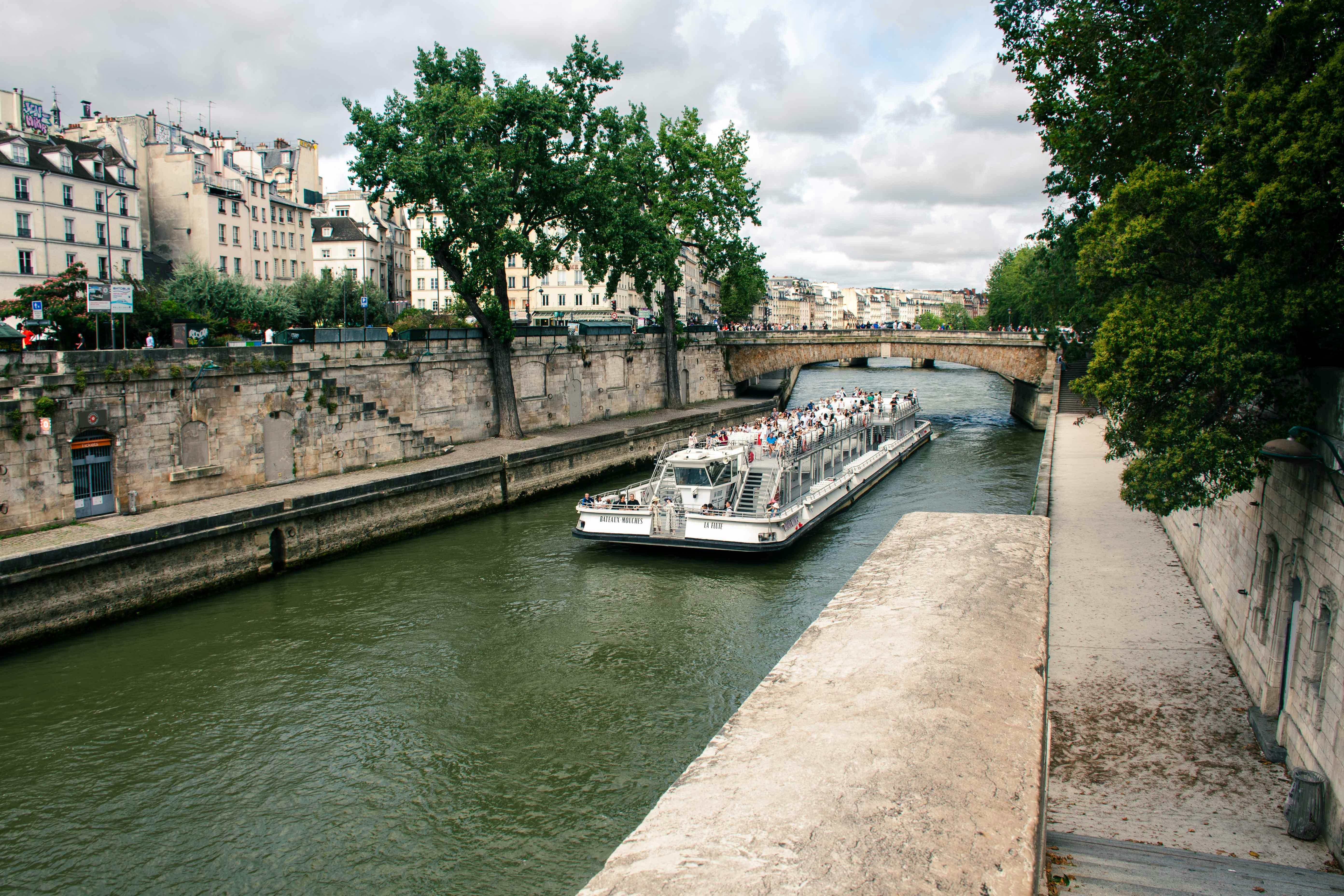
Seine River Cruise
Croisière sur la Seine
A classic boat tour that passes the Louvre, Notre Dame, and the Eiffel Tower, providing a unique perspective from the water.
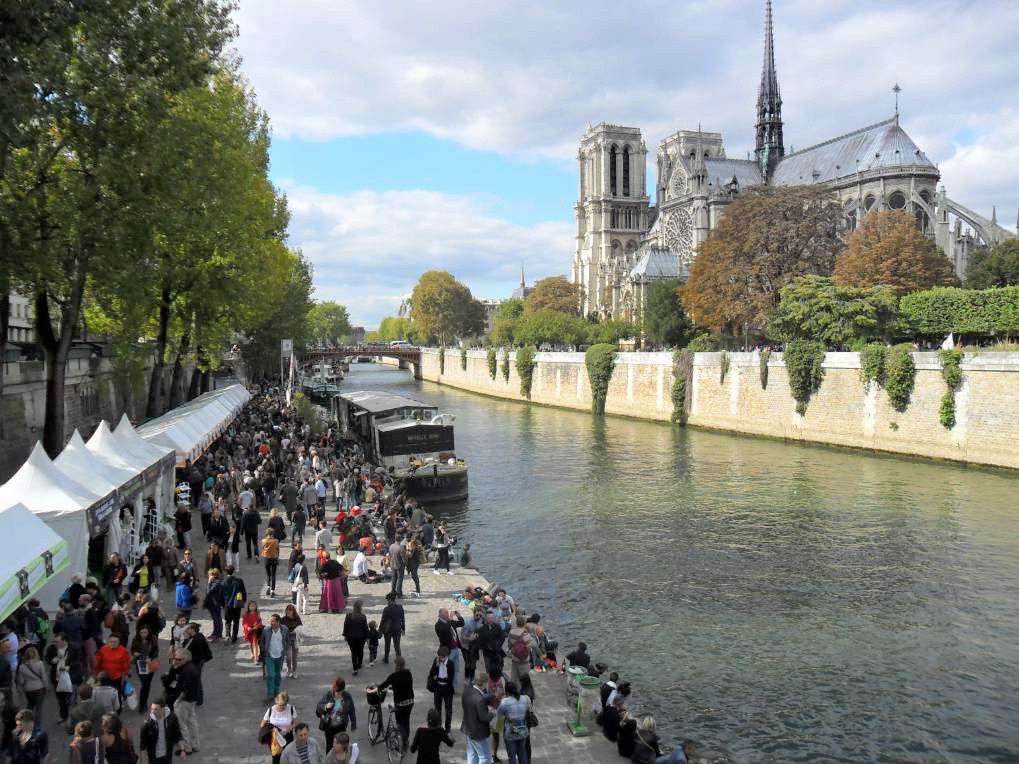
Seine Riverbanks
Berges de Seine
A UNESCO World Heritage site consisting of pedestrianized paths that offer the ultimate space for Parisian 'flânerie' and picnicking.
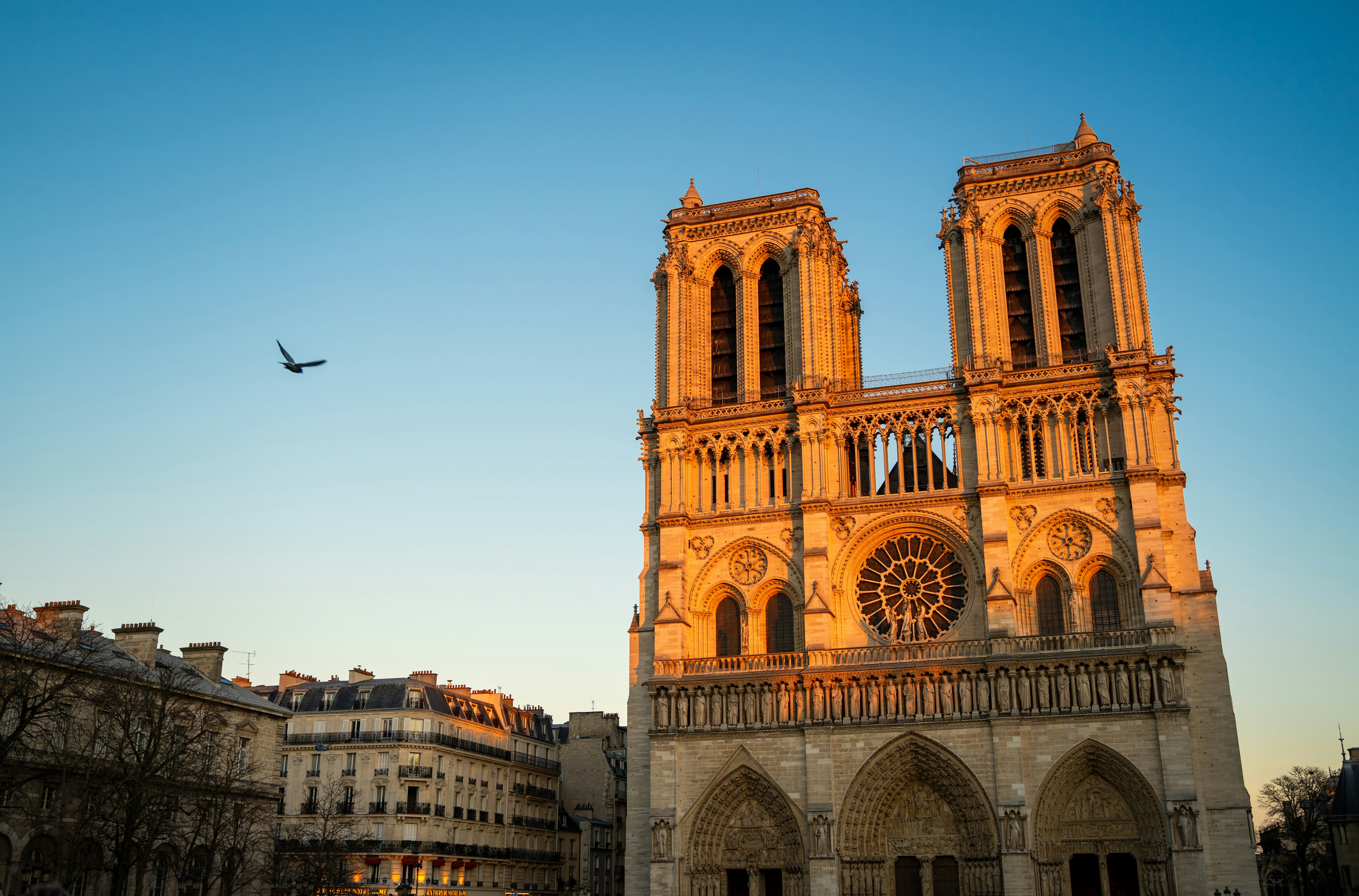
Notre-Dame Cathedral
Cathédrale Notre-Dame
A masterpiece of French Gothic architecture and the literal heart of the city (Point Zero).
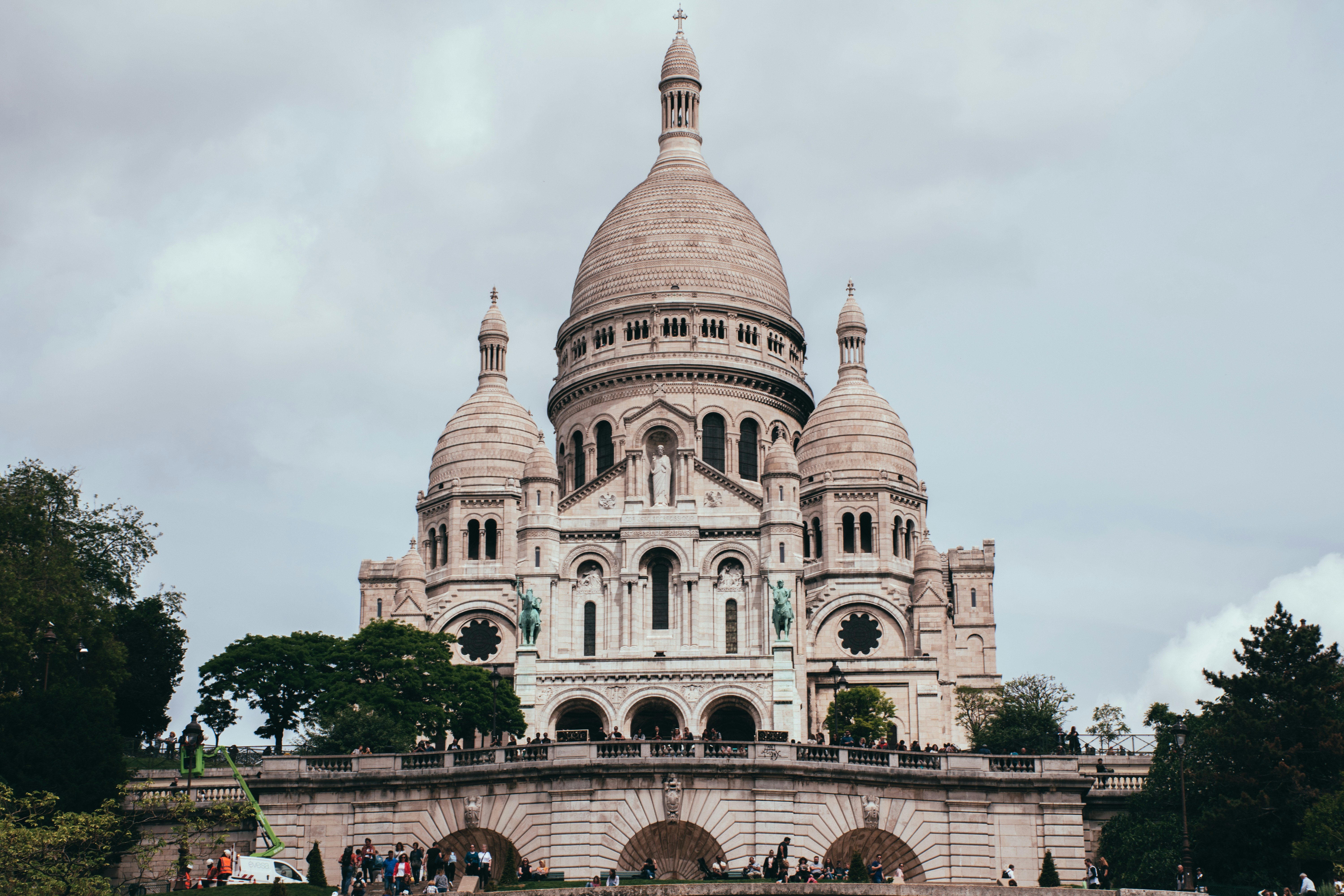
Sacré-Cœur Basilica
Basilique du Sacré-Cœur
A white-domed Romano-Byzantine basilica sitting at the highest point in Paris, offering unrivaled views of the entire city.
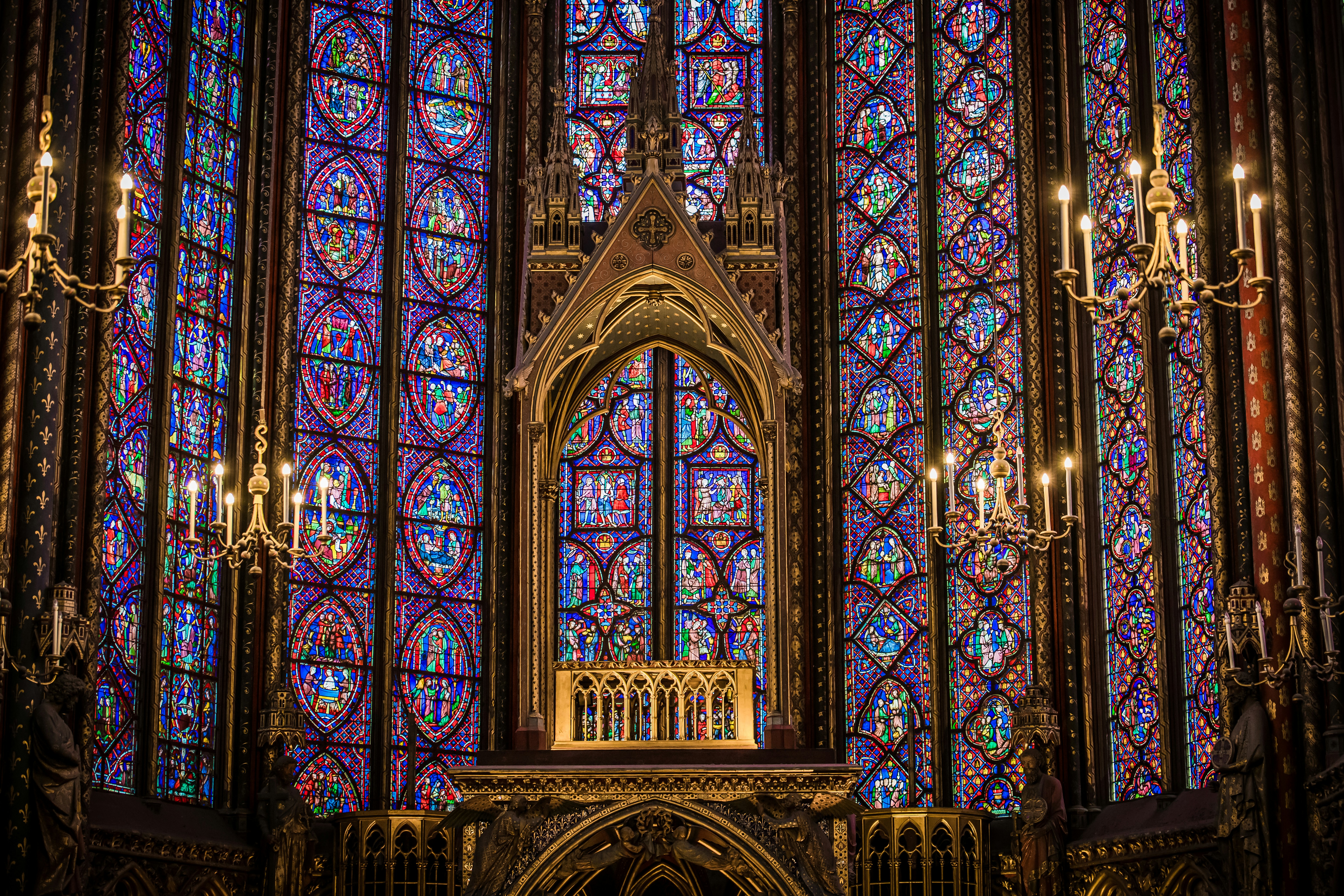
Sainte-Chapelle
A 13th-century royal chapel containing some of the most spectacular stained glass windows in the world.
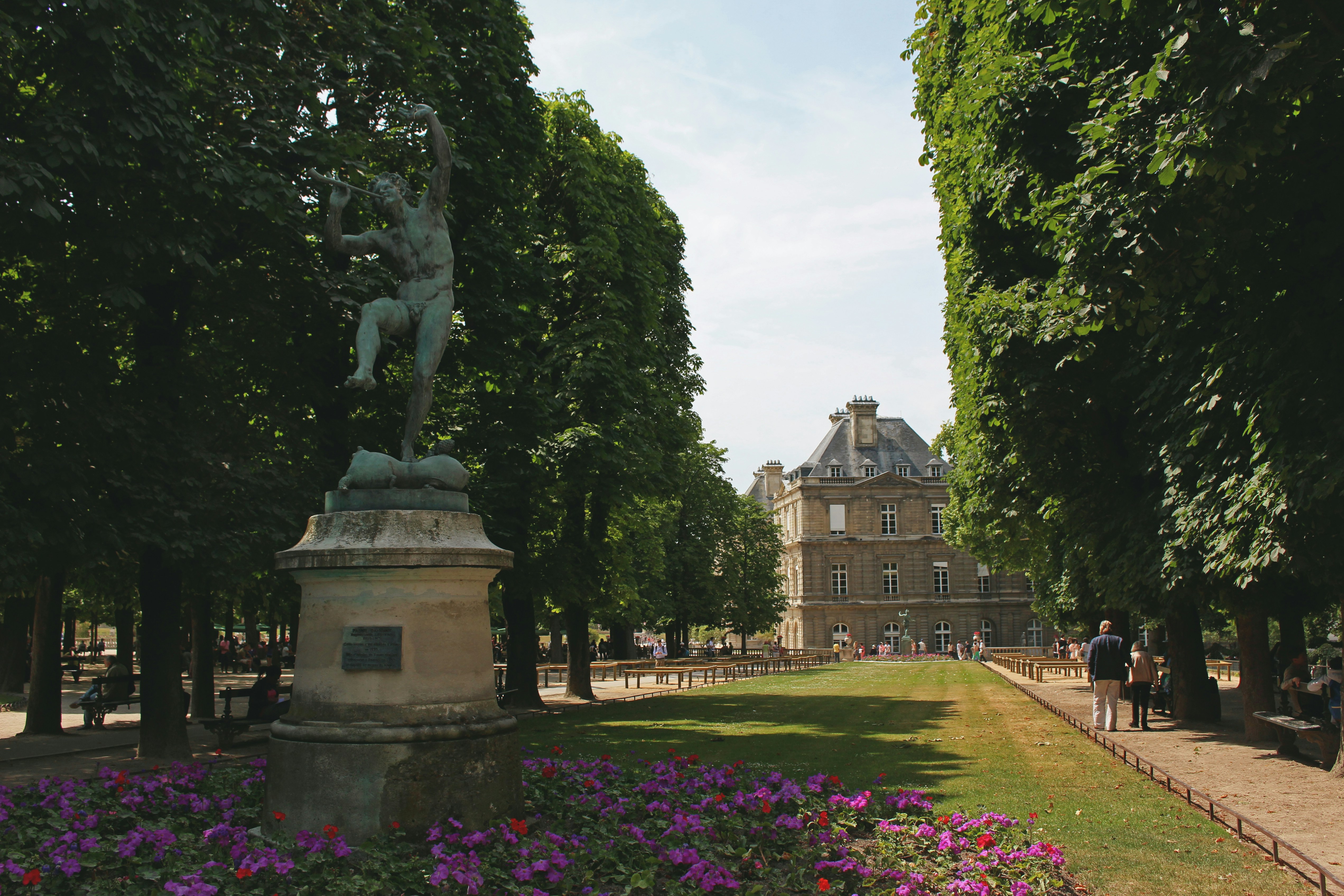
Luxembourg Gardens
Jardin du Luxembourg
The crown jewel of Left Bank parks, featuring French formal gardens, a palace, and the iconic green metal chairs.
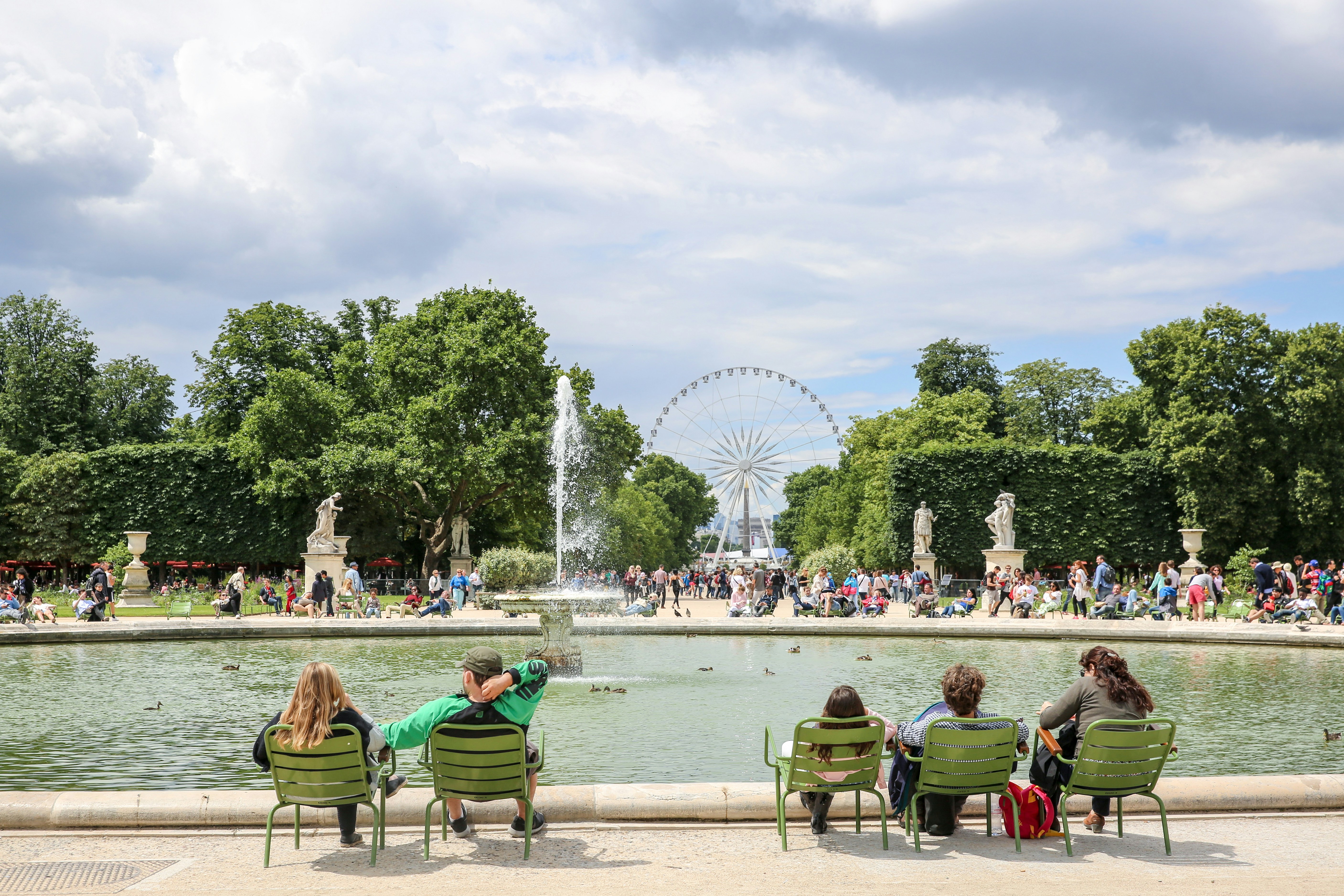
Tuileries Garden
Jardin des Tuileries
The manicured royal garden connecting the Louvre to the Place de la Concorde, famous for its gravel paths and sculptures.
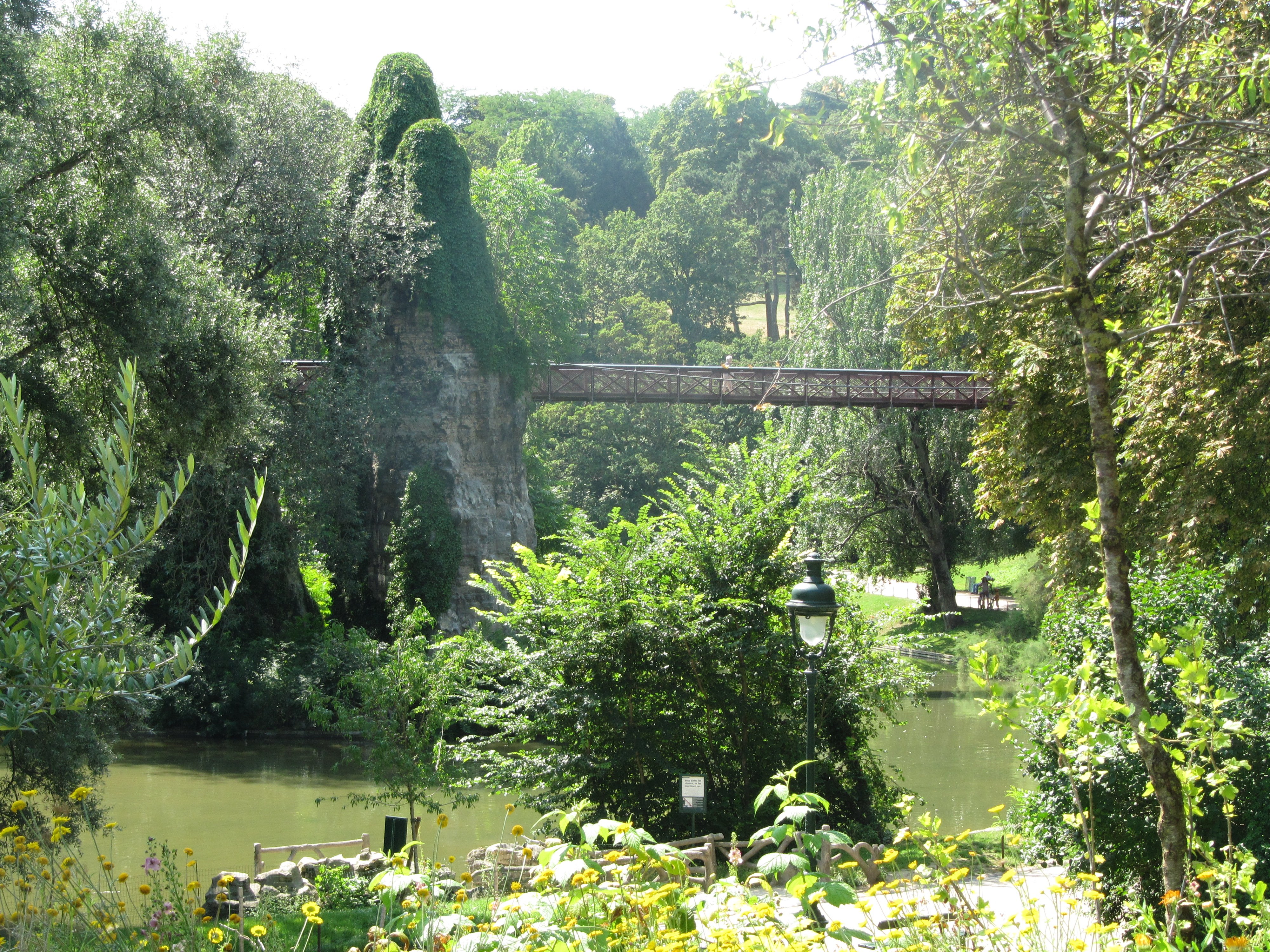
Buttes-Chaumont
Parc des Buttes-Chaumont
A hilly, rugged park in the 19th arrondissement featuring a suspension bridge, a waterfall, and a cliff-top temple.
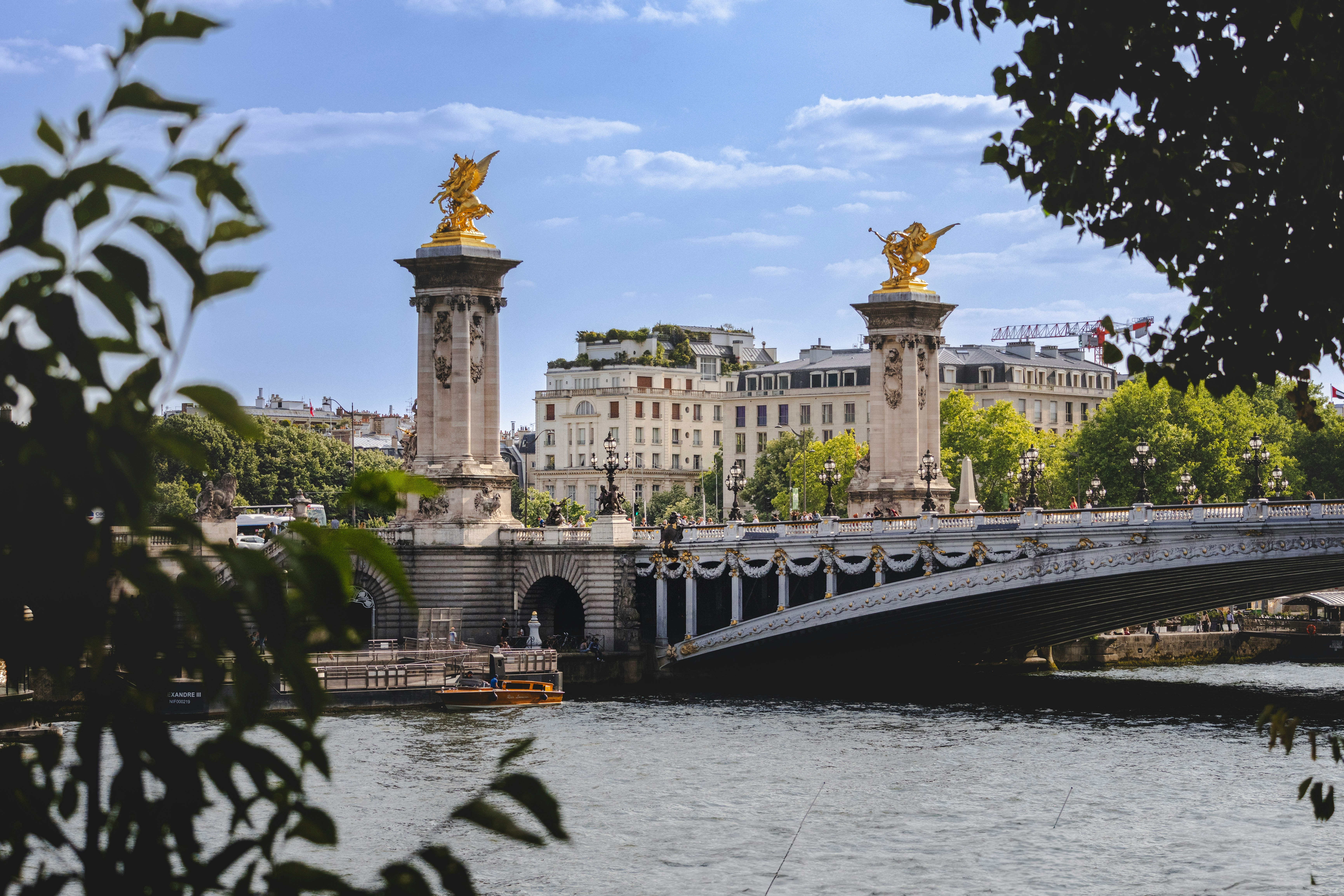
Pont Alexandre III
The most ornate bridge in Paris, decorated with Art Nouveau lamps, cherubs, and gold-leaf statues of winged horses.
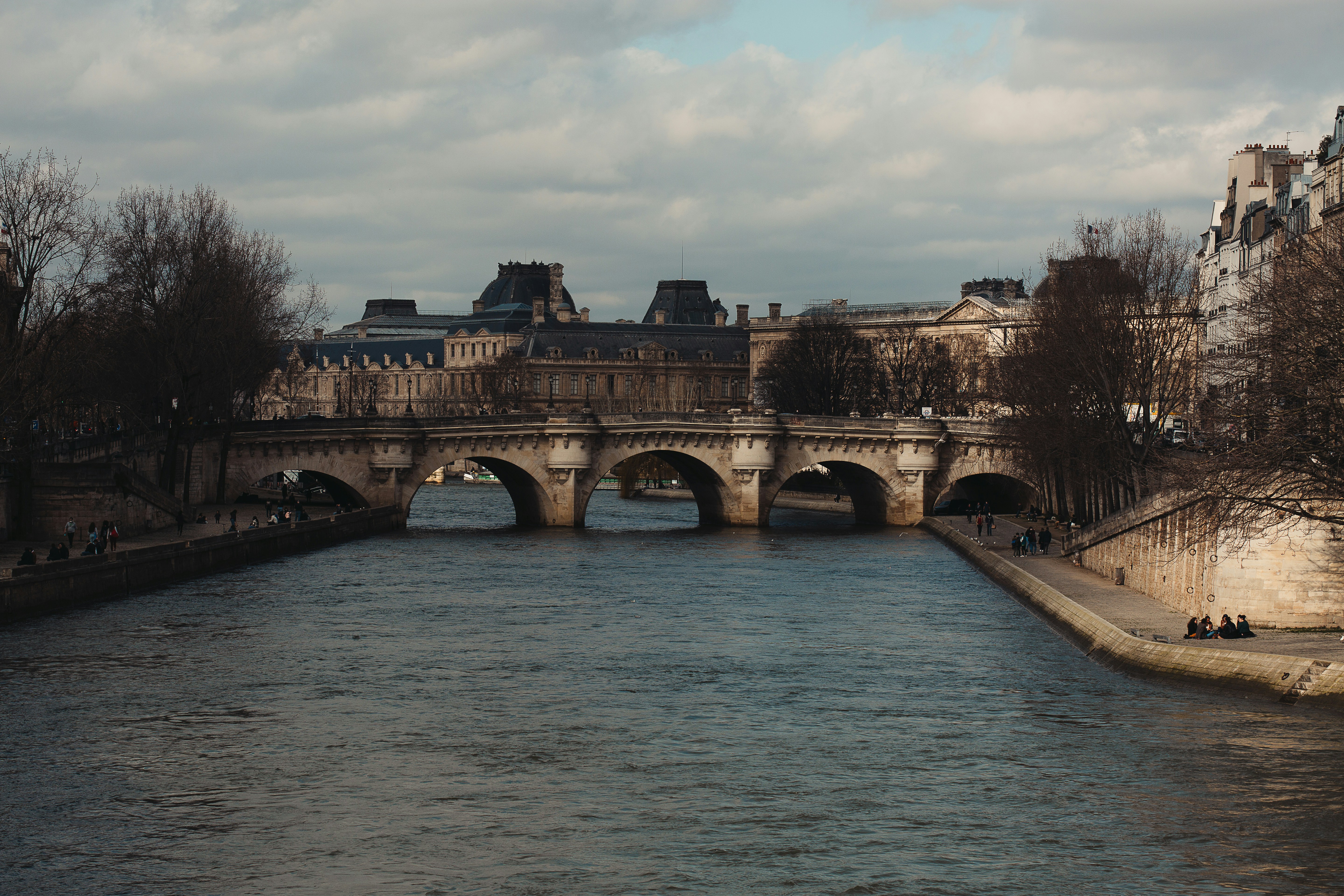
Pont Neuf
Despite the name (New Bridge), it is actually the oldest standing bridge across the Seine, famous for its curved stone 'bastions.'
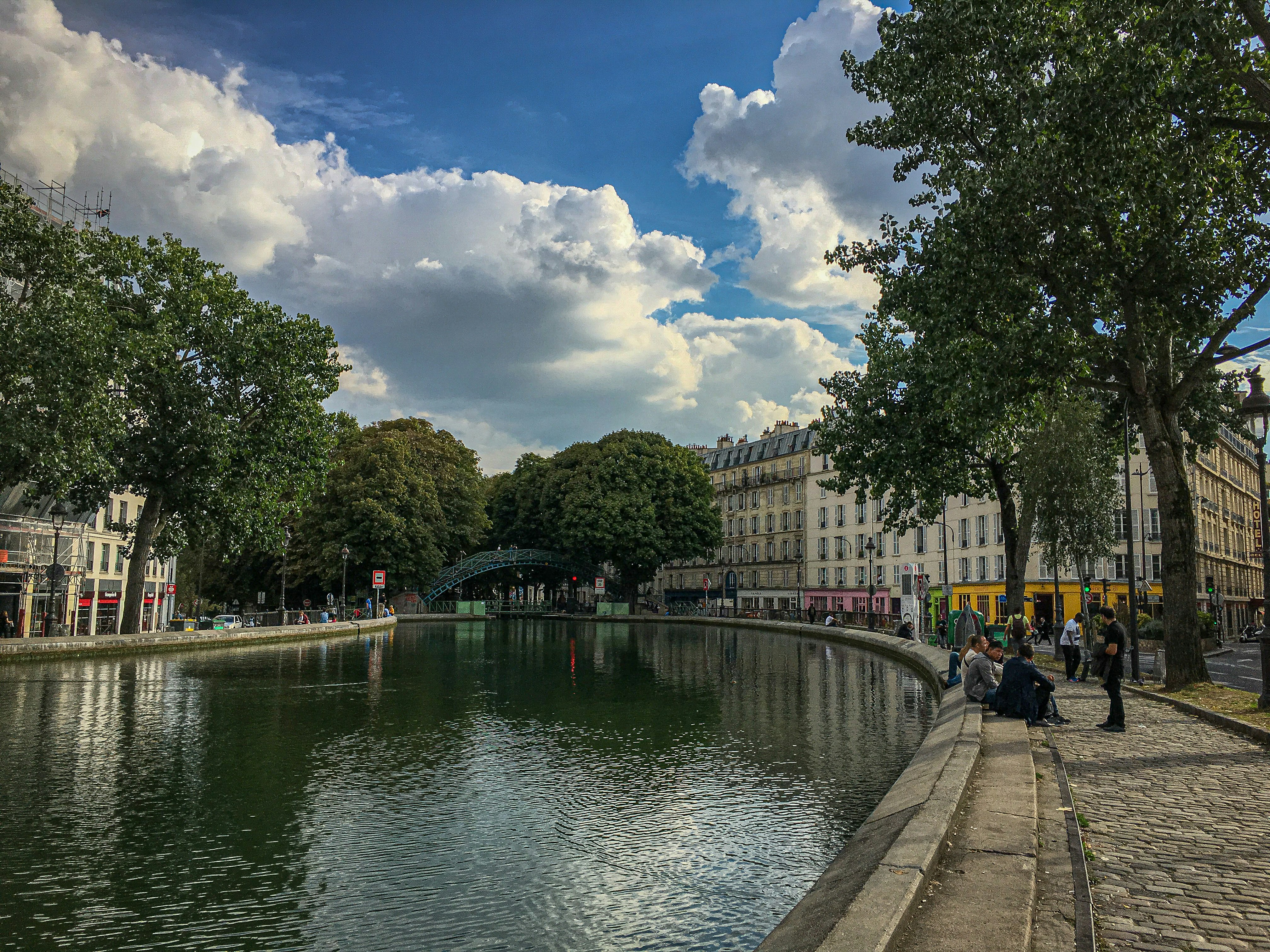
Canal Saint-Martin
A 4.5km waterway lined with iron footbridges and trendy boutiques, serving as the heart of East Paris nightlife.
🎒Travel Essentials for Paris
Curated gear recommended by locals to make your trip smoother.
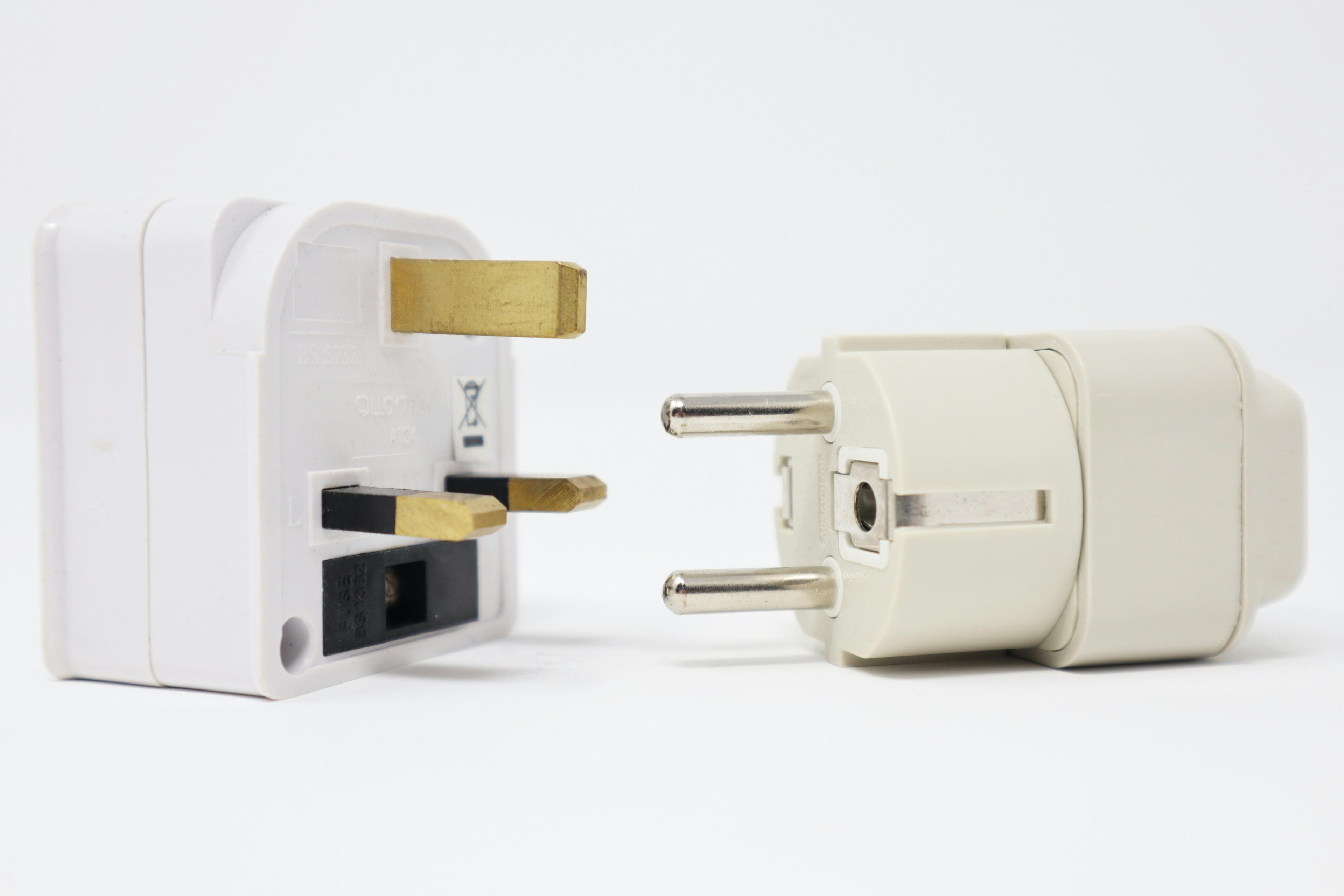
European Travel Adapter (Type E)
Why you need it:French plugs are Type E (two round pins with a grounding pin). You need this adapter.
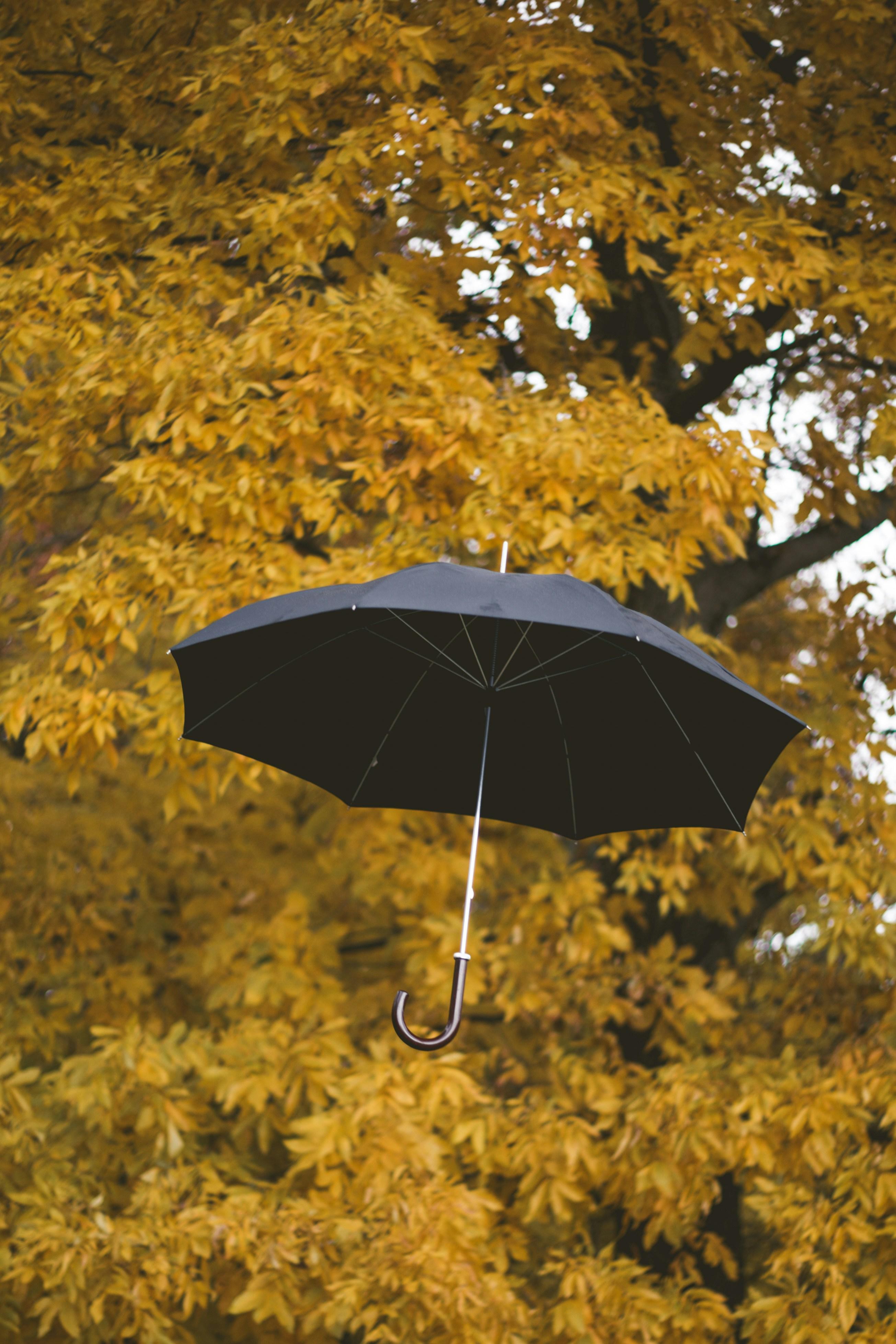
Compact Travel Umbrella
Why you need it:Paris weather is unpredictable. A small umbrella fits in your bag and saves you from sudden rain.

Comfortable Walking Shoes
Why you need it:Paris is a walking city. You will clock 15k+ steps. Heels are for dinner only.
As an Amazon Associate, we earn from qualifying purchases.•Prices and availability subject to change.•Smart routing detects your region for the best shopping experience.
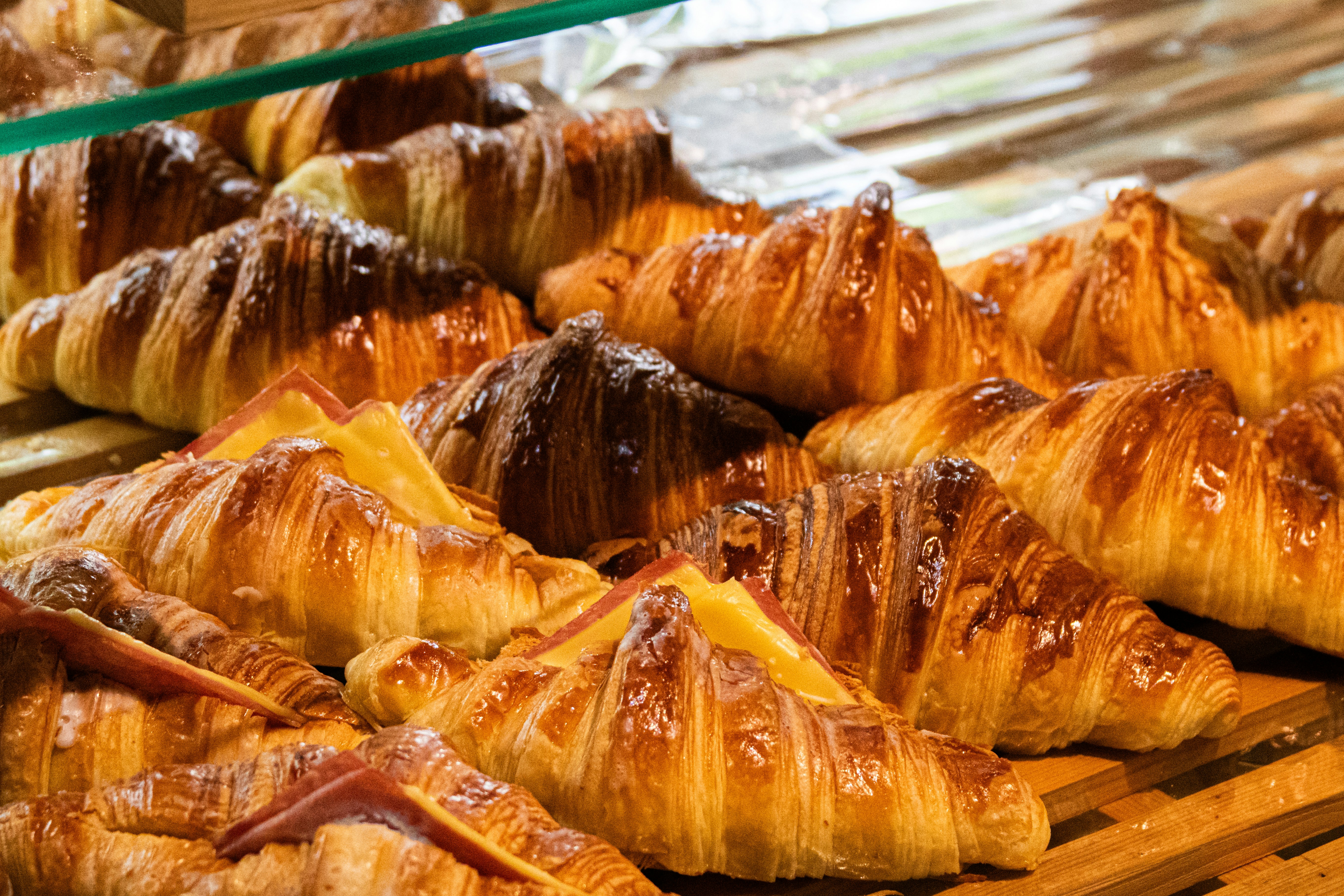
The Butter Croissant
Croissant au Beurre
The croissant au beurre is the quintessential French breakfast staple: a crescent-shaped laminated pastry made with pure butter (not margarine), creating its characteristic golden, flaky layers. A true croissant shatters when you bite it, releasing buttery steam. Straight croissants are 'ordinaire' (margarine), curved croissants are 'au beurre' (butter)—always choose curved. Best eaten warm from the bakery within hours of baking.
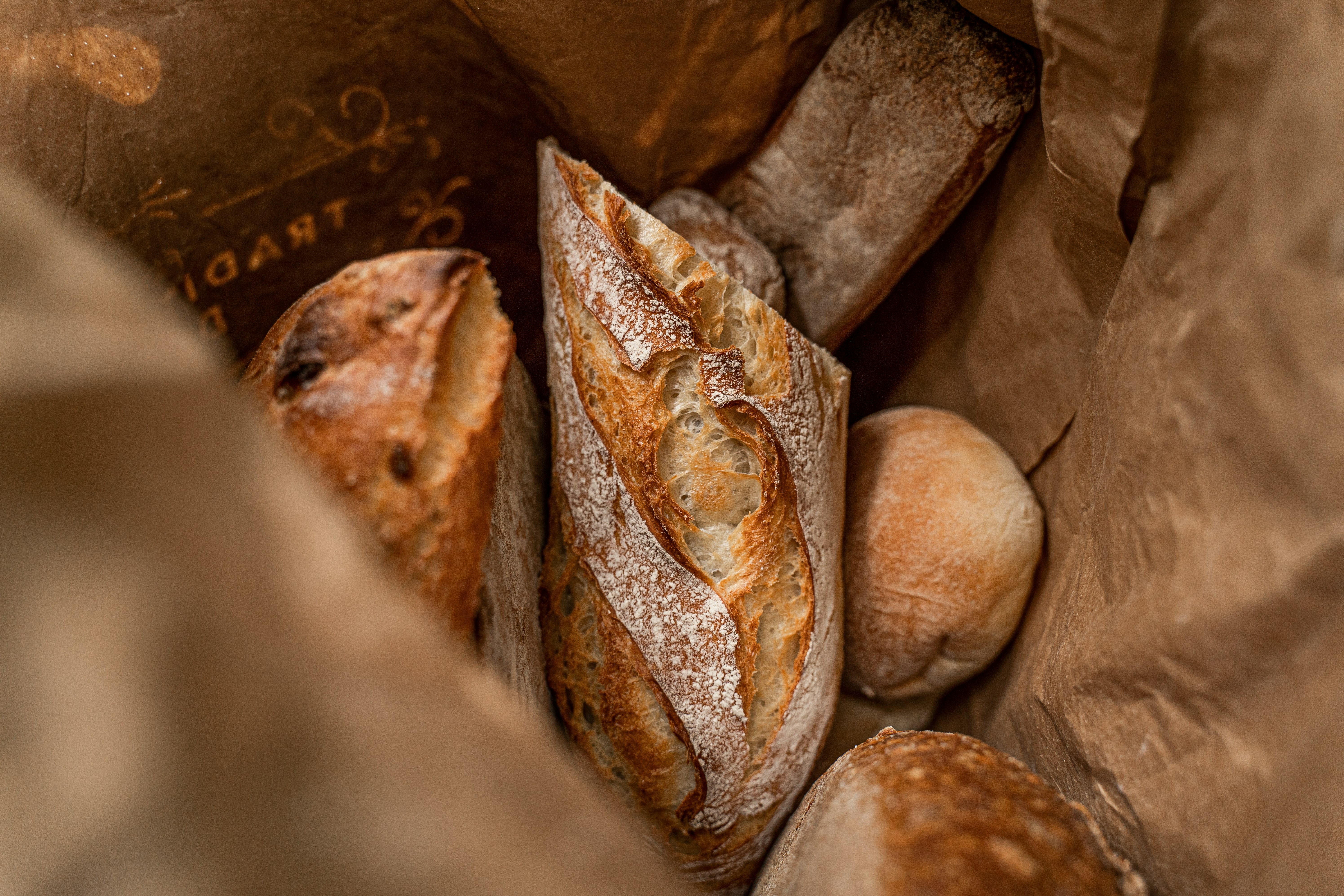
The Baguette
La Baguette Tradition
The baguette tradition is a long, thin loaf with a golden, crackly crust and a soft, airy interior with irregular holes. 'Tradition' means it's made by law with only four ingredients (flour, water, salt, yeast) and no additives—superior to regular baguettes. Locals buy them twice daily (morning and evening) because they go stale within hours. The perfect baguette sounds hollow when tapped, cracks when squeezed, and has a wheaty aroma.
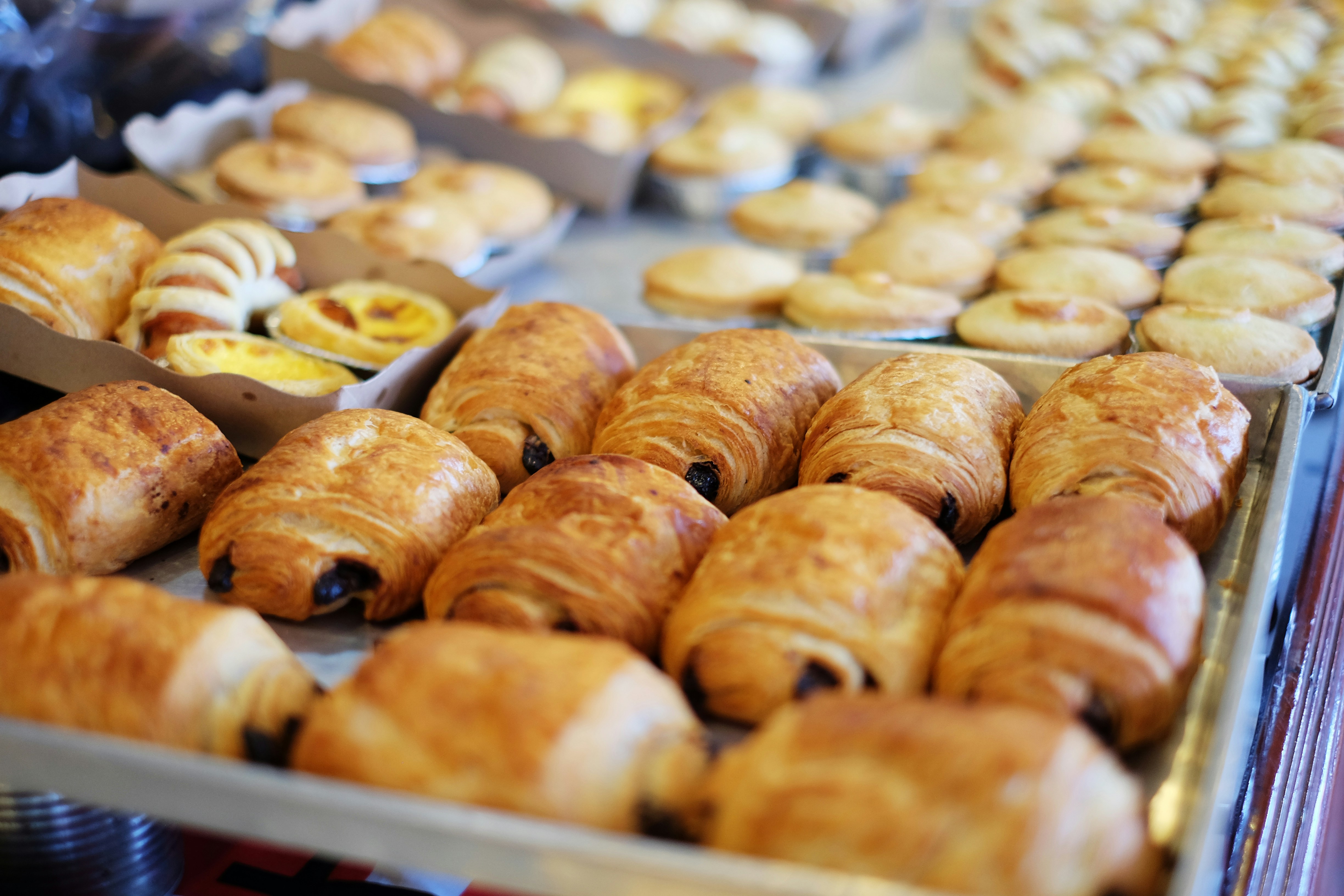
Pain au Chocolat
Pain au Chocolat / Chocolatine
Pain au chocolat is a rectangular croissant dough pastry with two sticks of dark chocolate baked inside. The dough is the same laminated butter dough as croissants, but shaped differently. When pulled apart, the chocolate should be melted and gooey, the dough flaky and buttery. It's France's second most popular breakfast pastry after croissants. In southwest France, it's controversially called 'chocolatine'—a divide that sparks genuine debates.
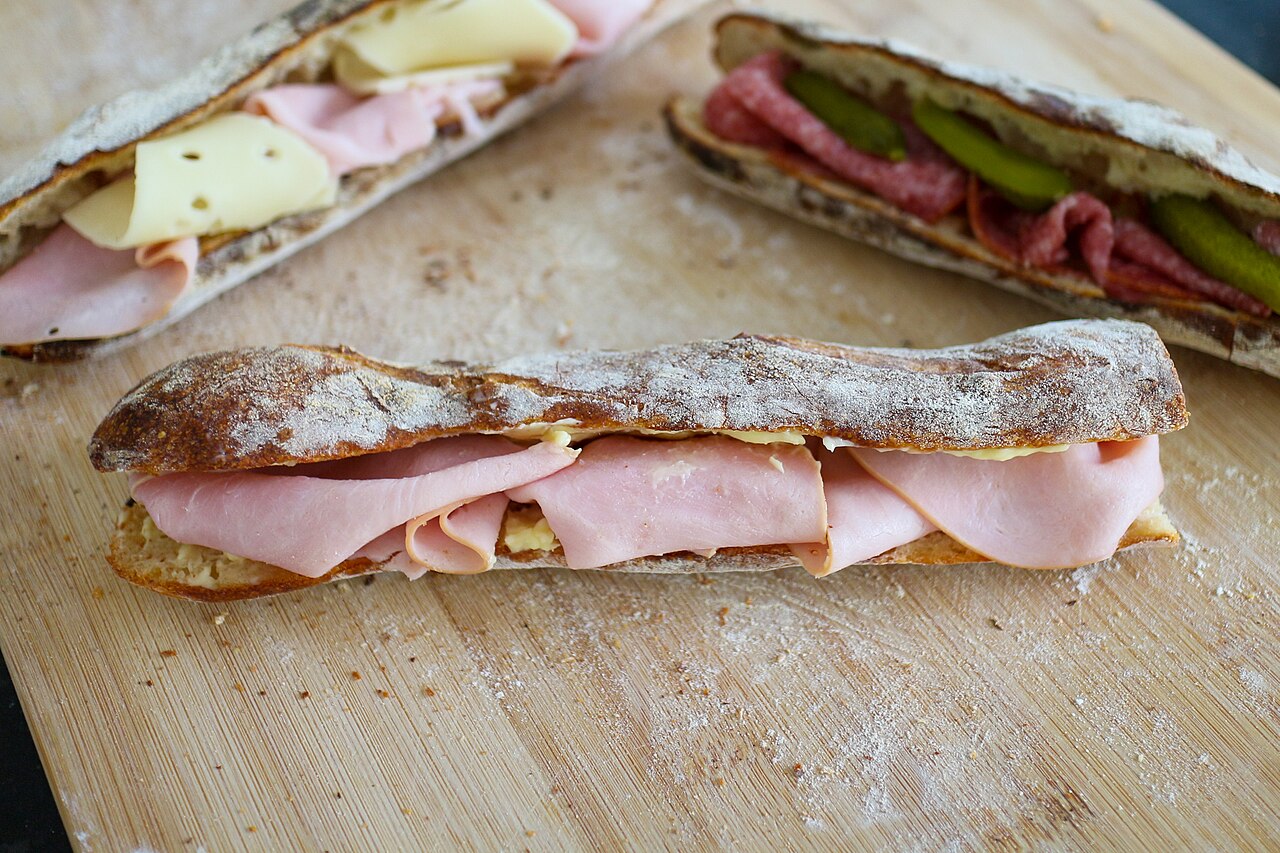
Parisian Ham Sandwich
Jambon-Beurre
The jambon-beurre is France's most popular sandwich: a baguette sliced lengthwise, spread with salted butter, filled with high-quality Paris ham (jambon de Paris—lightly cooked, tender, pink ham). That's it. No lettuce, no cheese, no condiments. The quality comes from three perfect ingredients. Over 1 billion are sold annually in France. It's the true Parisian lunch, eaten on park benches, at desks, on the go.
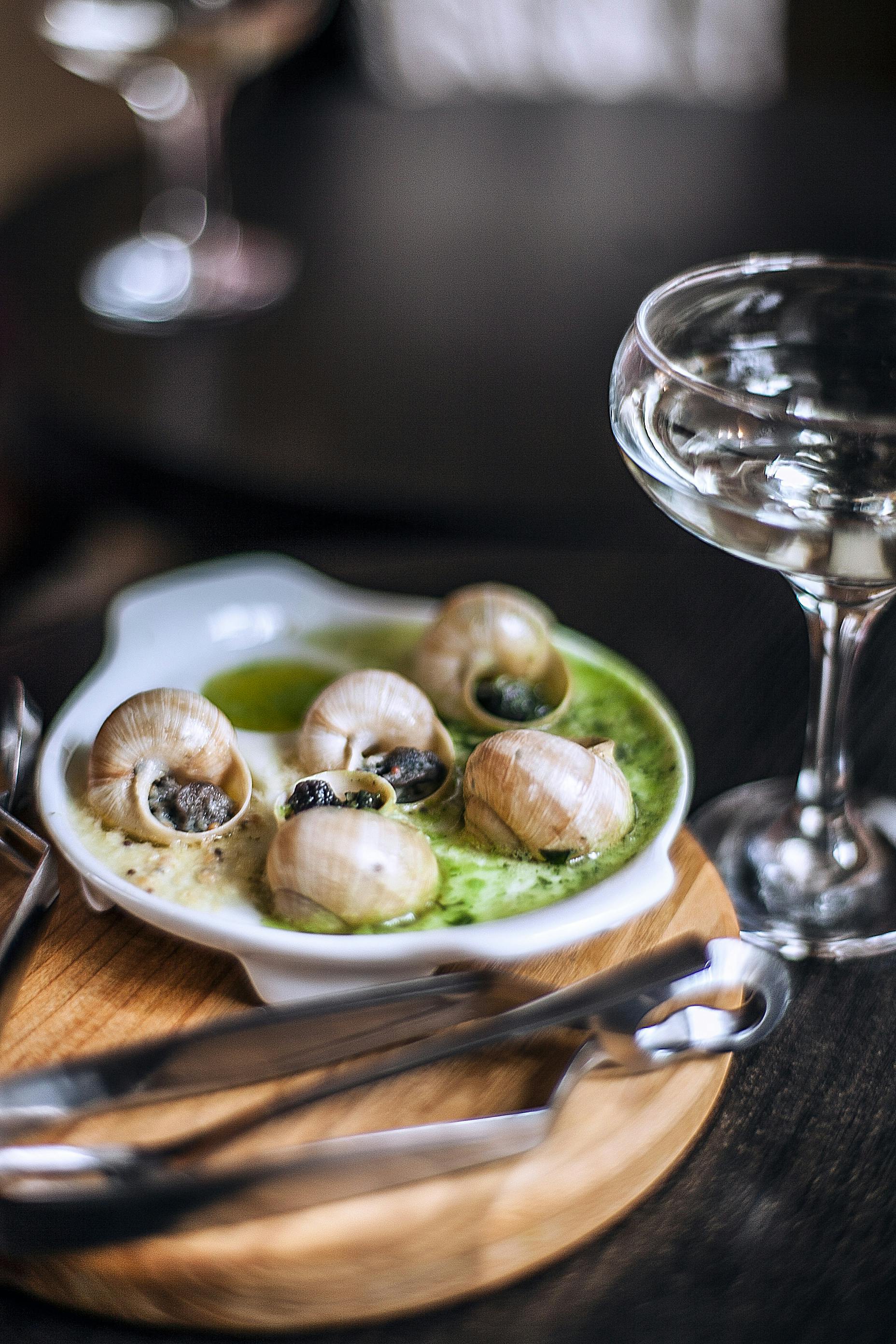
Escargots de Bourgogne
Escargots
Escargots are land snails (Burgundy snails) baked in their shells with garlic-parsley butter (beurre d'escargot). Served as a starter (6 or 12 snails) in traditional brasseries. You use a special fork and tongs to extract the snail, then soak up the garlicky butter with bread. The snails themselves taste like earthy mushrooms; the butter is the star. More common at dinner than lunch.
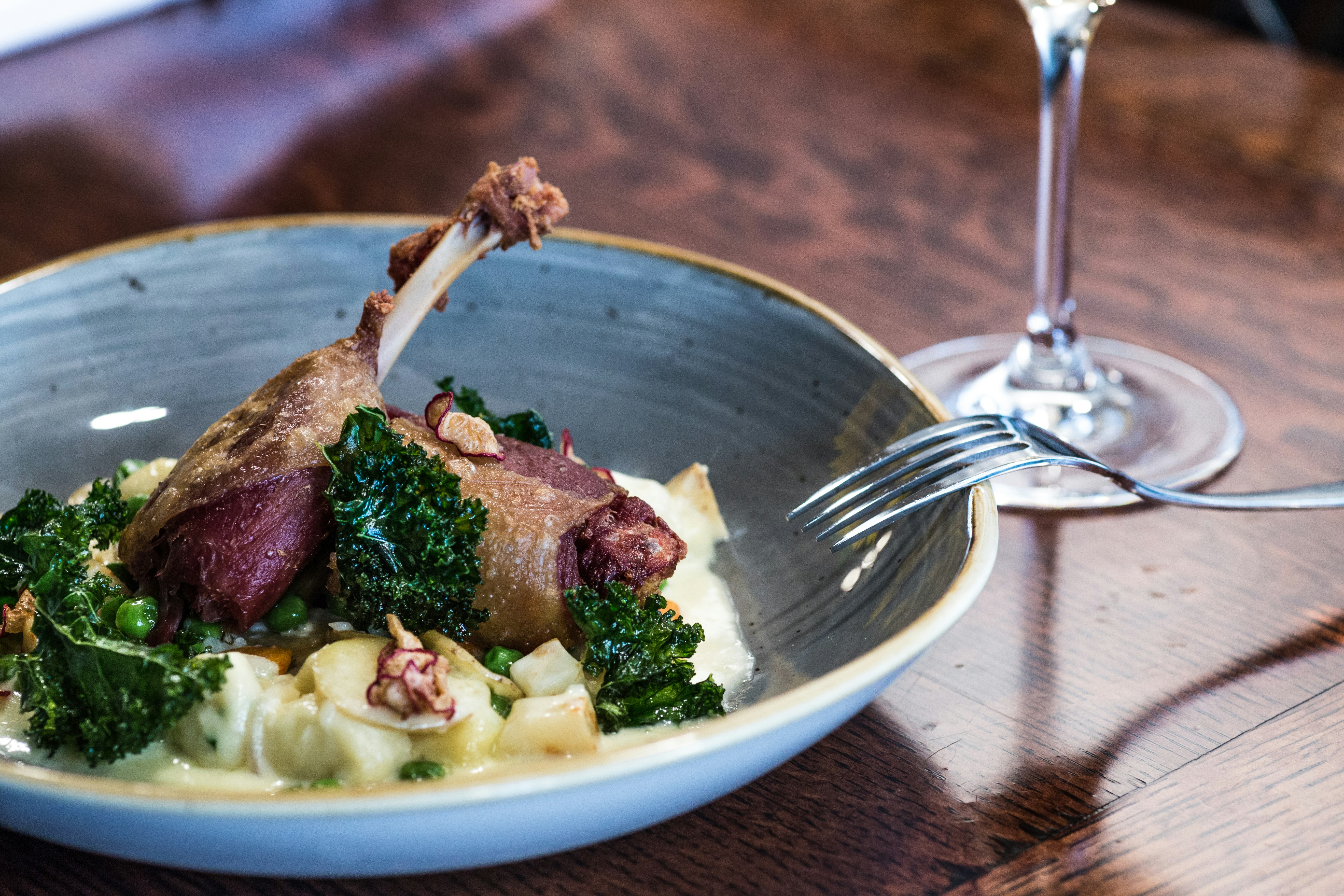
Confit de Canard
Confit de canard is duck leg slow-cooked in its own fat until the meat is fall-off-the-bone tender and the skin is crispy. It's a preservation technique from southwest France. The duck is salted, aged, then submerged in fat and cooked slowly for hours. Served as a main course with potatoes cooked in duck fat (pommes sarladaises) or green salad. The meat is rich, savory, and deeply flavorful.
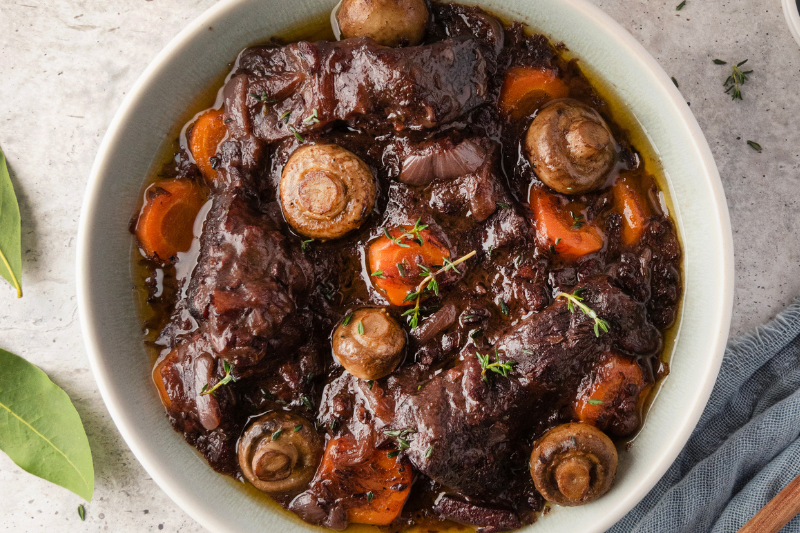
Boeuf Bourguignon
Bœuf Bourguignon
Boeuf bourguignon is beef braised in red wine (traditionally Burgundy wine) with carrots, onions, mushrooms, and lardons (bacon). The beef (usually chuck or brisket) is cooked for 2-3 hours until tender and the wine reduces into a rich, velvety sauce. It's a rustic bistro classic, often served with mashed potatoes or egg noodles. Best eaten in colder months as a hearty, warming meal.
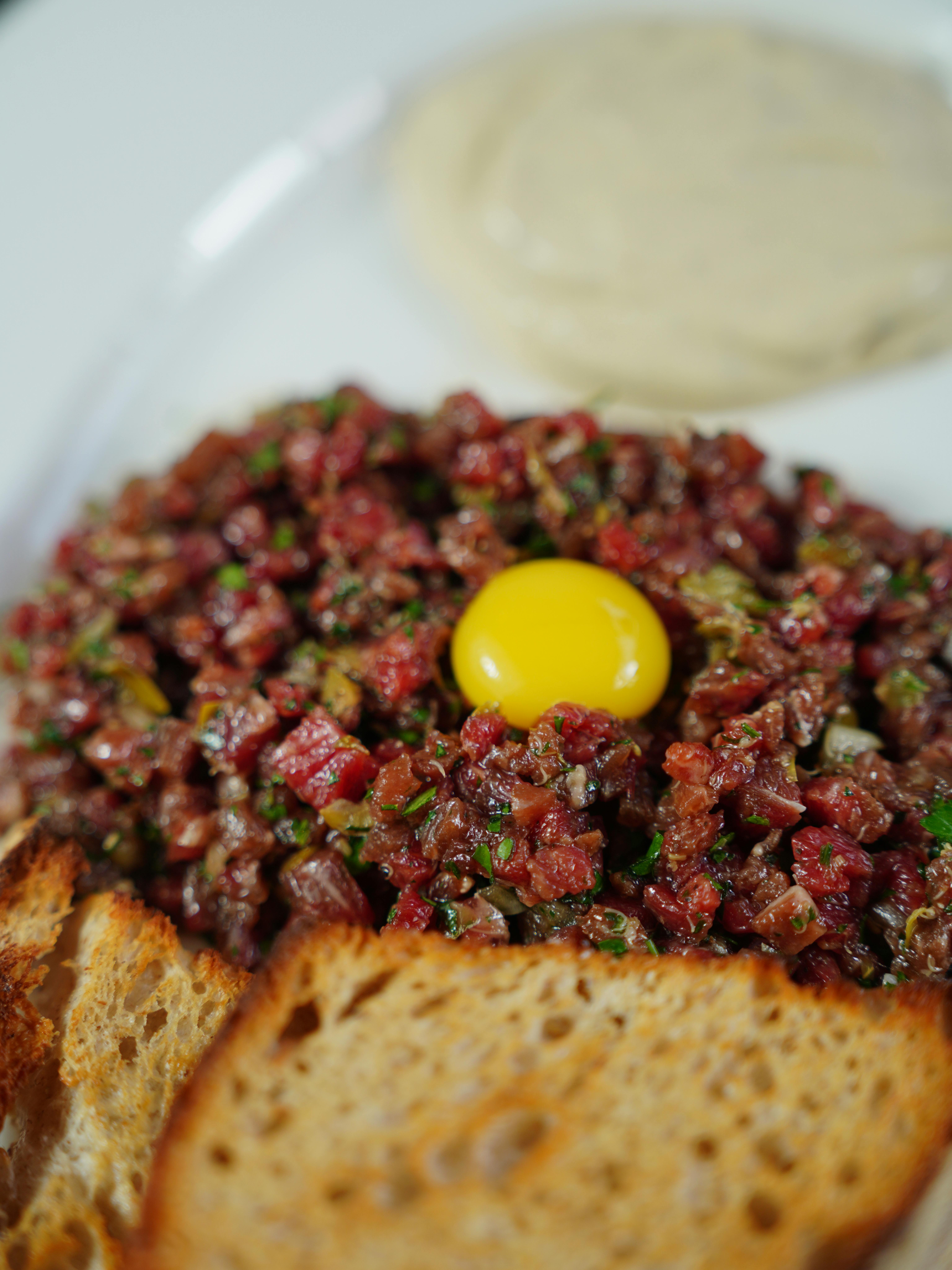
Steak Tartare
Steak tartare is raw minced beef (usually high-quality sirloin or filet) seasoned with capers, onions, Worcestershire sauce, Dijon mustard, and a raw egg yolk on top. It's served cold with fries (frites) or salad. Some restaurants prepare it tableside, others serve it pre-mixed. You mix the egg yolk into the meat yourself. It's rich, savory, and surprisingly delicate. Trust the beef quality—good restaurants use fresh, high-grade meat.
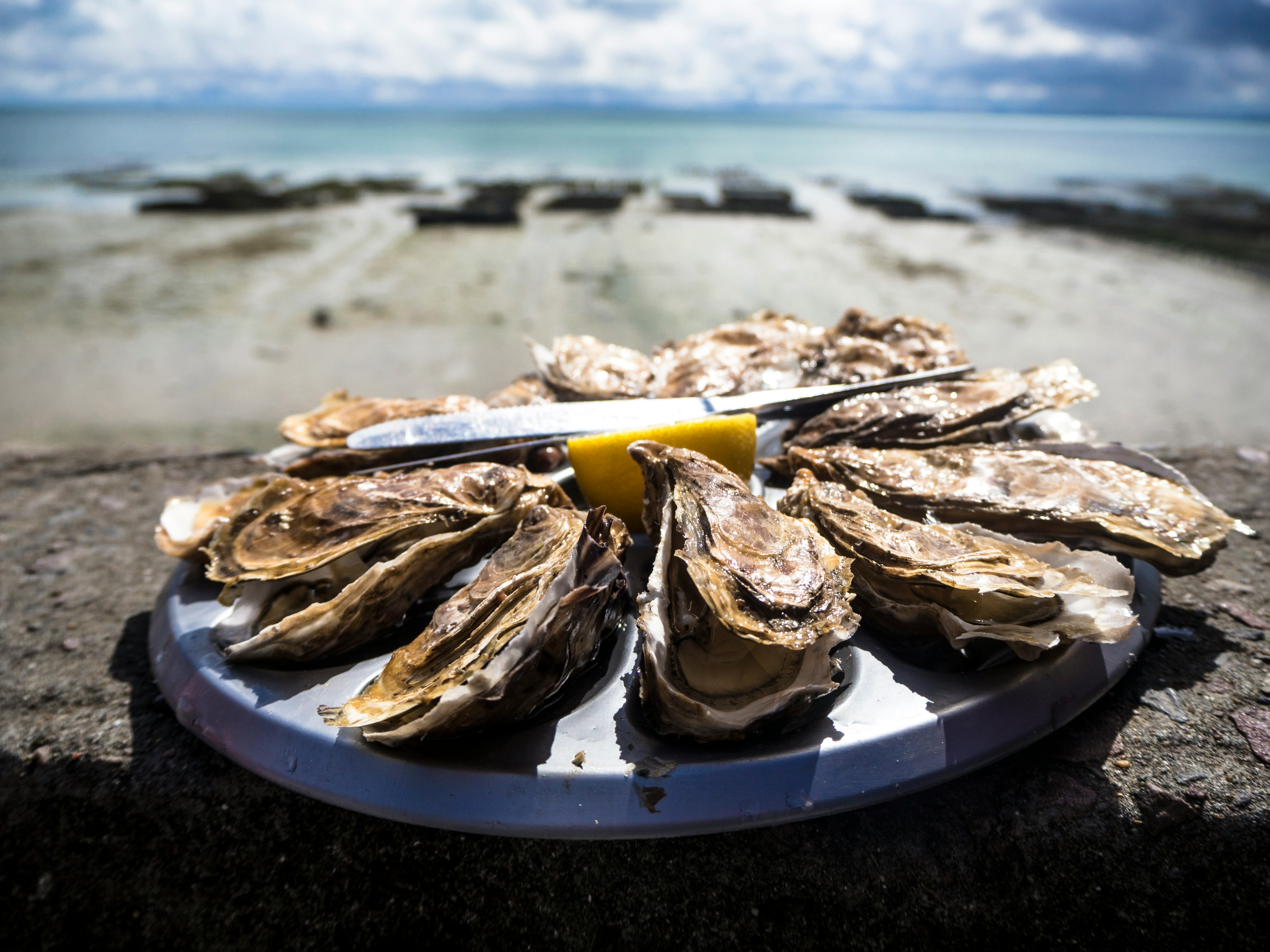
Oysters & Seafood
Huîtres et Fruits de Mer
French oysters (huîtres) are served raw on ice with lemon, shallot vinegar, or mignonette sauce. Eaten straight from the shell, slurped down in one go. Sizes range from 0 (largest) to 5 (smallest)—beginners should start with 3 or 4. Oysters are the star of 'plateau de fruits de mer' (seafood platters) which include clams, whelks, prawns, crab, and langoustines on ice. Best season is months with 'R' (September-April).
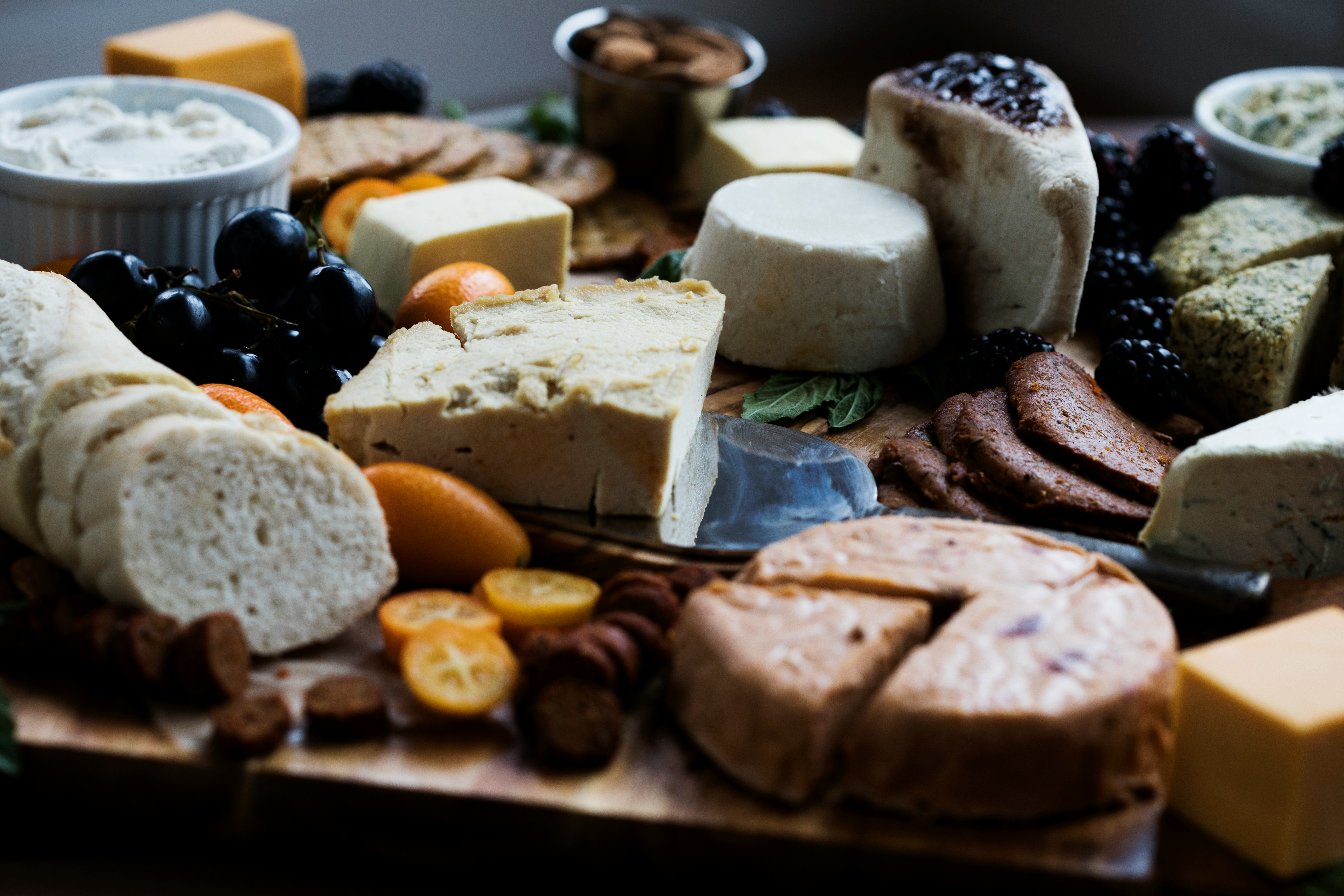
Cheese & Charcuterie Board
Planche Mixte
A planche mixte (mixed board) features regional French cheeses (Camembert, Brie, Comté, Roquefort, chèvre) and charcuterie (dried sausages, pâté, rillettes, prosciutto). Served as a shared appetizer or pre-dinner apéro with wine. Cheese is eaten with bread, never crackers. It's the perfect introduction to French cheese culture without committing to the full cheese course. Meant to be shared, eaten slowly with conversation.
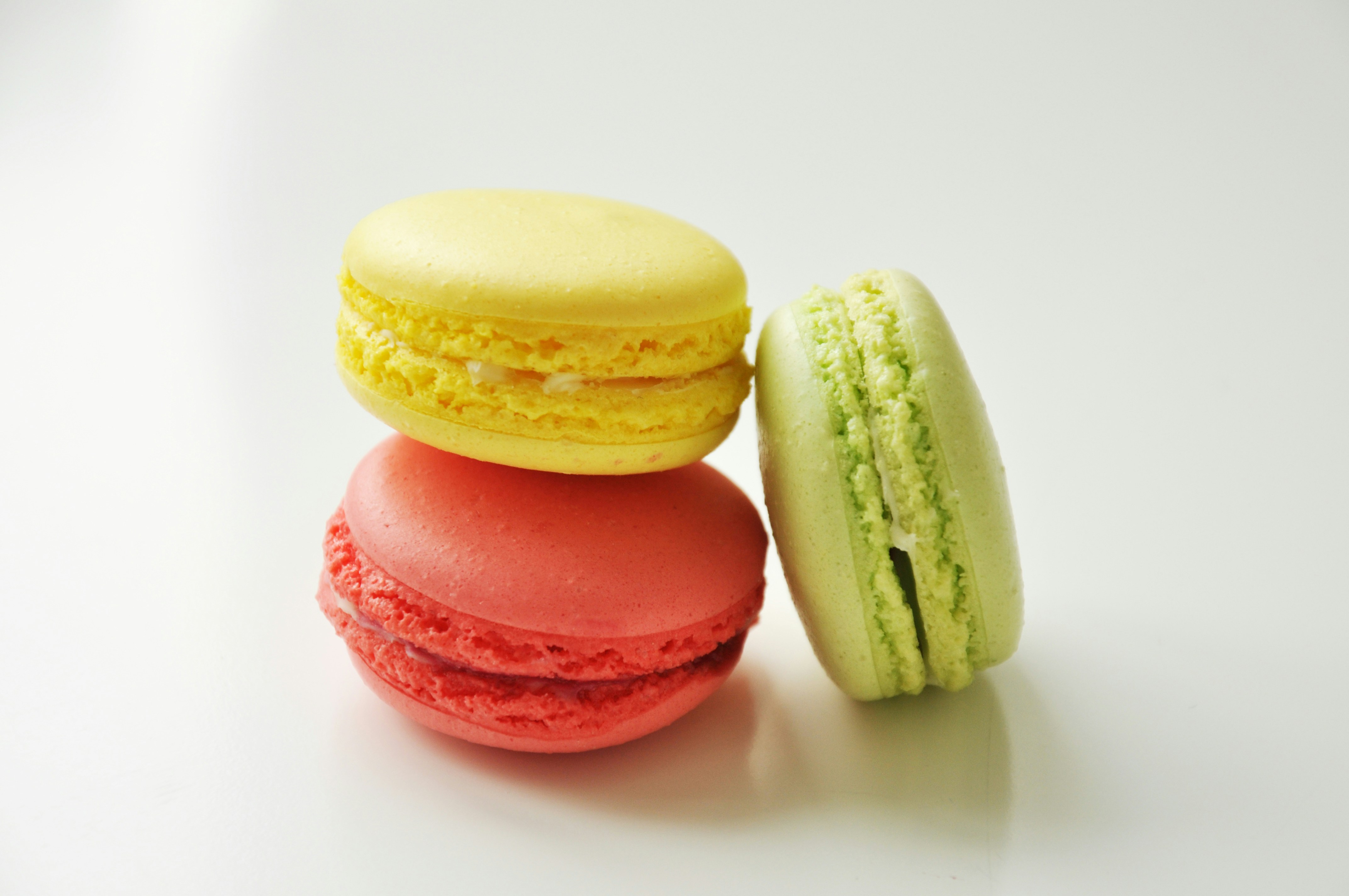
The Macaron
Macaron
The macaron is a delicate almond-based meringue cookie sandwich: two crisp-chewy shells with smooth ganache, buttercream, or jam filling. Not to be confused with coconut macaroons (American). Perfect macarons have a smooth, shiny shell, crisp exterior, chewy interior, and 'feet' (ruffled base). Flavors range from classic (vanilla, chocolate, pistachio) to seasonal (rose, salted caramel, yuzu). They're expensive (€2-3 each) but iconic.
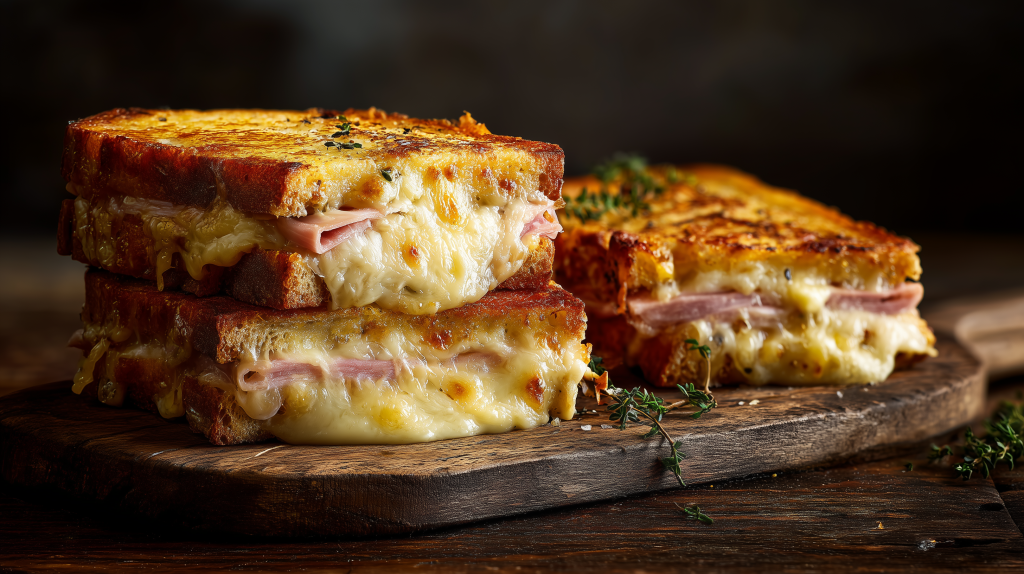
Croque-Monsieur
The croque-monsieur is France's ultimate comfort food: a hot sandwich made with ham and Gruyère cheese between toasted bread, topped with béchamel sauce and more grated cheese, then grilled until bubbling and golden. It's rich, gooey, and decadent. Add a fried egg on top to make it a 'croque-madame.' Served in cafés and bistros as a lunch or casual dinner. Eaten with a knife and fork, not hands.
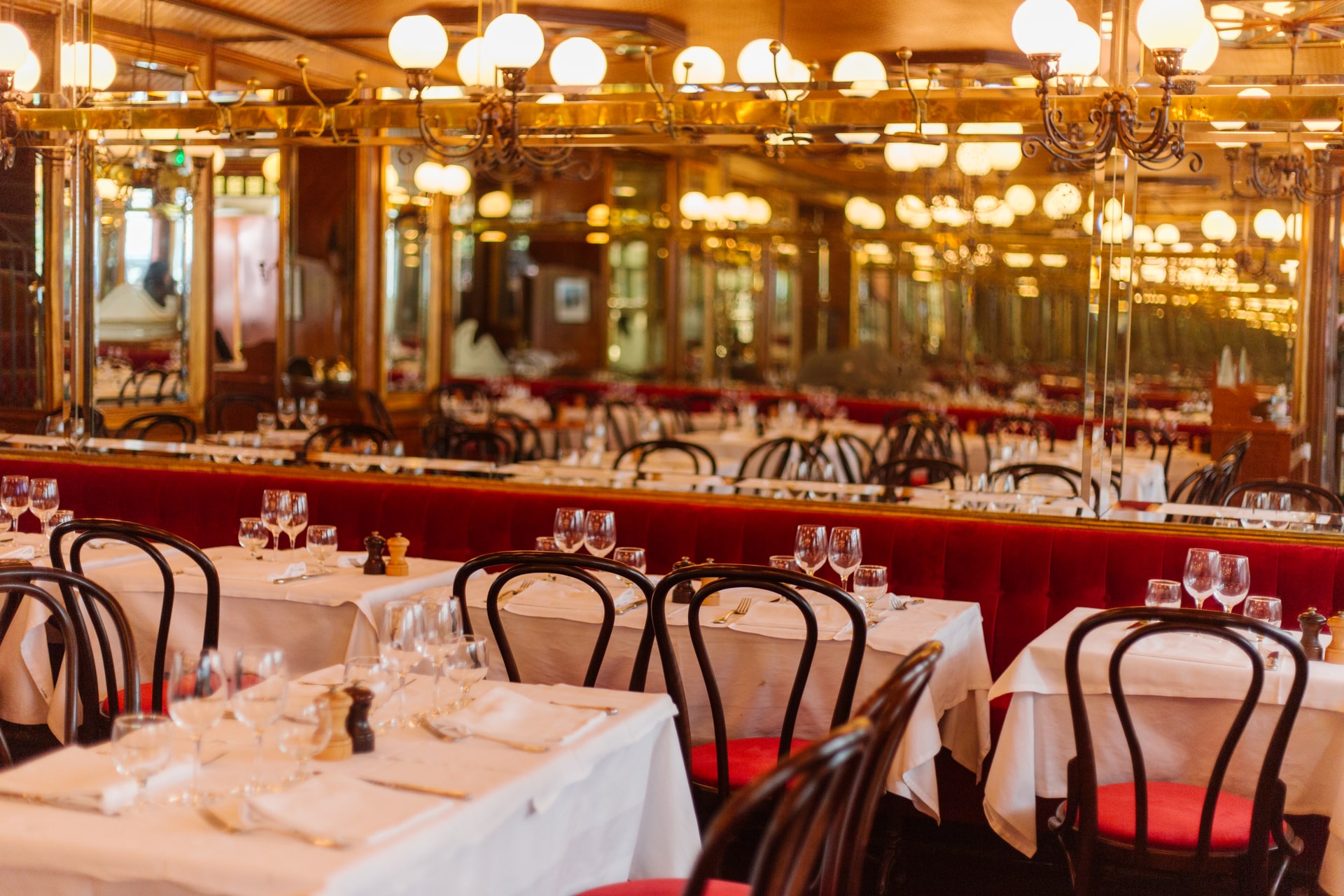
The Paris Bistro
Le Bistrot
The Paris bistro is a cultural institution: small, casual restaurants with zinc-topped bars, bentwood chairs, chalkboard menus, and handwritten daily specials. They serve classic French comfort food (boeuf bourguignon, pot-au-feu, confit de canard, steak-frites) in a convivial atmosphere. Service is fast and efficient, not chatty. Bistros are neighborhood anchors where regulars eat weekly. It's not gourmet—it's honest, well-executed French cooking at fair prices.
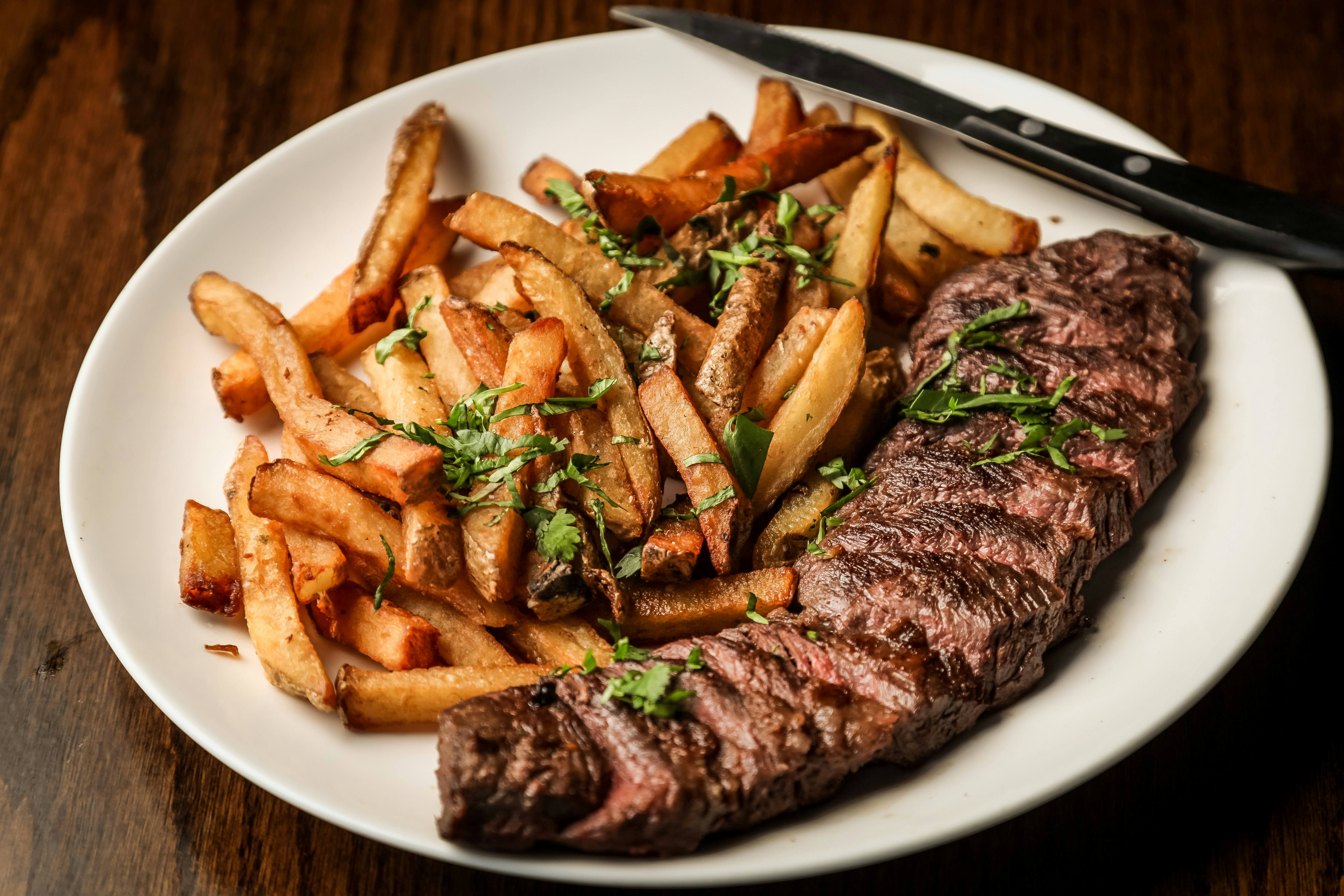
Steak-Frites
Steak-frites is the quintessential French bistro dish: a seared steak (usually sirloin, entrecôte, or bavette) served with crisp, thin French fries and a choice of sauce (béarnaise, pepper sauce, or herb butter). The steak is cooked rare to medium-rare ('saignant' or 'à point'). Fries are golden, crispy outside and fluffy inside. Simple but executed perfectly—the test of a good bistro. Always served with green salad on the side.
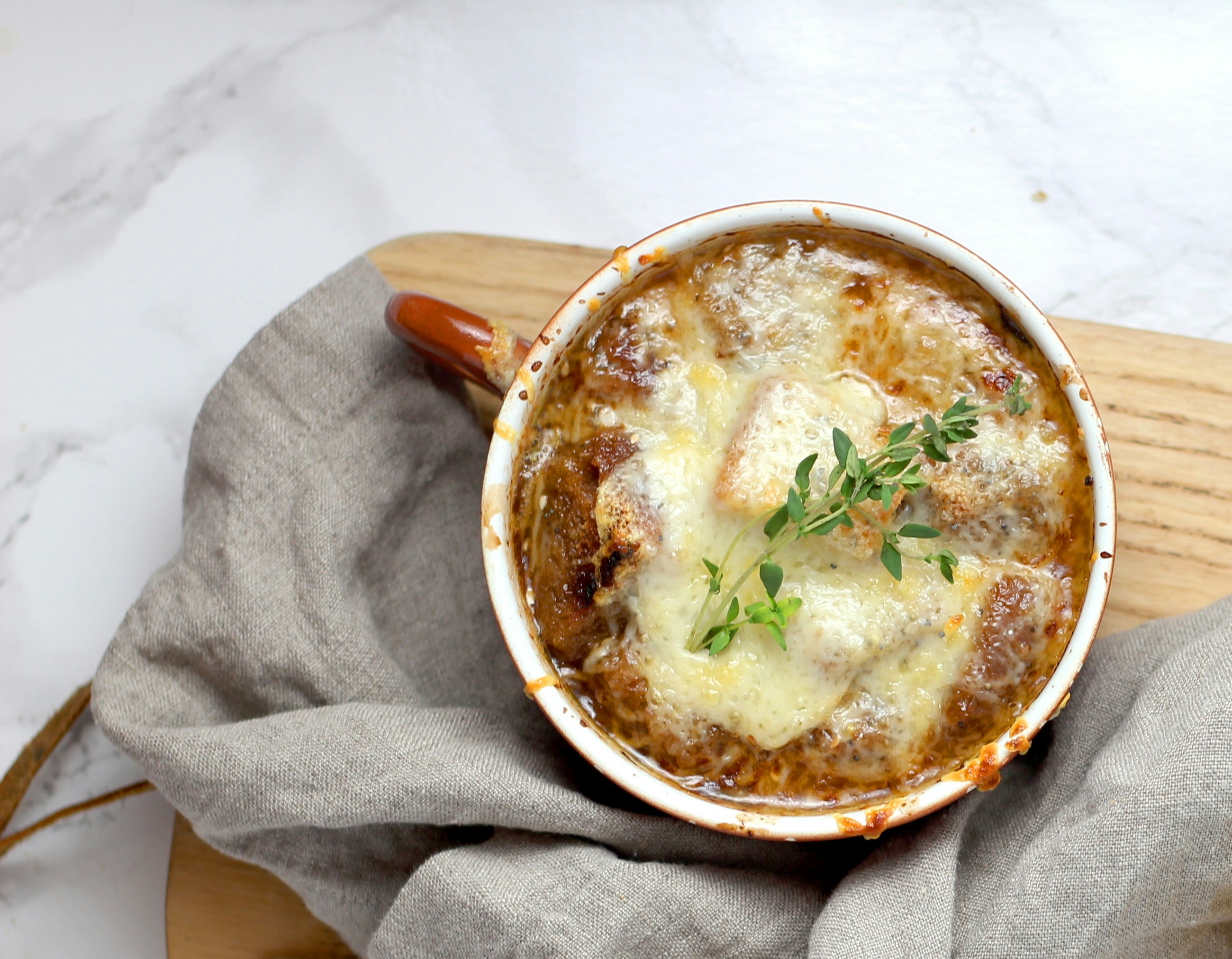
French Onion Soup
Soupe à l'Oignon
French onion soup is a deeply caramelized onion broth (beef or chicken stock) topped with a thick slice of toasted bread and a generous layer of melted Comté or Gruyère cheese. The onions are slowly cooked for 30-40 minutes until sweet and golden. The cheese melts over the bread, forming a gooey, stringy cap. It's warming, savory, and intensely flavorful. Often eaten late at night as post-party comfort food.
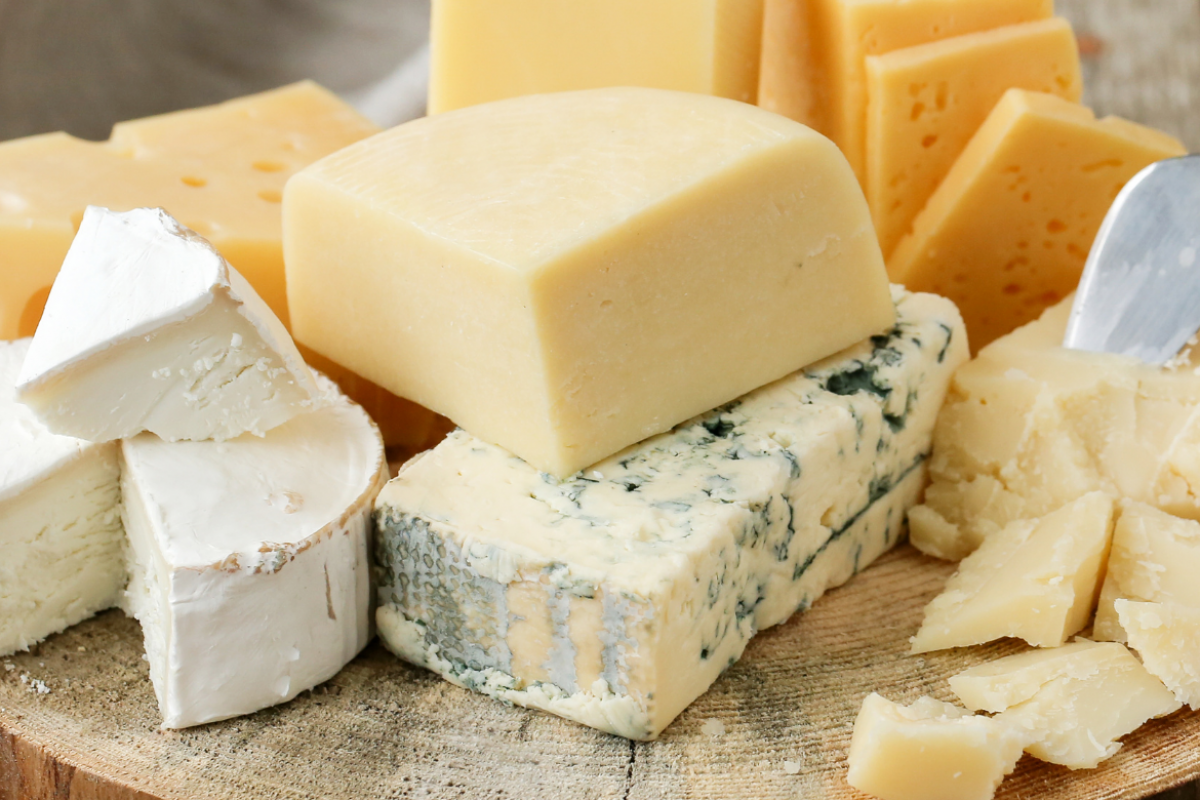
French Cheese Course
Fromage
In traditional French meals, cheese is served after the main course and before dessert—not as an appetizer. A cheese plate features 3-5 varieties representing different textures and flavors: fresh (chèvre goat cheese), soft (Brie, Camembert), hard (Comté, Beaufort), and blue (Roquefort). Eaten with bread, never crackers. The progression goes from mild to strong. It's meant to cleanse the palate and extend the wine course before dessert.
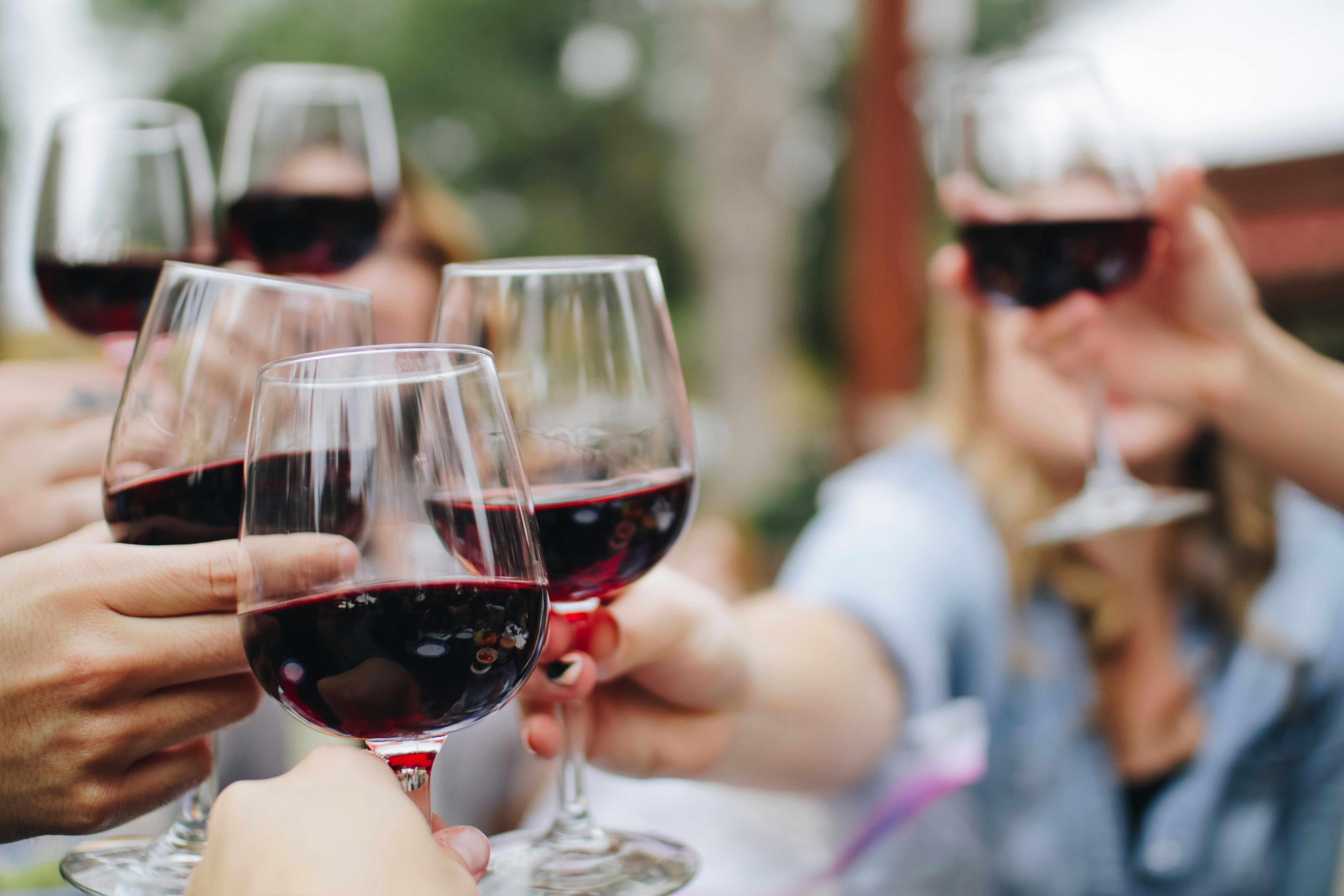
French Wine
Vin
Wine is an essential part of French meals, not an add-on. House wine ('vin de la maison') by the carafe is common, affordable (€8-15 per carafe), and often excellent quality. French wine culture emphasizes regional pairing: Loire whites, Bordeaux reds, Burgundy Pinot Noirs, Rhône blends. Paris is experiencing a massive natural wine ('vin nature') boom—minimal-intervention wines that are funky, cloudy, and trendy. Wine bars ('bars à vin') are everywhere.
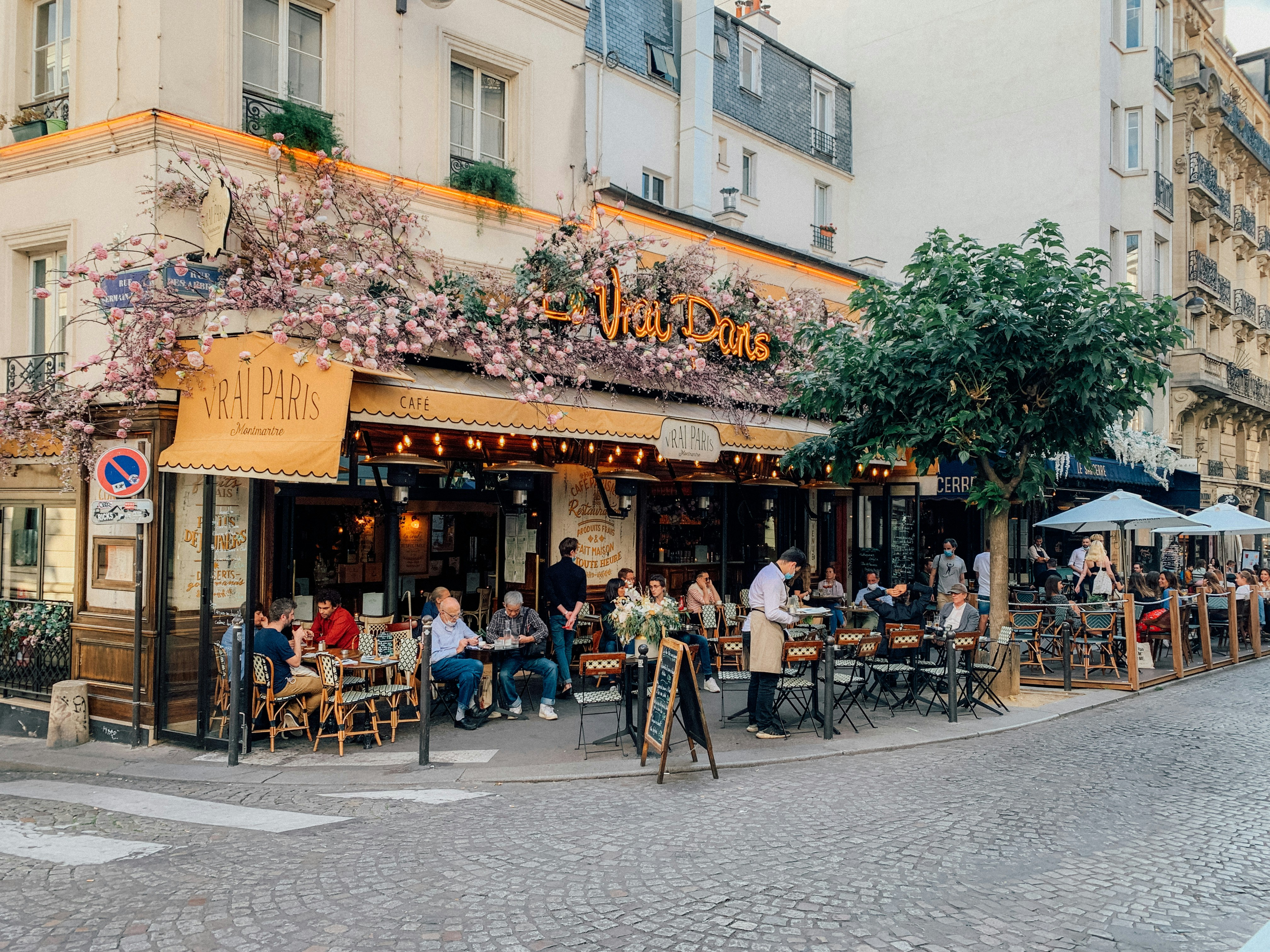
Café Culture
Le Café
Parisian café culture is about lingering over a single espresso ('un café') or glass of wine for hours, watching life pass by from a terrace table. It's a social institution, not just coffee service. Seating is strategic: 'en terrasse' (outside sidewalk) costs more than 'en salle' (inside), and 'au comptoir' (standing at the bar) is cheapest. The café is your office, living room, and people-watching theater. Ordering once buys you hours of space—no one rushes you.
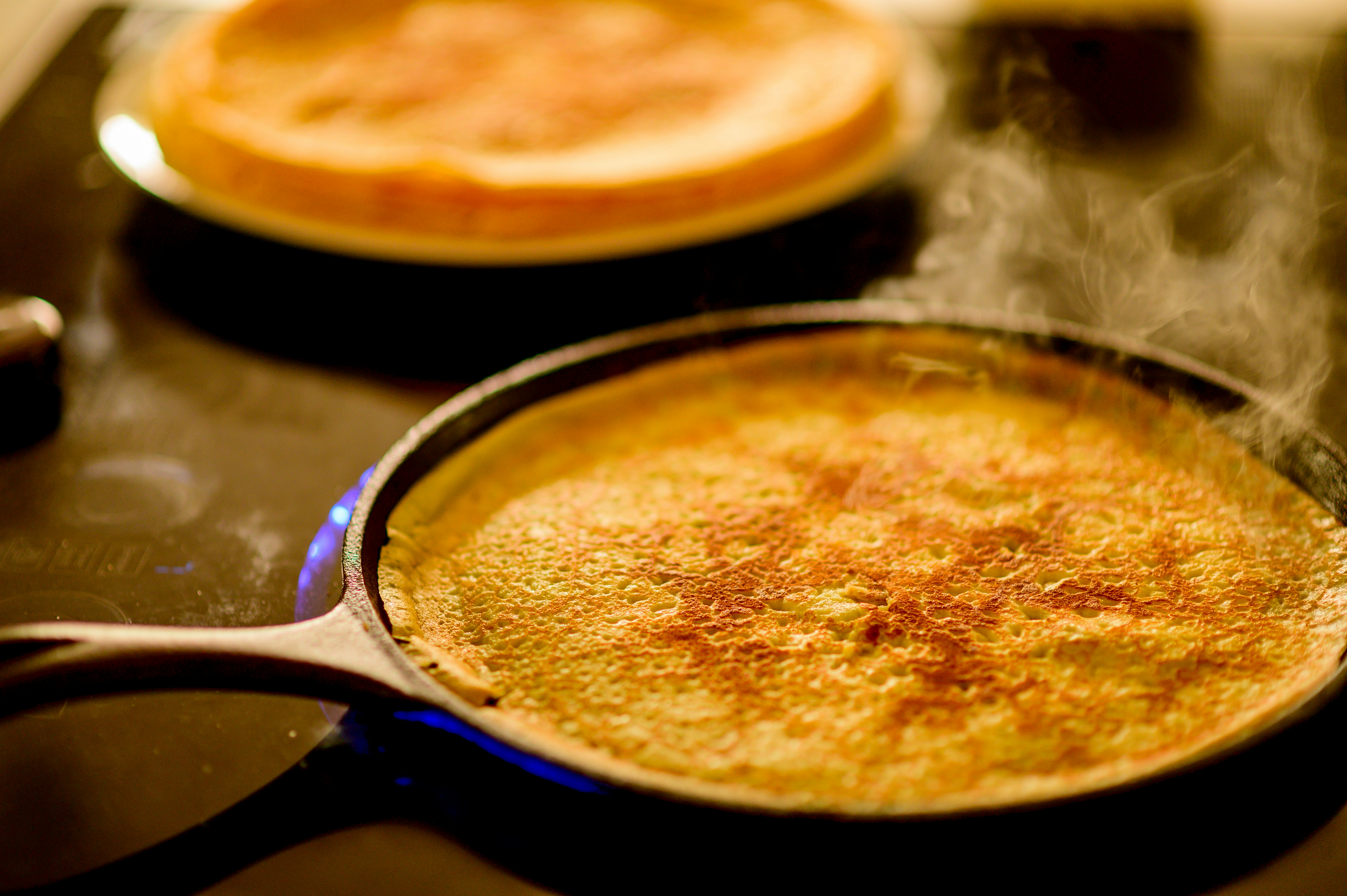
Paris Crêpes
Crêpes
Crêpes are thin pancakes folded into triangles or rolled into cones, filled with sweet (Nutella, sugar and lemon, jam) or savory (ham and cheese, egg). Savory buckwheat crêpes are called 'galettes' (from Brittany). They're street food sold from walk-up windows ('guichets') or crêperies. Watching the crêpe-maker spread batter on the hot griddle with a wooden rake is part of the experience. Cheap (€4-8), filling, and perfect on-the-go food.
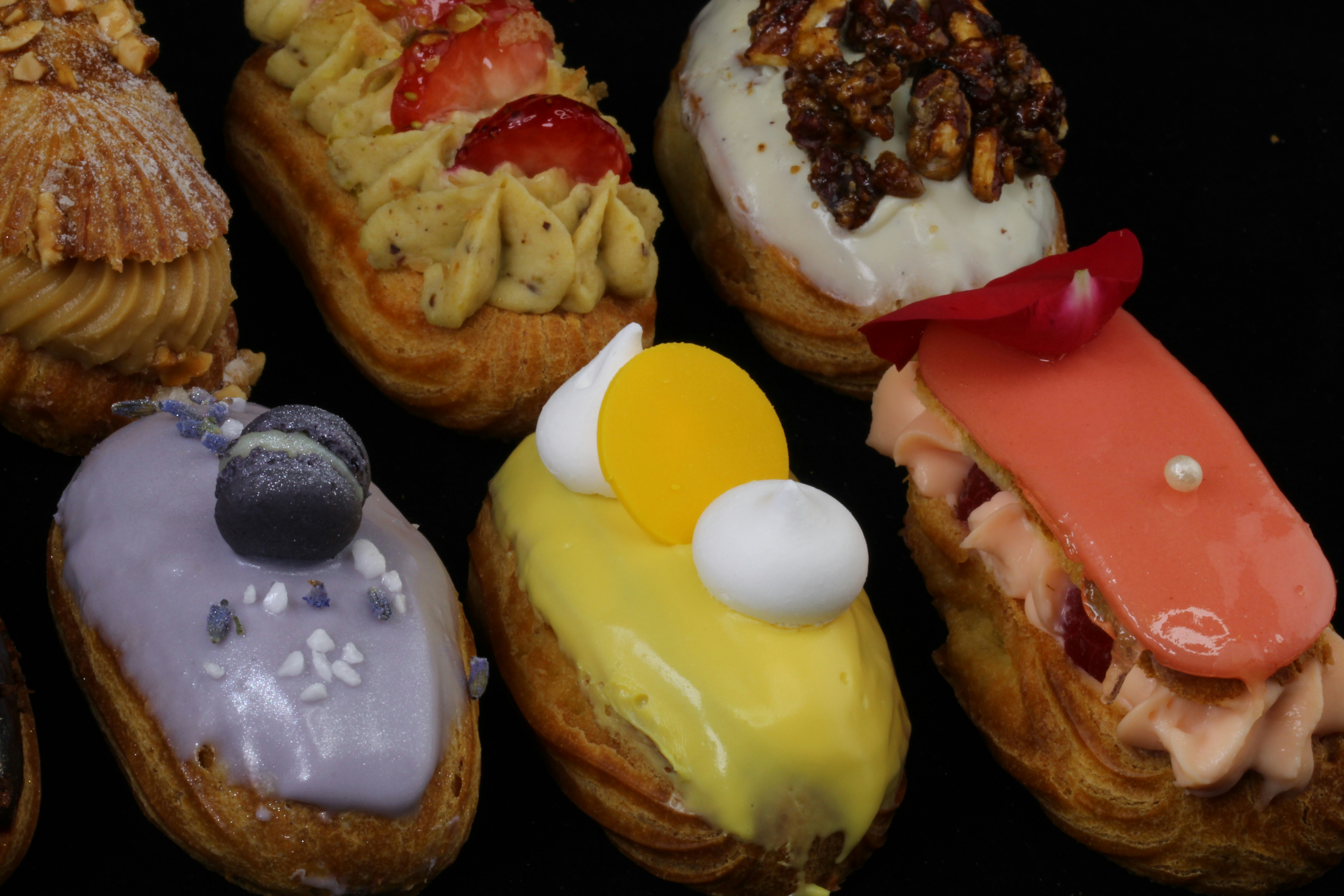
The Éclair
Éclair
An éclair is an oblong choux pastry (same dough as cream puffs) filled with vanilla, chocolate, or coffee pastry cream and topped with glossy fondant icing. It's light, airy, and not overly sweet. Modern pâtisseries offer creative flavors (pistachio, salted caramel, passion fruit) with colorful glazes. A proper éclair has a crisp shell, creamy filling, and shiny glaze. It's eaten in 2-3 bites, never with utensils.
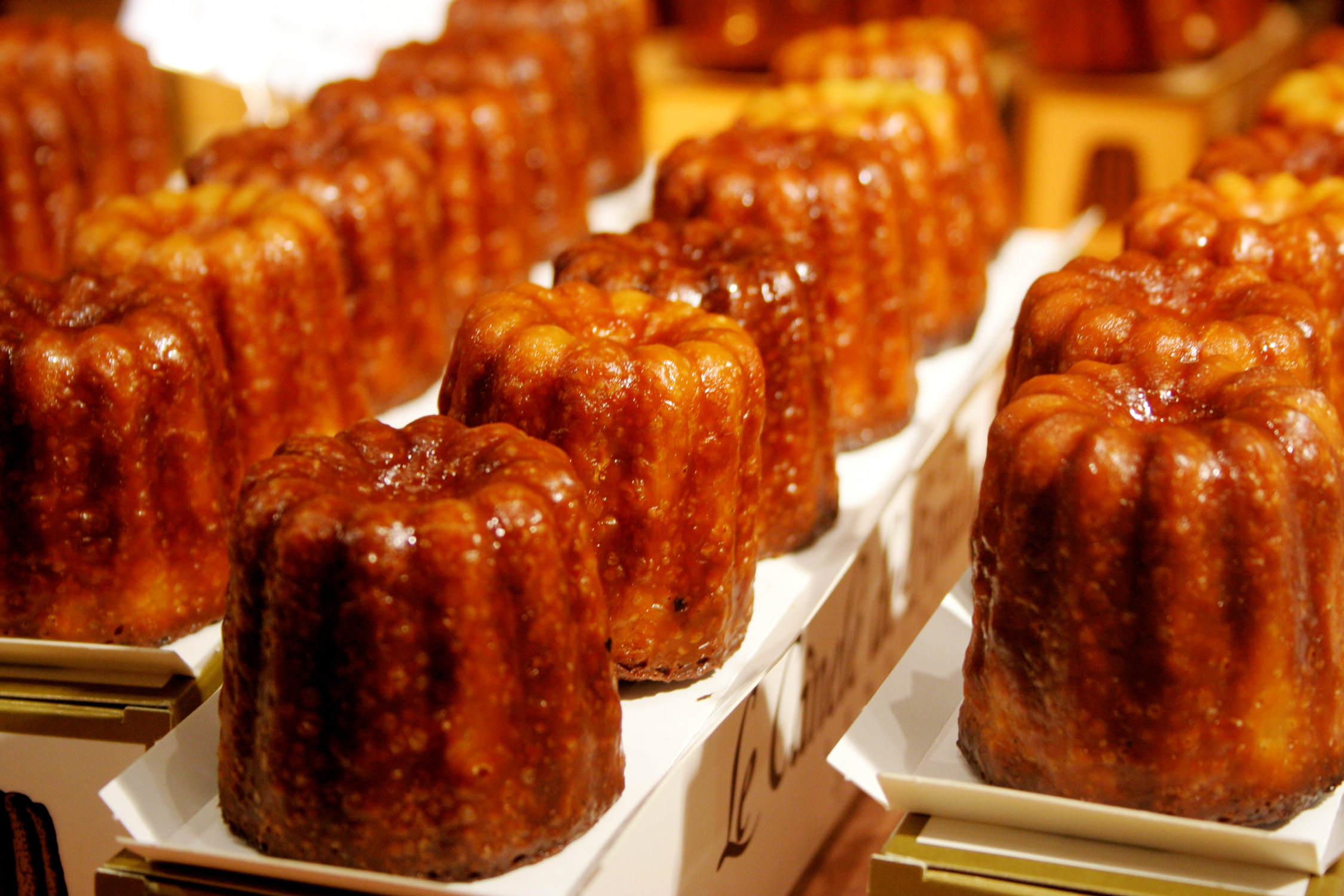
The Canelé
Canelé de Bordeaux
The canelé is a small ridged cake from Bordeaux with a dark, thick caramelized crust and a soft, custardy interior. It's flavored with rum and vanilla, with a hint of caramel from the burnt sugar coating. The contrast between crunchy exterior and creamy interior is the appeal. About 2 inches tall, eaten in 3-4 bites. Originally from Bordeaux but now a Paris pâtisserie staple.
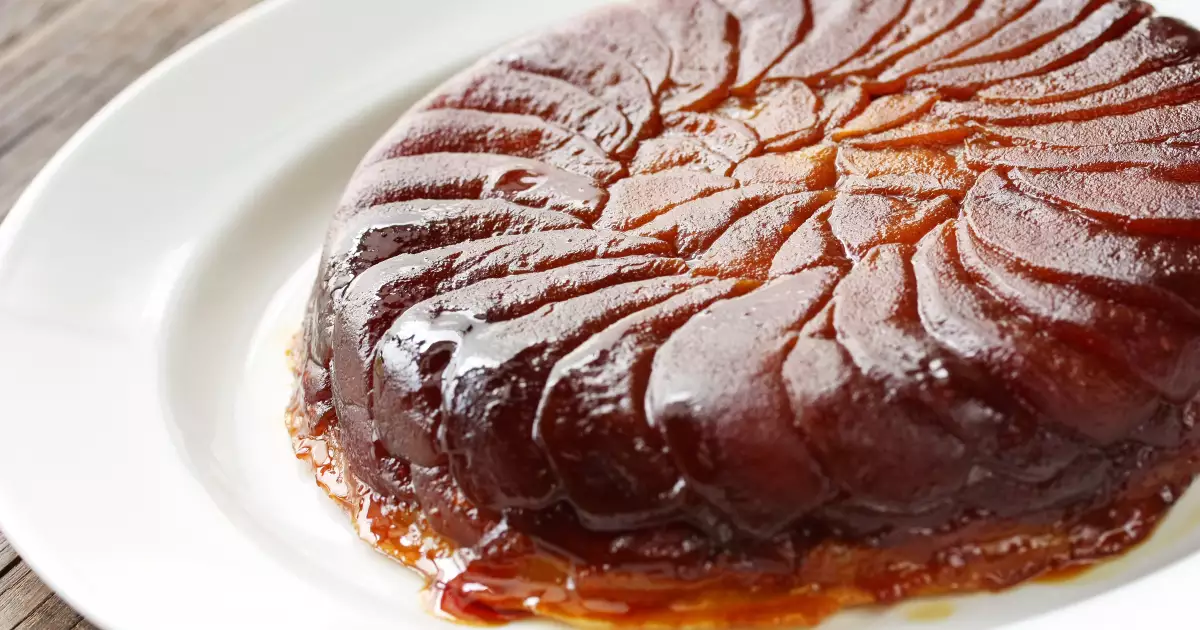
Tarte Tatin
Tarte Tatin is an upside-down caramelized apple tart: apples are cooked in butter and sugar until golden, covered with pastry, baked, then flipped so the caramelized apples are on top. The apples are tender, deeply caramelized, and sweet with a buttery puff pastry base. Served warm with crème fraîche, vanilla ice cream, or whipped cream. It's rustic, elegant, and quintessentially French dessert.
The Perfect 24 Hours in Paris
Sunrise at Trocadéro with Fresh Croissants
Start your day at Trocadéro Gardens facing the Eiffel Tower. Grab warm croissants from a nearby boulangerie and watch the Iron Lady emerge from the morning mist. The early light creates golden photo opportunities without the tour group chaos. This is the Paris of postcards, but real.
Louvre Masterpieces Speed Run
Skip the all-day museum marathon. Enter at 9am when doors open, head straight for the Denon wing. See the Mona Lisa, Winged Victory, and Venus de Milo in 90 minutes. Book tickets online days ahead—the queue wraps around the pyramid. Exit before museum fatigue sets in.
Lunch: Classic Bistro in Le Marais
Walk to Le Marais for a proper French bistro lunch. Order the formule (fixed menu): steak-frites or duck confit, a glass of Côtes du Rhône, and crème brûlée. Places like Chez Janou or L'As du Fallafel (for falafel) capture the neighborhood's energy. Service is brisk, not rude—that's just efficiency.
Seine River Walk & Bouquinistes
Stroll along the Seine from Pont Neuf to Musée d'Orsay. Browse the green bouquiniste boxes selling vintage books, posters, and prints—they've been here since the 16th century. Stop for une carafe d'eau (free tap water) at a café terrace. Watch boats pass and locals kiss on benches. This is the Paris you imagined.
Sunset from Sacré-Cœur
Take the metro to Abbesses, then walk up through Montmartre's winding streets to Sacré-Cœur. Arrive by 6pm to claim steps space. As the sun sets, the entire city turns golden below you. Street musicians play, artists sketch, and the city's lights start flickering on. The climb is steep but the view is unmatched.
Dinner & Champagne at Eiffel Tower
Book a table at Madame Brasserie (2nd floor) or splurge on Jules Verne. If dining elsewhere, grab champagne from a supermarché and picnic on Champ de Mars. At 10pm, the tower sparkles for 5 minutes—thousands of lights shimmer in sequence. Every hour on the hour until 1am. The sparkle show makes first-timers cry. It's okay to be one of them.