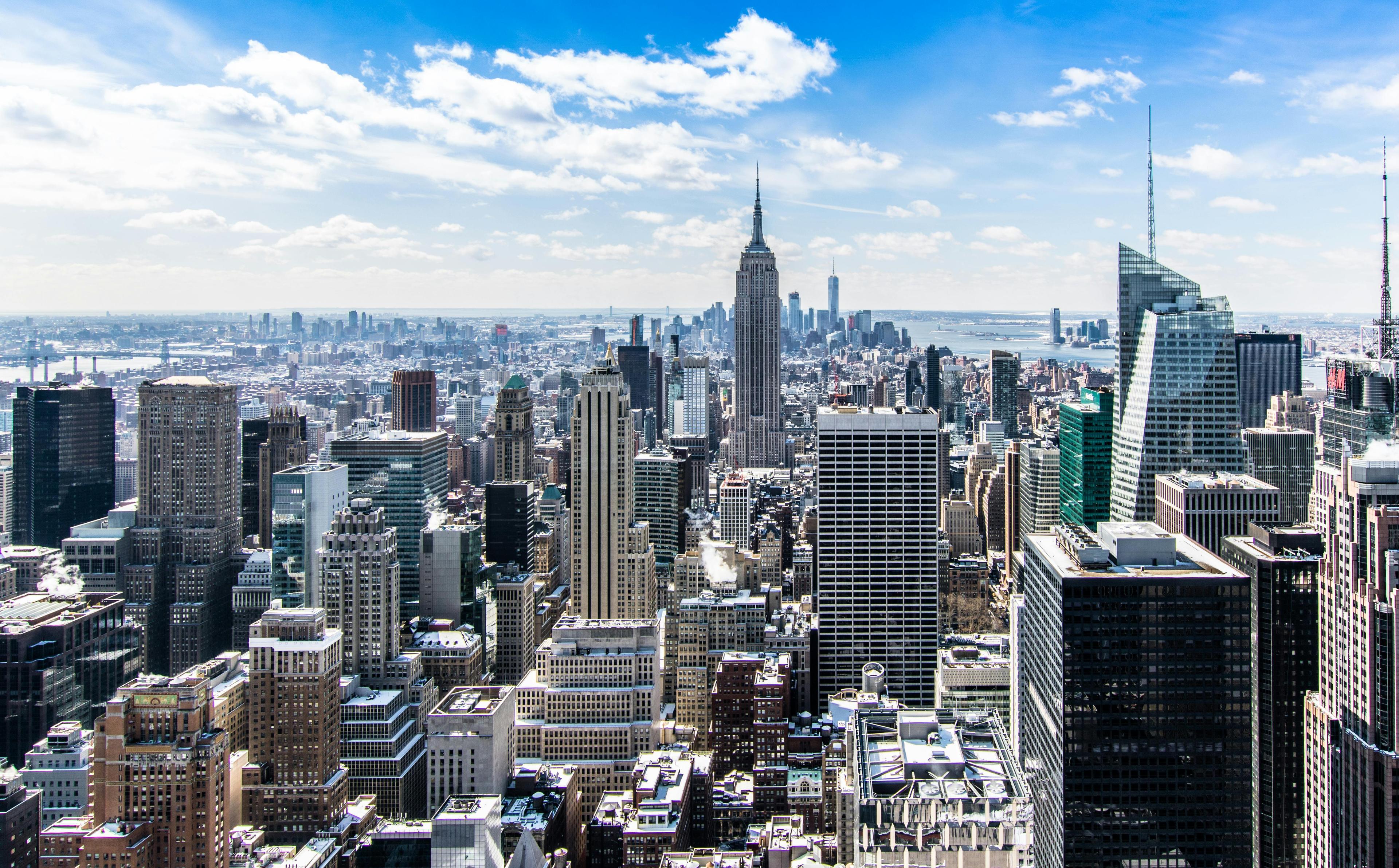
New York City
The Concrete Jungle: Fast, loud, kind but not nice, and the only place where 4am pizza is a food group.
View Photo GalleryEssential Info
Survival Kit
Best Time
Spring / Fall
Currency
USD
Language
Local Language
Jan
-3°C - 4°CHeavy coat, thermal layers, waterproof boots
Hotel deals
Bitter wind tunnels
Feb
-2°C - 6°CHeavy coat, gloves, scarf
Fashion Week
Snowstorms possible
Mar
2°C - 10°CWarm coat, layers, umbrella
St. Patrick's Day
Windy
Apr
7°C - 16°CLight jacket, rain gear
Cherry blossoms (Brooklyn Botanic)
Rain showers
May
12°C - 22°CLight layers, comfortable shoes
Ideal walking weather
Hotels get expensive
Jun
18°C - 27°CSummer clothes, light jacket for A/C
Pride Month
Humidity starts
Jul
21°C - 30°CBreathable fabrics, deodorant
4th of July Fireworks
Trash smell
Aug
21°C - 29°CLightest possible clothes
Summer Streets (car-free)
Oppressive humidity
Sep
17°C - 25°CLight layers
San Gennaro Festival
Expensive hotels
Oct
11°C - 18°CLeather jacket, boots, scarf
Central Park foliage
Cooler evenings
Nov
6°C - 12°CWarm coat, layers
Thanksgiving Parade
Early sunset (4:30pm)
Dec
0°C - 7°CWinter coat, patience
Rockefeller Tree
Insane crowds in Midtown
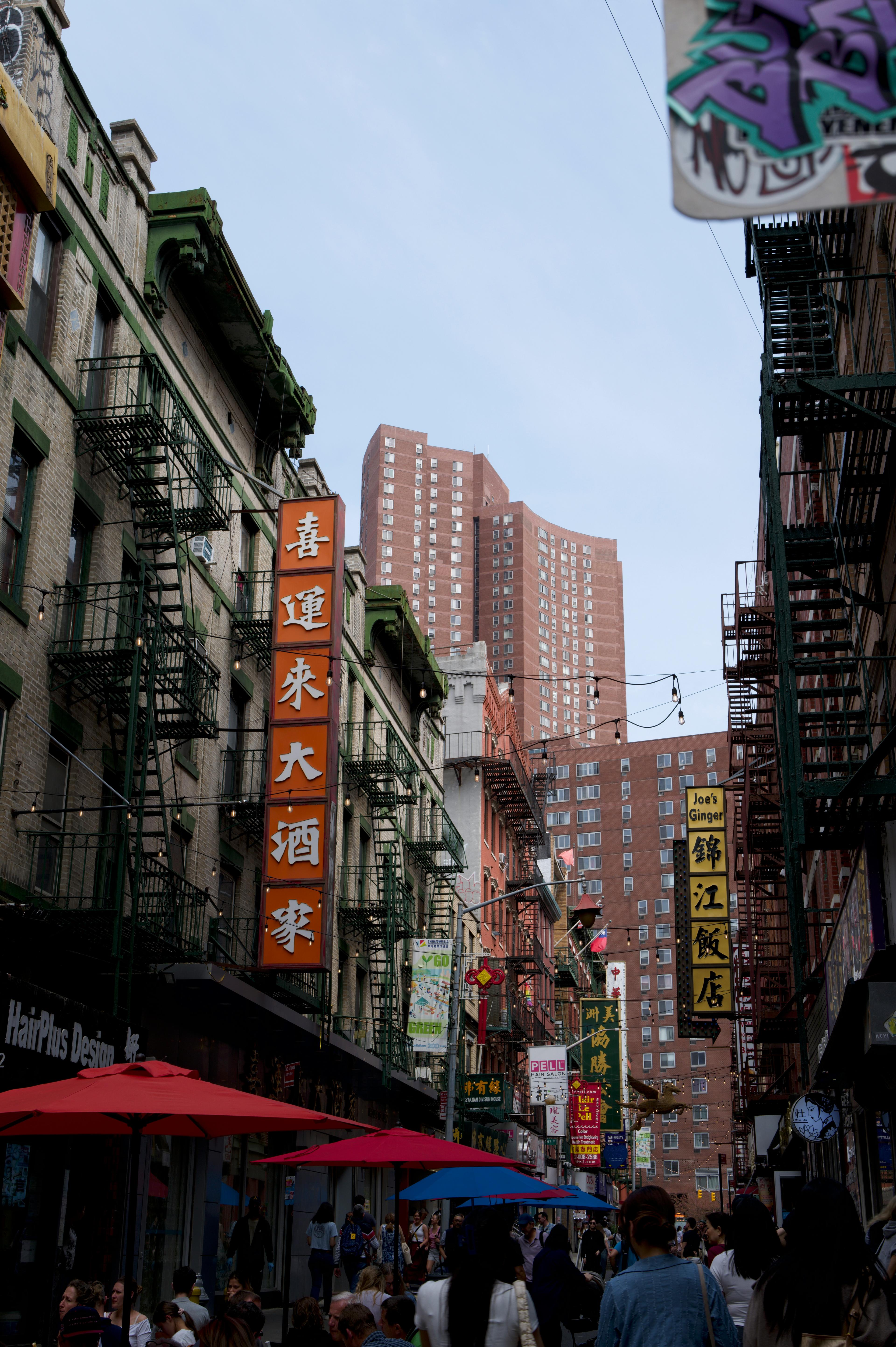
Chinatown
A dense, cash-heavy enclave that feels like a city within a city. It is not a tourist trap, but a living community of fishmongers, herbalists, and bakeries. It offers the cheapest and most authentic food in Manhattan.

West Village
Once the center of 1960s bohemia and the gay rights movement (Stonewall), it is now a playground for celebrities. Its winding, off-grid streets (some still cobblestone) defy the Manhattan grid system. Navigation here is landmark-based.
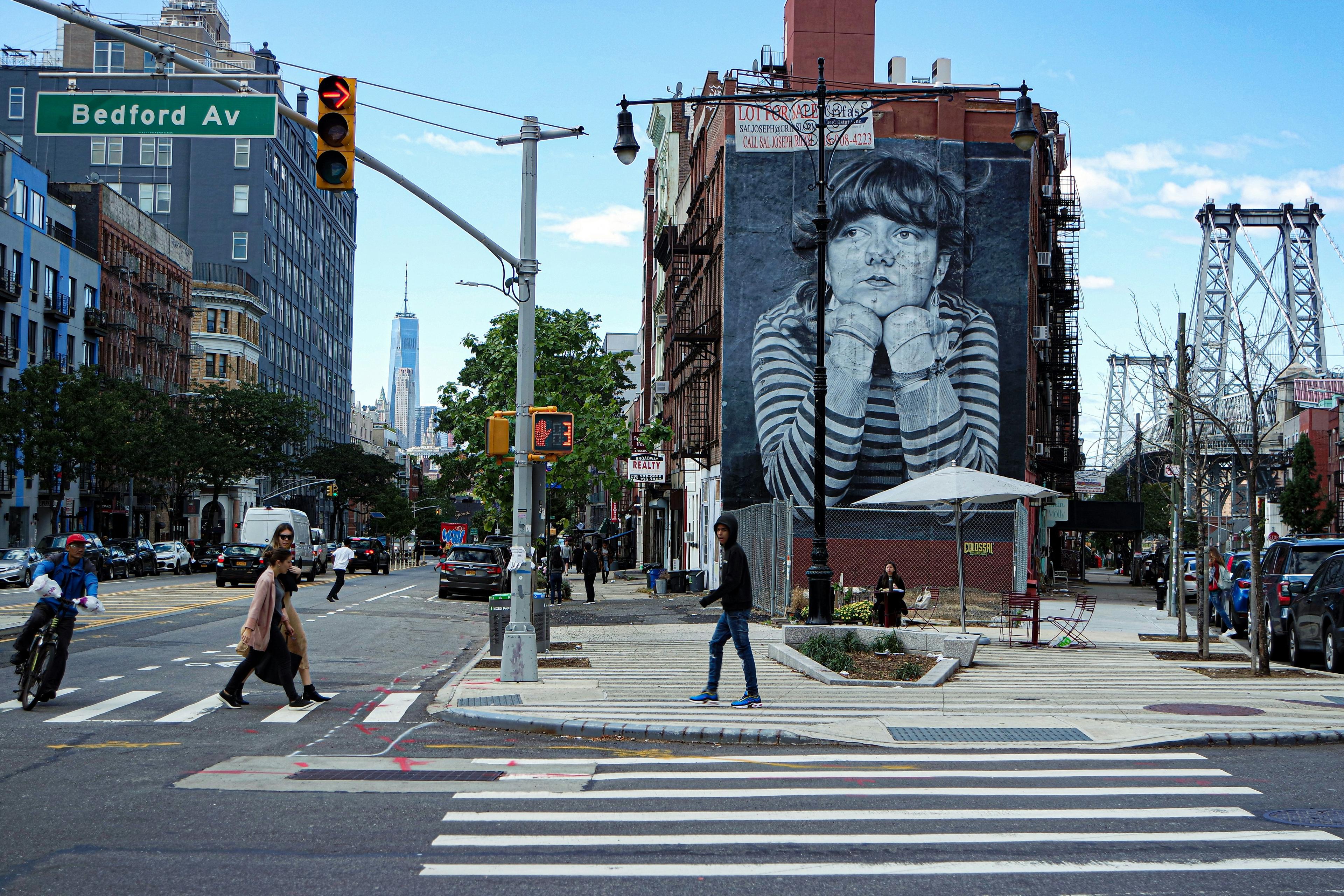
Williamsburg
Formerly a gritty industrial hub dominated by the Domino Sugar Refinery, it has transformed into a global capital of trends. Expect converted warehouse lofts, waterfront parks, and incredible skyline views.
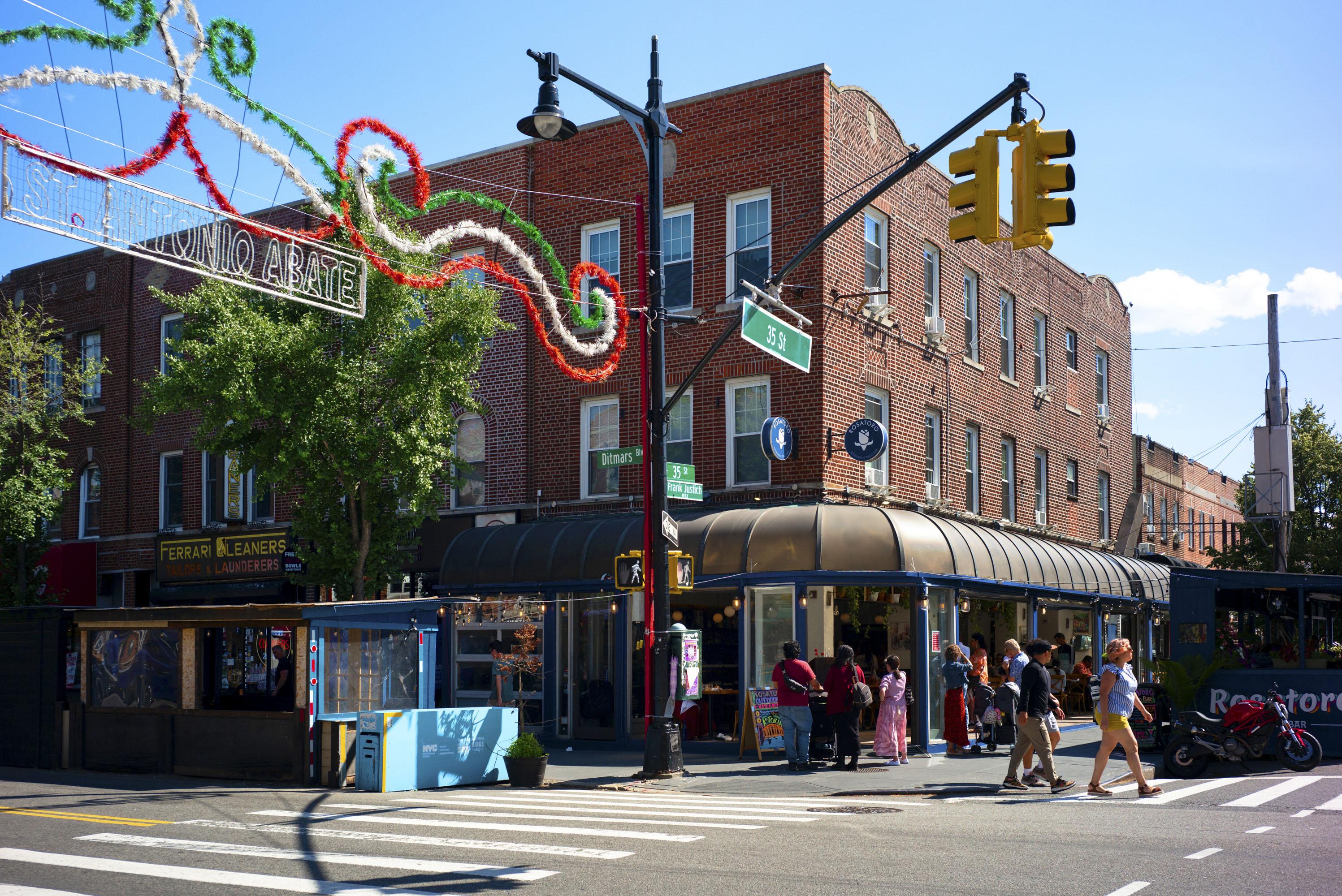
Astoria & LIC
The heart of Queens, historically anchored by a massive Greek population and Kaufman Studios. It offers authentic beer gardens and skyline views without the Manhattan price tag.
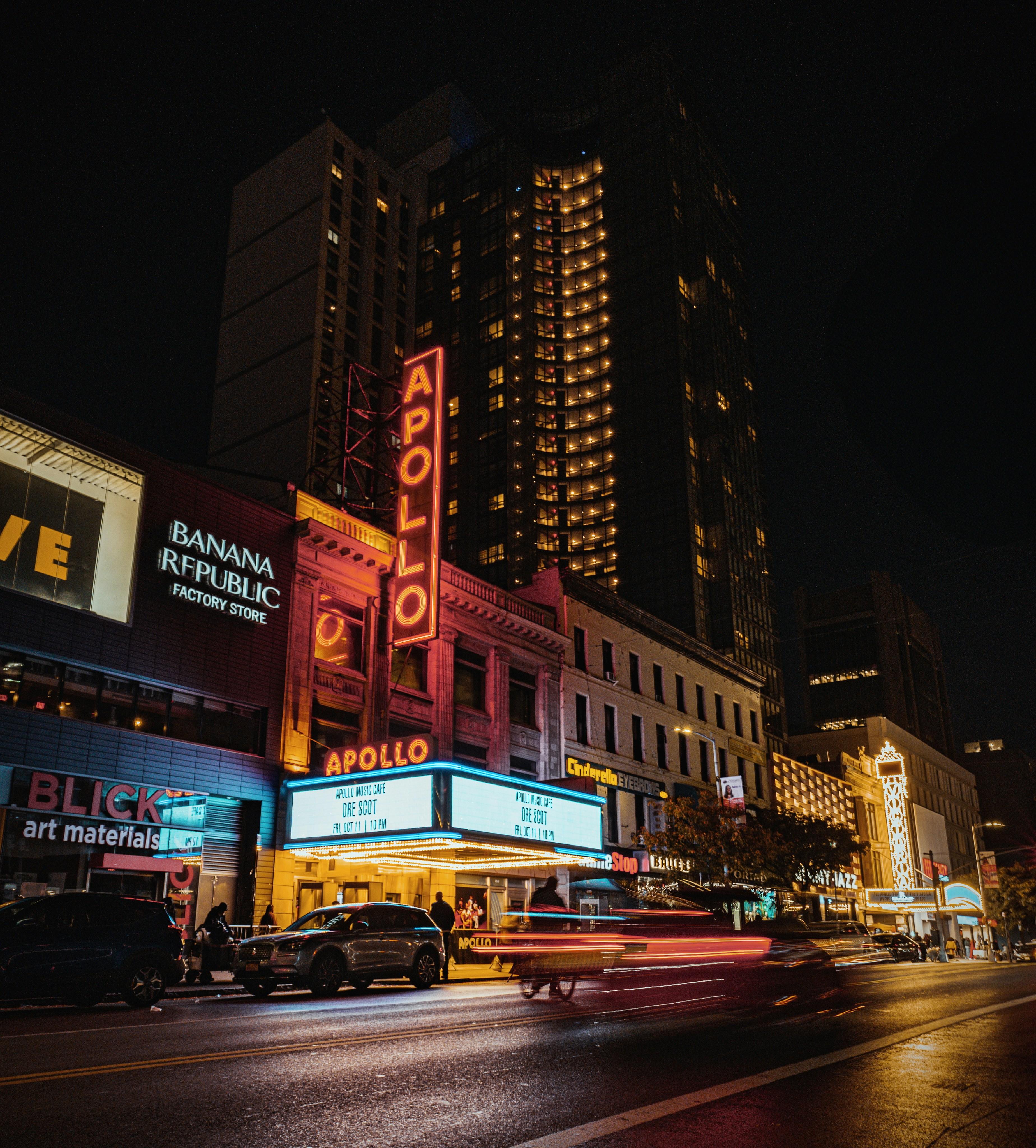
Harlem
The birthplace of the Harlem Renaissance in the 1920s. It remains a cultural capital with historic brownstones, the legendary Apollo Theater, and a vibrant community energy.
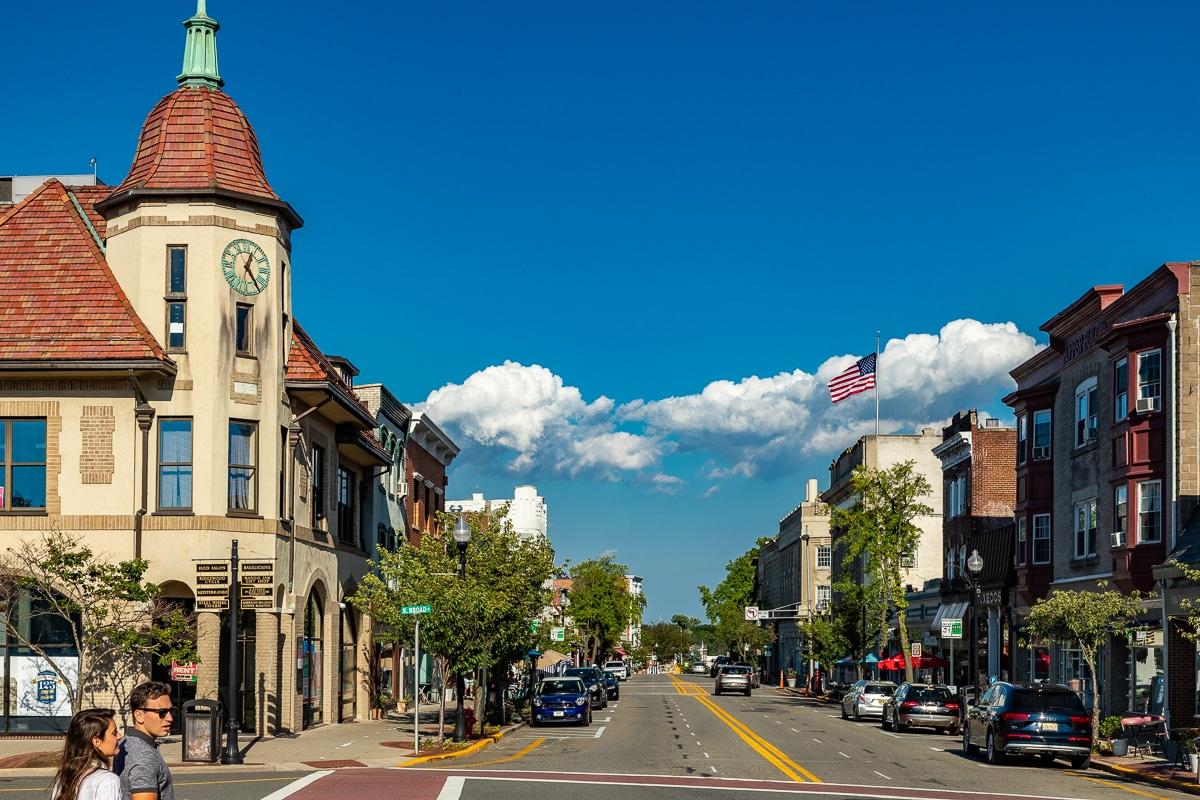
Ridgewood
Identified as a top neighborhood to watch in 2025. It offers a mix of historic architecture and new cultural venues, serving as a quieter, slightly more affordable alternative to the now-commercialized Williamsburg.
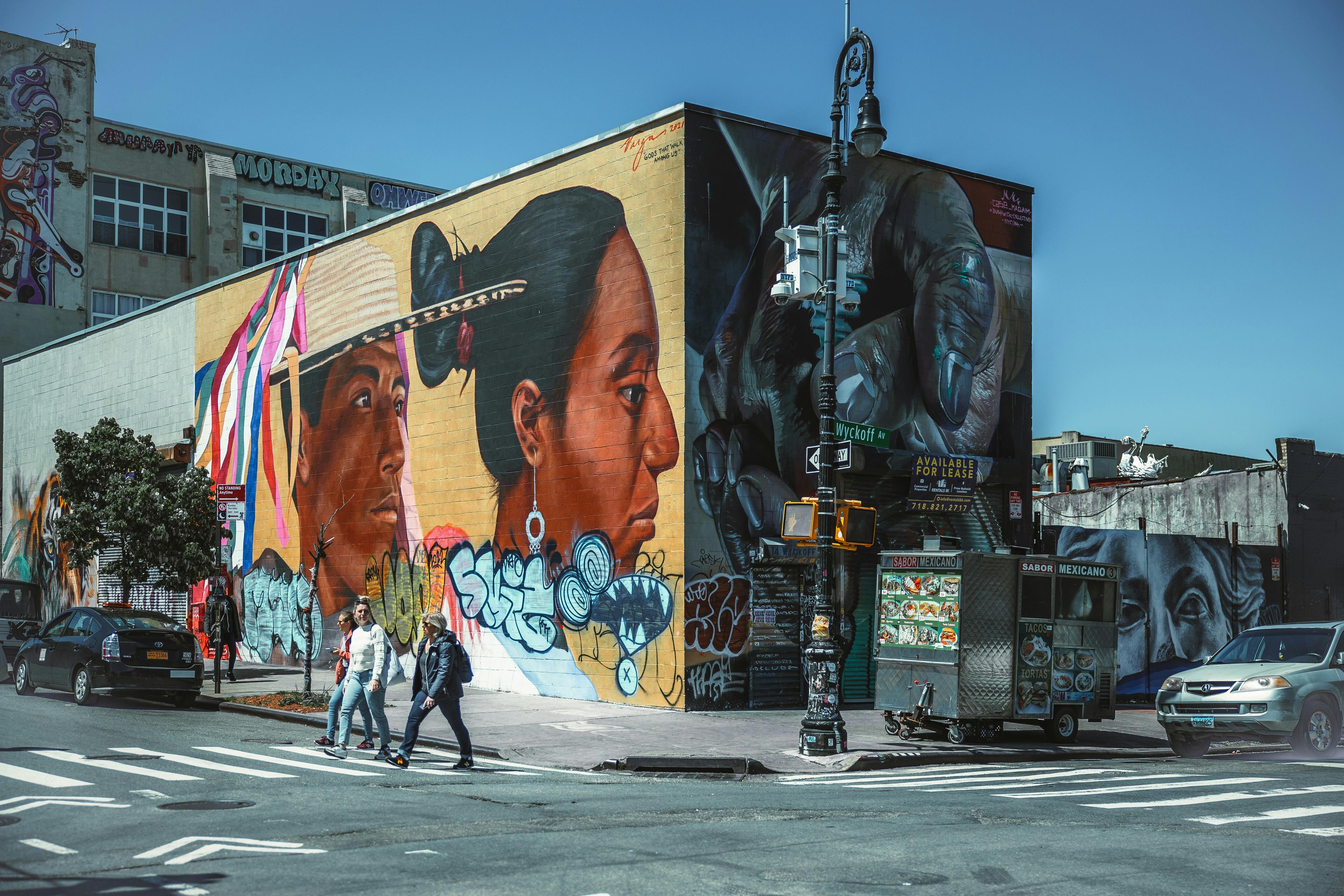
Bushwick
The hub for underground nightlife, warehouse raves, and street art. It is less polished than Manhattan, offering a grittier, industrial aesthetic.

Arthur Avenue (The Bronx)
Known as the 'Real Little Italy,' this neighborhood retains the authentic markets, pork stores, and multi-generational Italian families that have largely vanished from Manhattan's Mulberry Street.
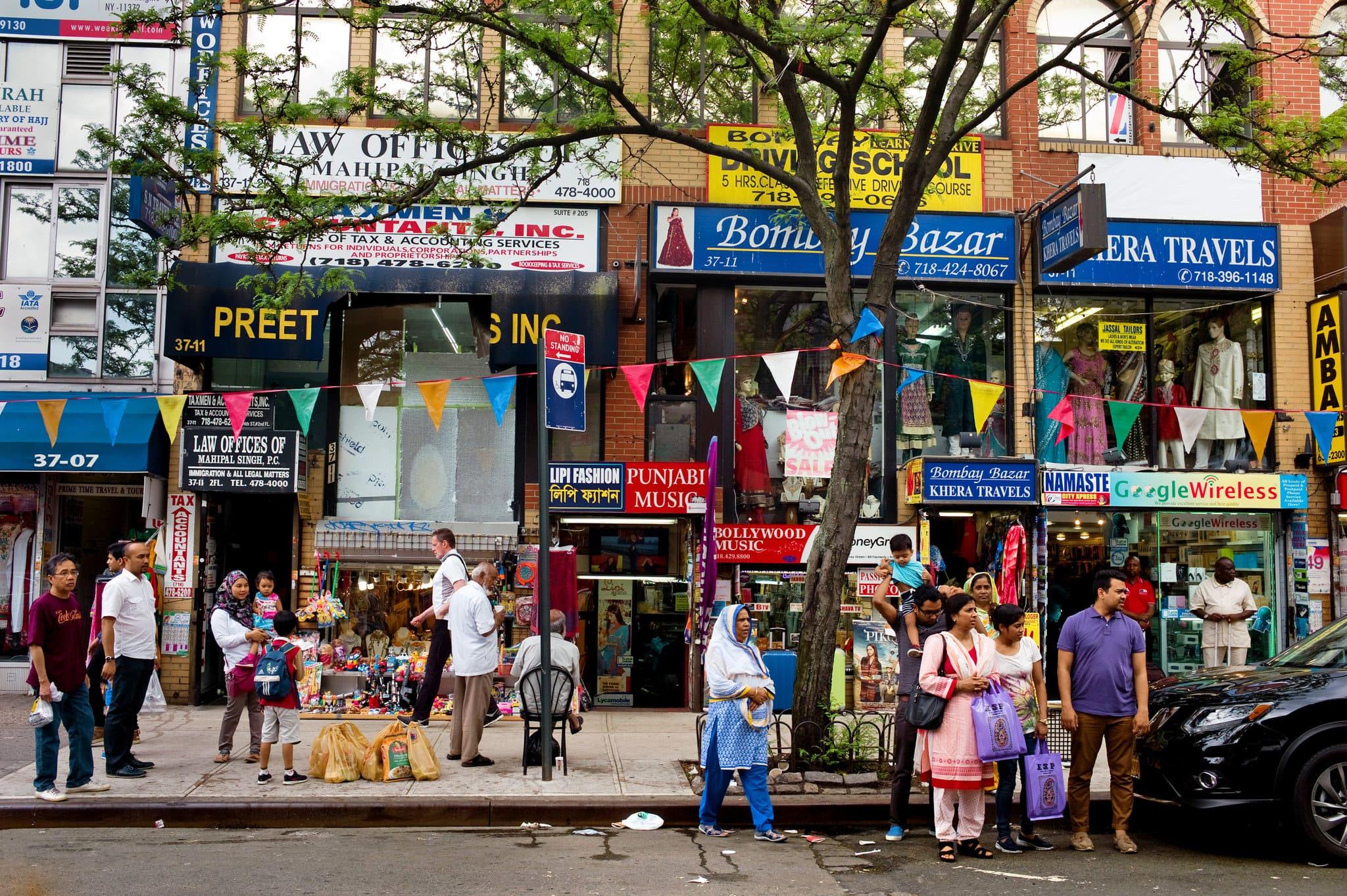
Jackson Heights
The most diverse zip code on earth. 'Little India/Himalaya' meets a massive Latin American hub. The place for Tibetan momos and Colombian arepas.
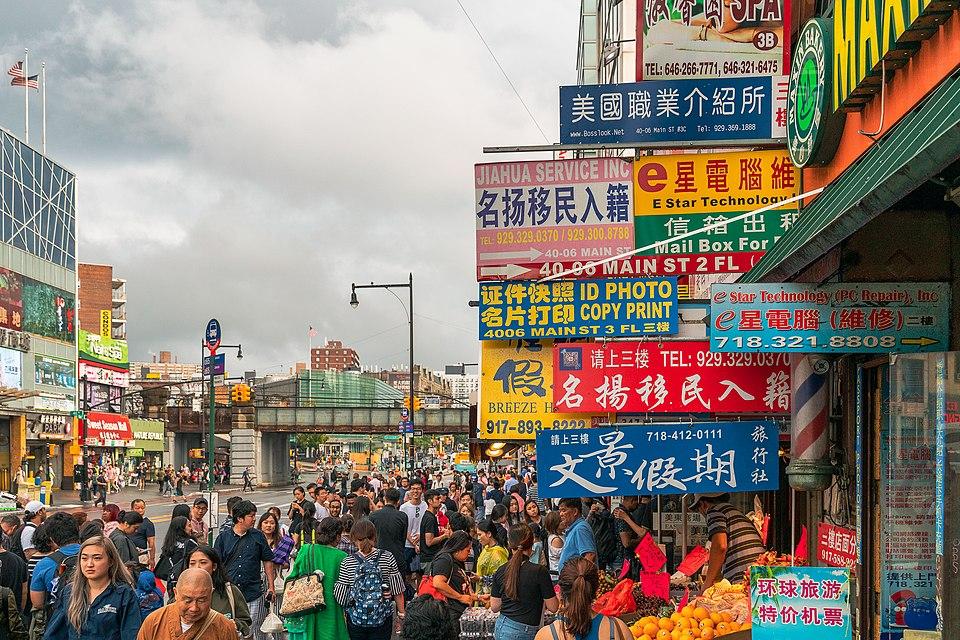
Flushing
A massive, modern Asian metropolis. Offers a wider diversity of regional cuisines (Sichuan, Northern, Taiwanese) than Manhattan's Chinatown.
Dos & Don'ts
- The Sidewalk Code: Treat the sidewalk like a highway. Walk Right, Pass Left. Never stop in the middle; pull over to the side. Groups must single up to let others pass.
- The Backpack Rule: On the subway, take your backpack OFF and hold it between your legs. Wearing it doubles your footprint and hits people. It is the #1 tourist marker.
- Efficiency is Respect: Moving fast is how New Yorkers show respect for other people's time. Don't stop in the middle of the sidewalk. Step to the side.
- Kind, Not Nice: A New Yorker won't smile at you or do small talk, but if you fall down the stairs, they will be the first to pick you up. Don't confuse speed with rudeness.
- Tipping Nuance: 20% pre-tax is the minimum for sit-down service. Bad service? Still 15-18%. For counter service/tablets, $1-2 or skipping is fine. Bars are $1/beer or $2/cocktail. Housekeeping is $3-5/day. It is not optional; it is their wage.
- The Subway Swagger: Let people OFF before you get ON. Stand aside. If a car is empty in rush hour, DO NOT GET IN (it has a broken A/C or a bad smell).
- No Greetings: Do not say hello to strangers in elevators or hallways. Silence is privacy. Directness is valued; if you need help, ask directly and you will receive it.
- Pizza Rules: Fold the slice down the center ('Libretto style'). Never use a fork and knife unless you want to be ridiculed. Order 'Regular' or 'Plain' slice, not 'Cheese'.
- Escalator Discipline: Stand Right, Walk Left. Blocking the left side is a major offense.
- Eye Contact: We ignore each other to give privacy in a crowded city. If you see someone yelling or talking to themselves ('Showtime' performers included), do not engage, do not stare, just keep walking.
Key Phrases
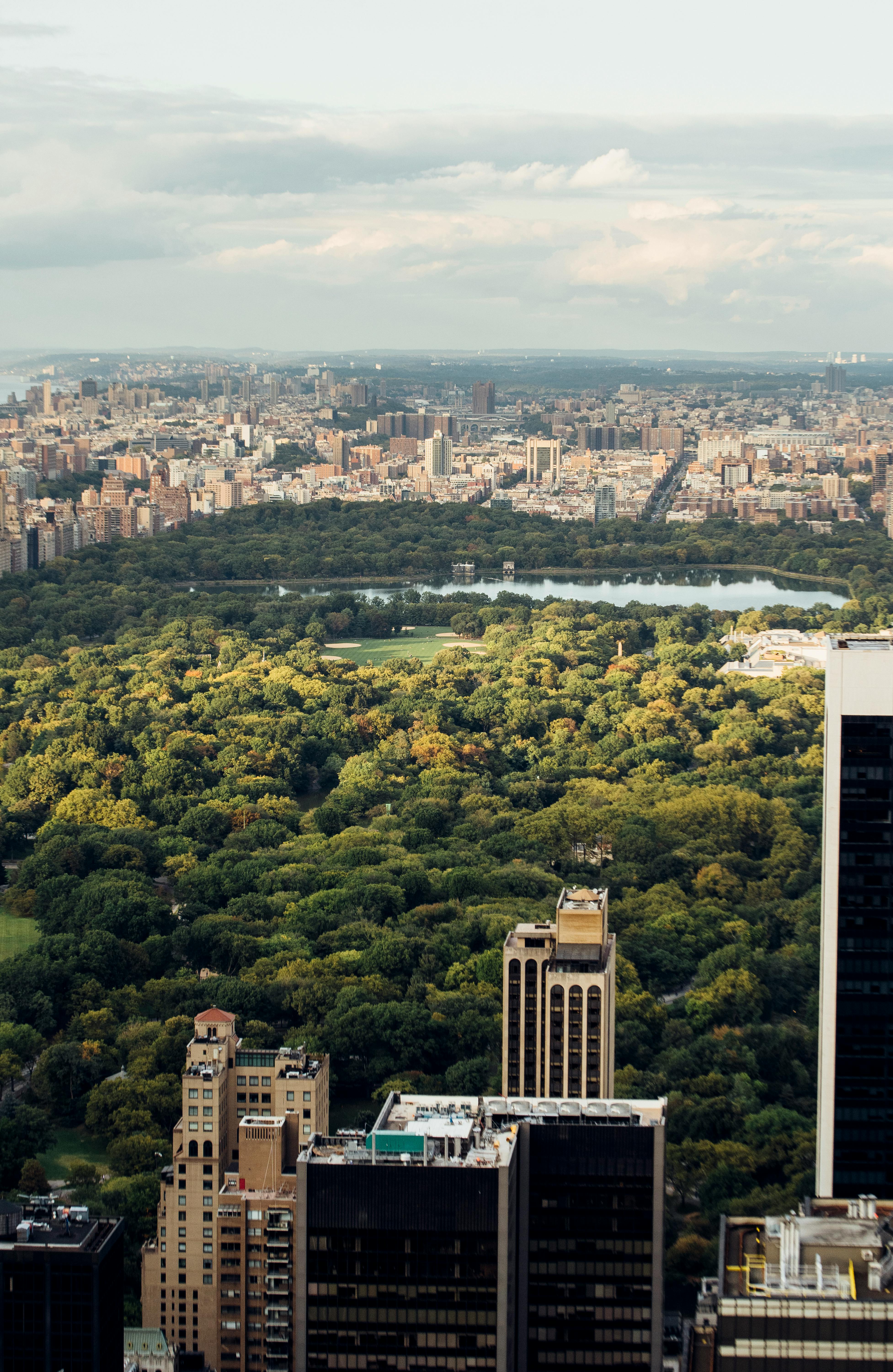
Central Park
Central Park is an 843-acre entirely man-made park in the heart of Manhattan, designed in 1857 by Frederick Law Olmsted and Calvert Vaux. It required moving millions of cartloads of earth and was conceived as a 'democratic space' where all social classes could mingle. The park contains woodlands, meadows, lakes, theaters, ice rinks, and the Metropolitan Museum. Don't just stay at the entrance—venture deep to find The Ramble (wild woodlands), Bow Bridge, or Bethesda Fountain.
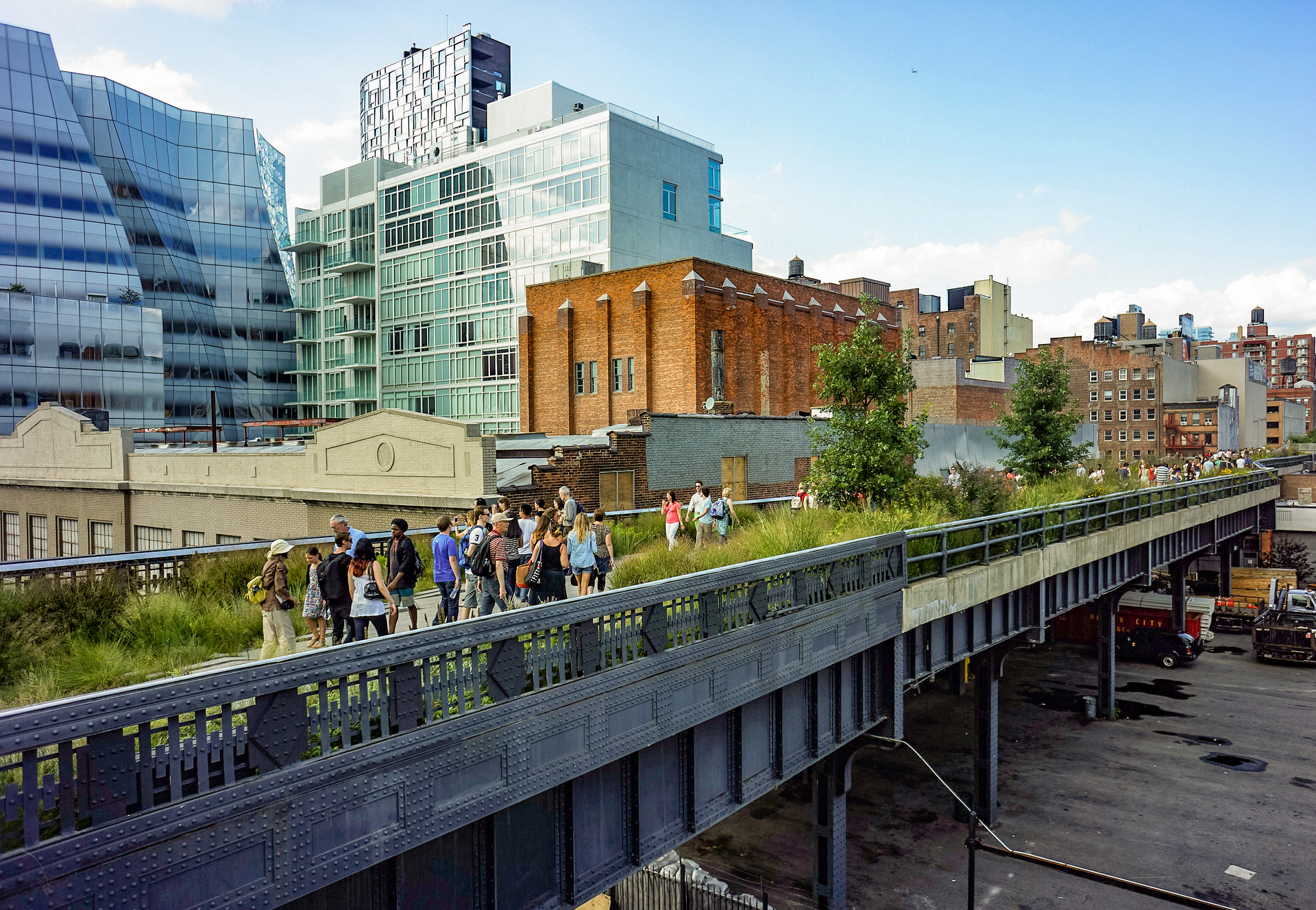
The High Line
The High Line is a 1.45-mile elevated linear park built on a historic freight rail line 30 feet above street level. It weaves through buildings from the Meatpacking District to Hudson Yards, featuring native plantings, public art, and unique city perspectives. It's a masterpiece of adaptive reuse and landscape architecture that transformed a rusted rail line into one of NYC's most popular parks.
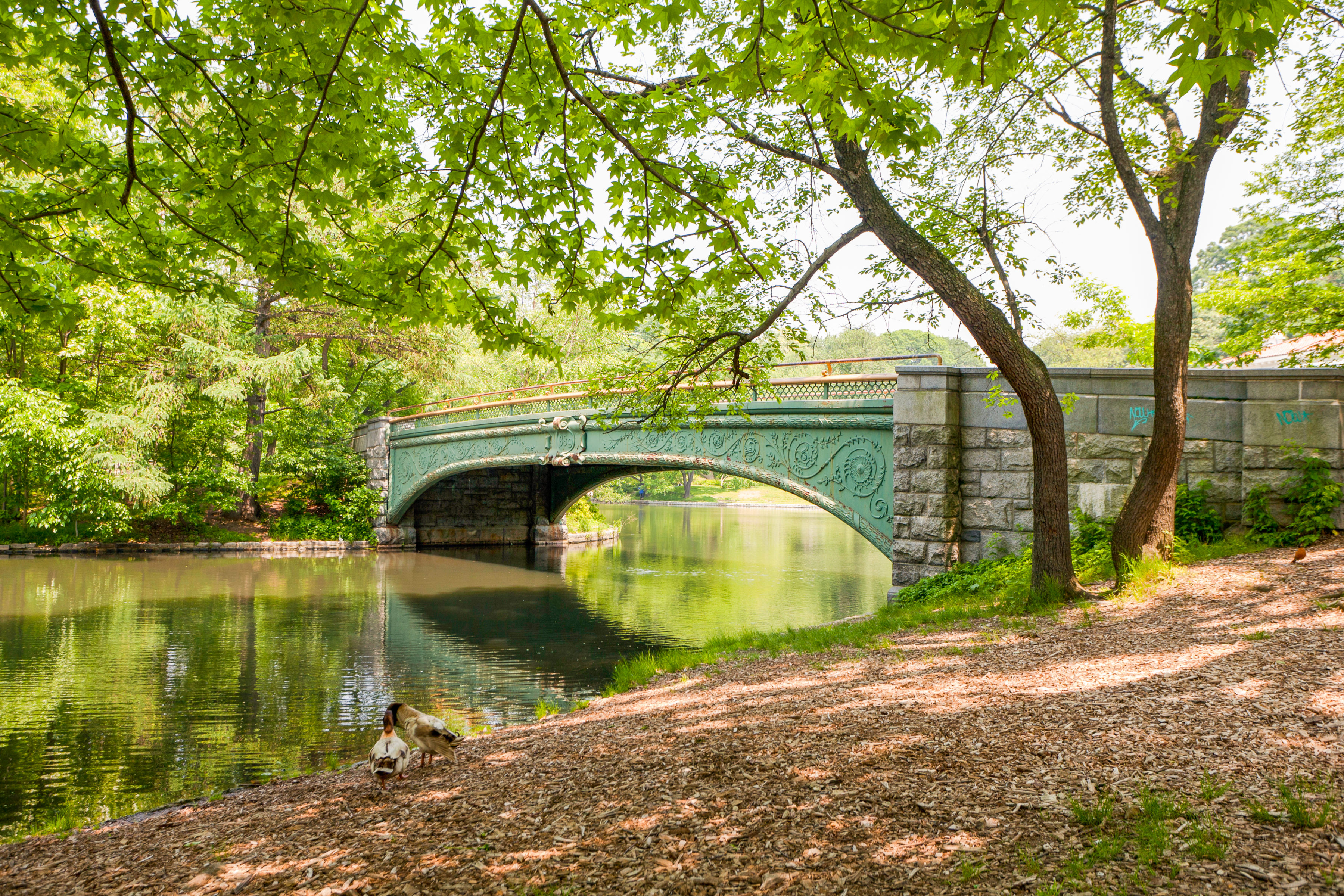
Prospect Park
Prospect Park is Brooklyn's 526-acre masterpiece, designed by Olmsted and Vaux (the same designers as Central Park). They considered this their 'better' park because they weren't constrained by Manhattan's rectangular grid. It features the Long Meadow (90 acres of unbroken green space), a lake, forests, and the Prospect Park Bandshell. It's less manicured and more naturalistic than Central Park.
Washington Square Park
Washington Square
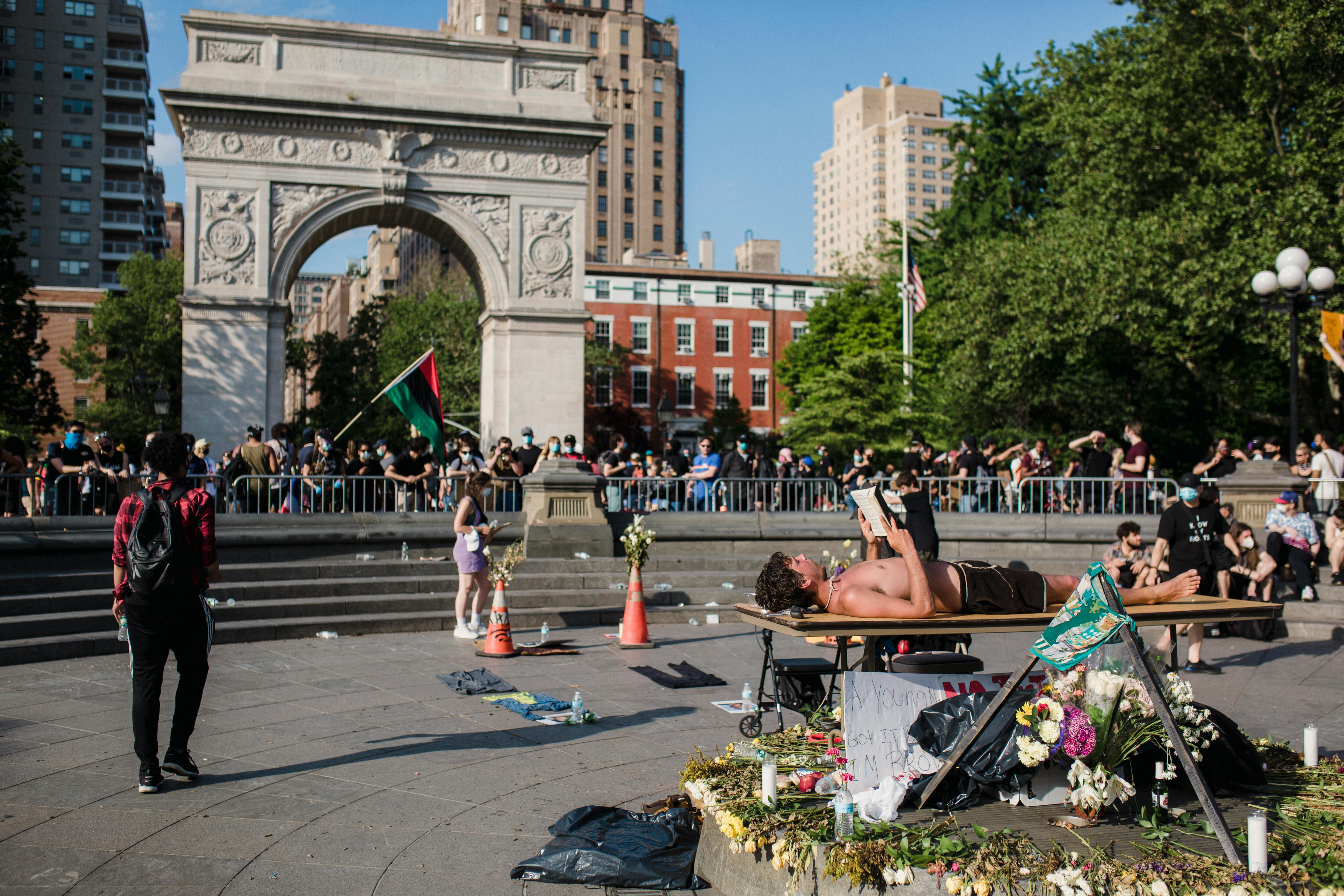
Washington Square Park is the 9.75-acre heart of Greenwich Village and the best people-watching spot in NYC. It's centered on the iconic marble arch (modeled after Paris's Arc de Triomphe) and features the famous fountain. Historically a potter's field (mass grave for the poor), it became the epicenter of the 1960s Beatnik and Folk movements. Today it's filled with street musicians, chess hustlers, NYU students, and pure NYC energy.
Union Square Greenmarket
Union Square
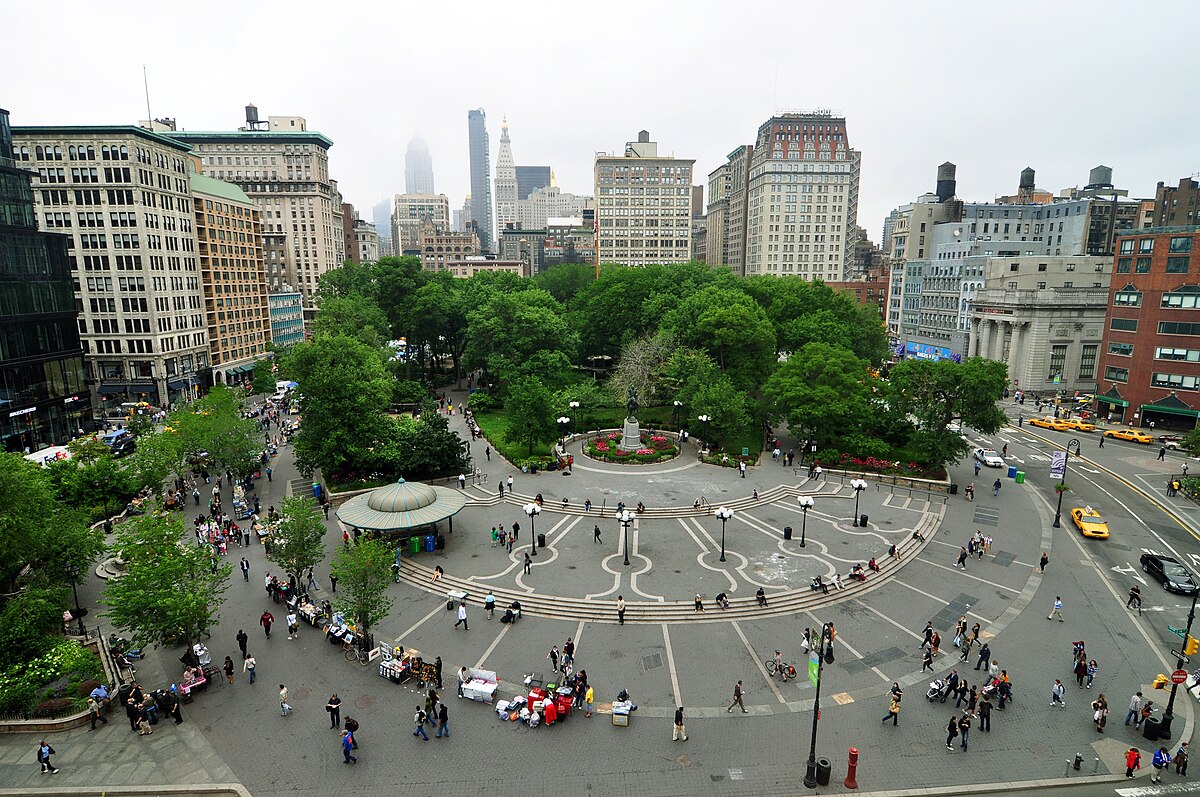
Union Square Greenmarket is NYC's most famous farmers market, operating Monday/Wednesday/Friday/Saturday year-round. Over 100 regional farmers sell produce, meats, cheeses, breads, and flowers directly to consumers. It's also a major transit hub (six subway lines) and historical site of protests and political gatherings. The market embodies NYC's connection to upstate farms and local food culture.
Queens Night Market
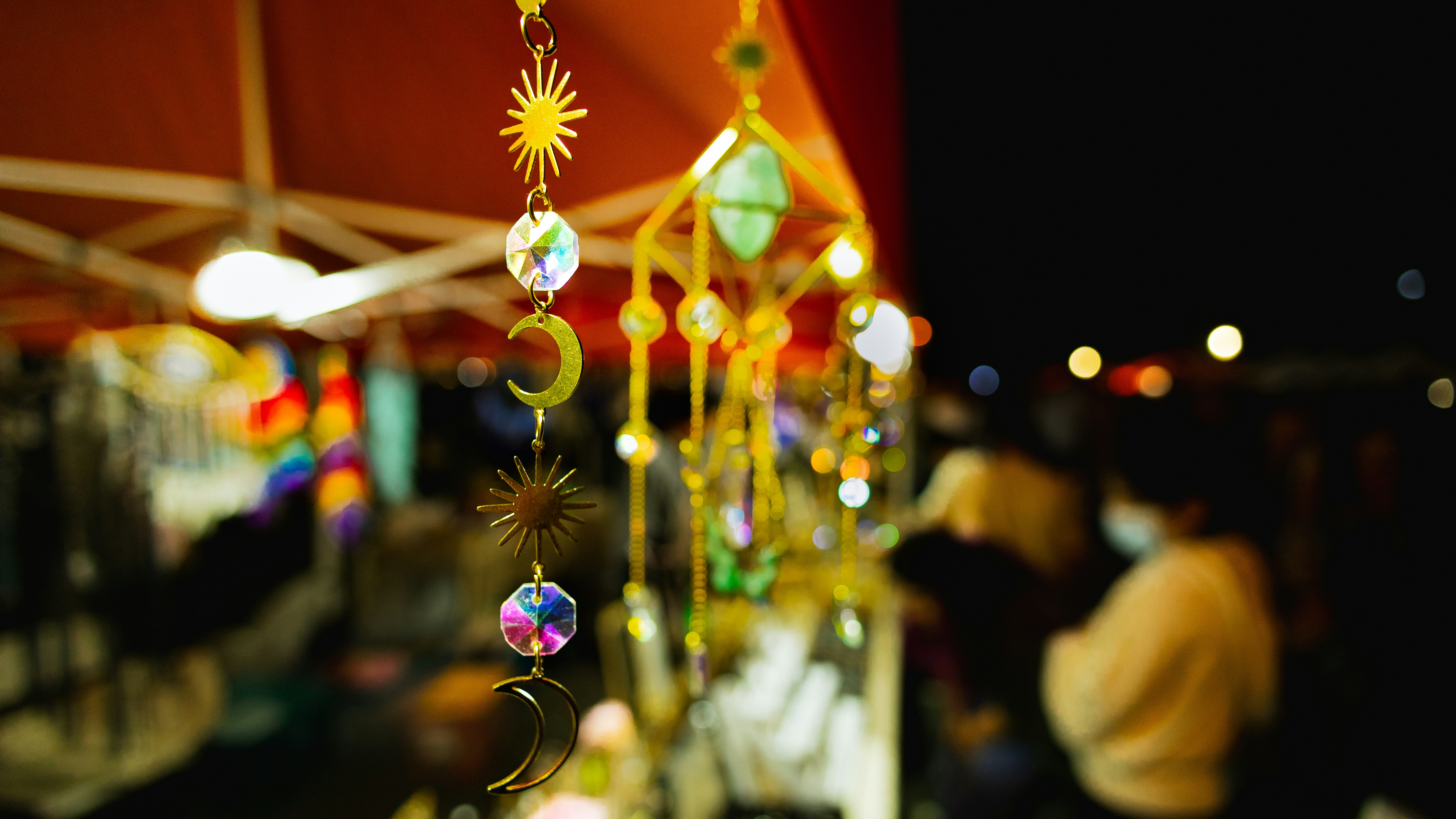
Queens Night Market is a seasonal open-air night market (April-October, Saturdays 5-midnight) at the New York Hall of Science in Flushing Meadows-Corona Park. It features 100+ vendors selling global street food from the world's most diverse borough, with all food capped at $6 maximum. The market emphasizes Queens' immigrant communities: Tibetan momos, Peruvian anticuchos, Filipino sisig, Colombian arepas. It's authentic, cheap, and community-focused.
Staten Island Ferry
The Ferry
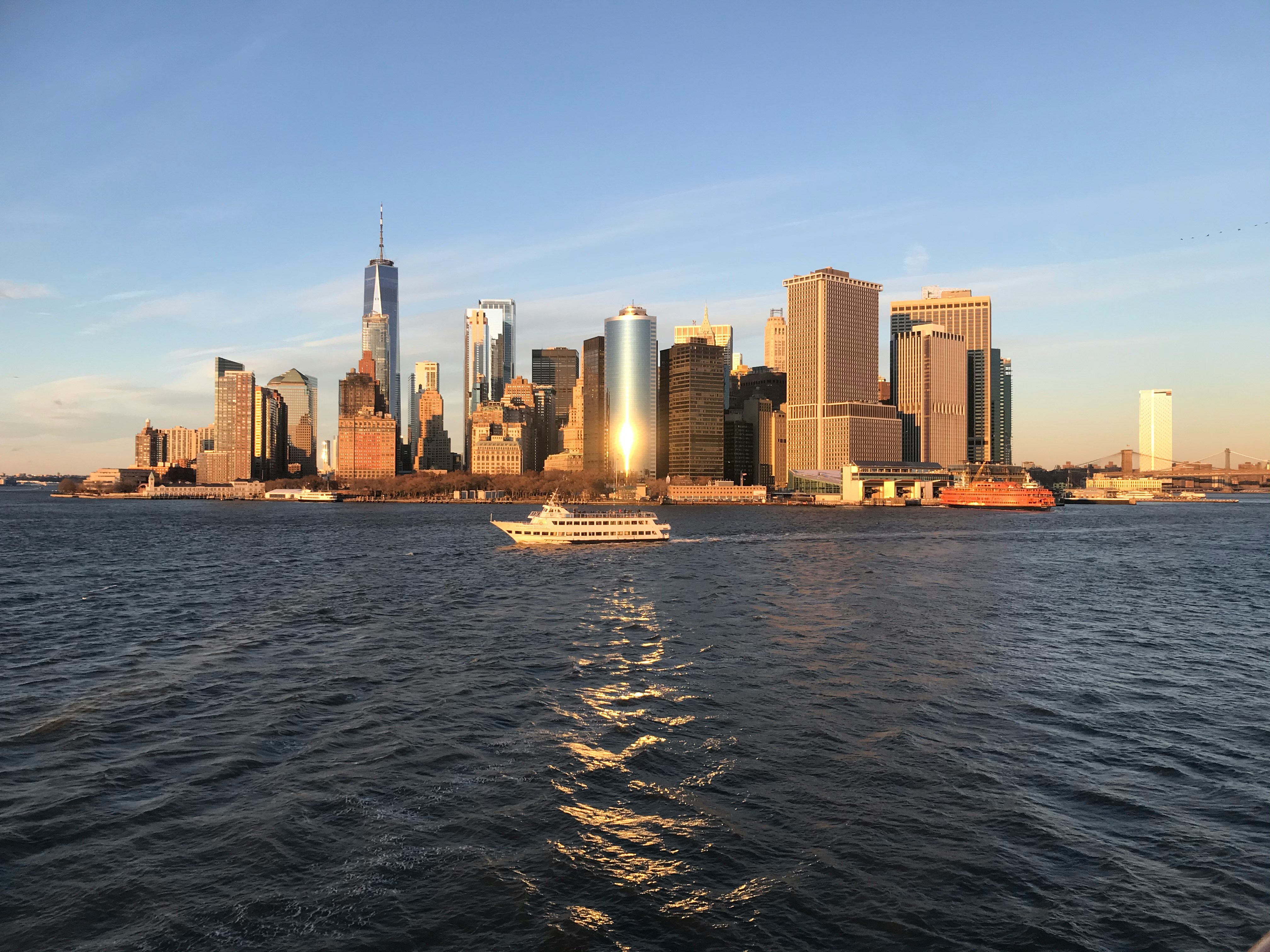
The Staten Island Ferry is a free, 24/7 commuter ferry running between Manhattan (Whitehall Terminal) and Staten Island (St. George). The 25-minute ride offers spectacular views of the Statue of Liberty, Ellis Island, and Lower Manhattan skyline without costing a cent. It's NYC's best free attraction. Locals drink beer on the boat (sold onboard). You can just ride round-trip without leaving the terminal—tourists do this for the views.
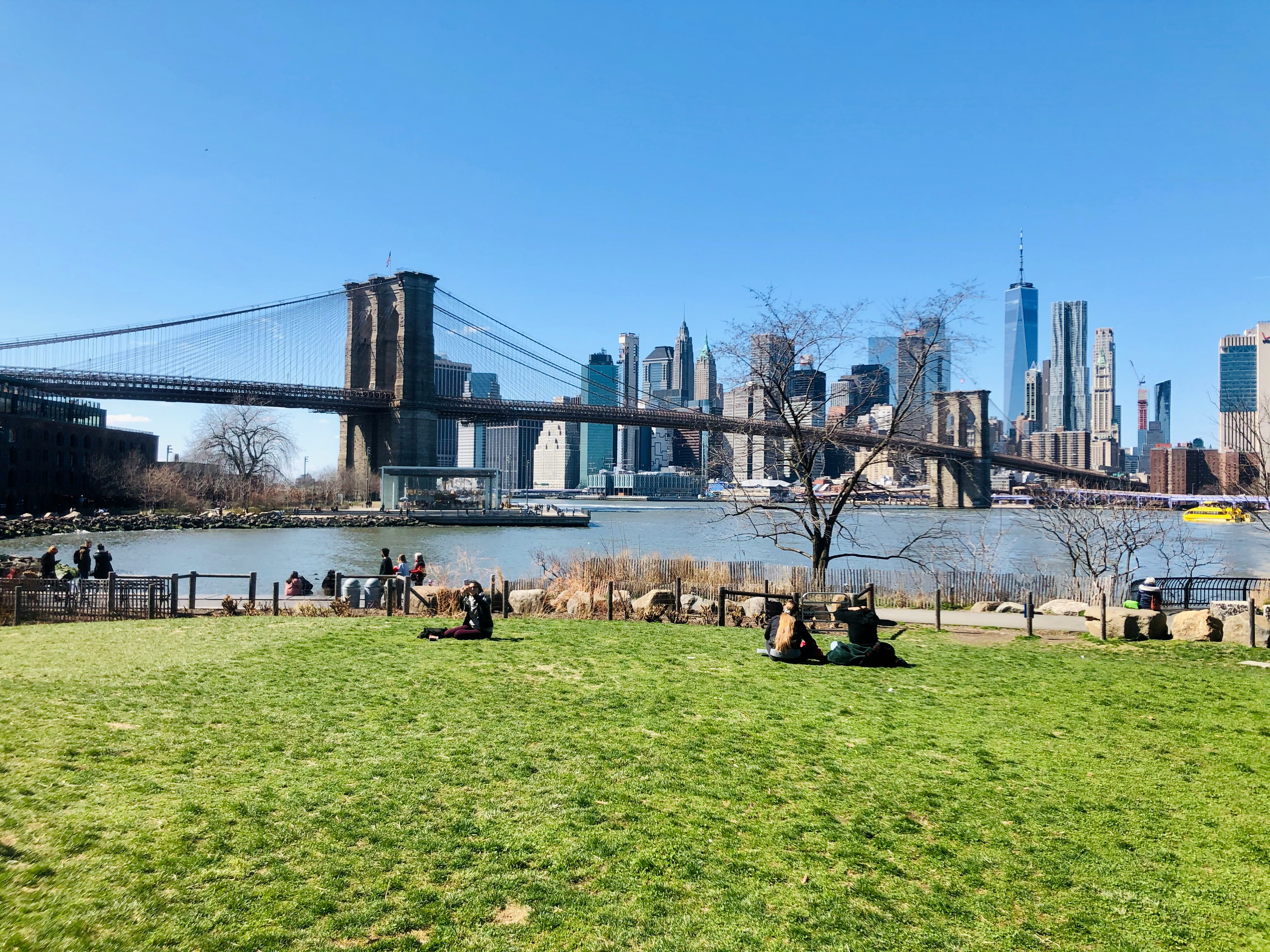
Brooklyn Bridge Park
DUMBO Waterfront
Brooklyn Bridge Park offers the best views of the Manhattan skyline, framed by the Brooklyn Bridge (completed 1883)—the world's first steel-wire suspension bridge. The park stretches 1.3 miles along the Brooklyn waterfront in DUMBO with multiple piers, lawns, playgrounds, and iconic photo spots. Walk the bridge itself for pedestrian/bike paths with stunning views. The bridge's construction cost designer John Roebling his life (crushed foot led to tetanus).
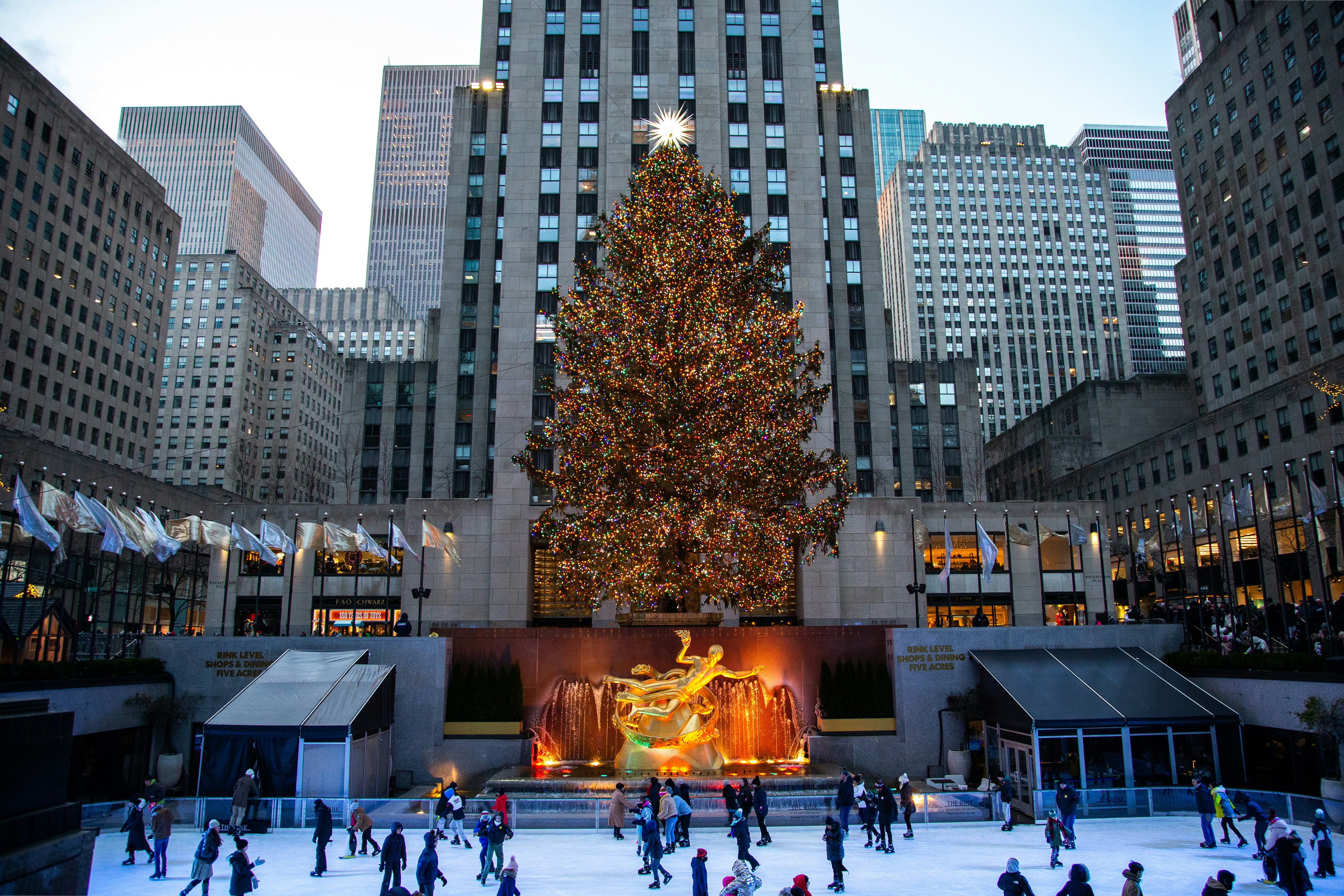
Top of the Rock
Rockefeller Center
Top of the Rock is the observation deck atop Rockefeller Center (70 floors, 850 feet up) with 360° views of Manhattan, Central Park, and the Empire State Building. Built in 1933 in Art Deco style, it offers better views than the Empire State Building because you can actually see the Empire State Building from here. Three levels of outdoor decks allow unobstructed views. Sunset is prime time but requires timed tickets.
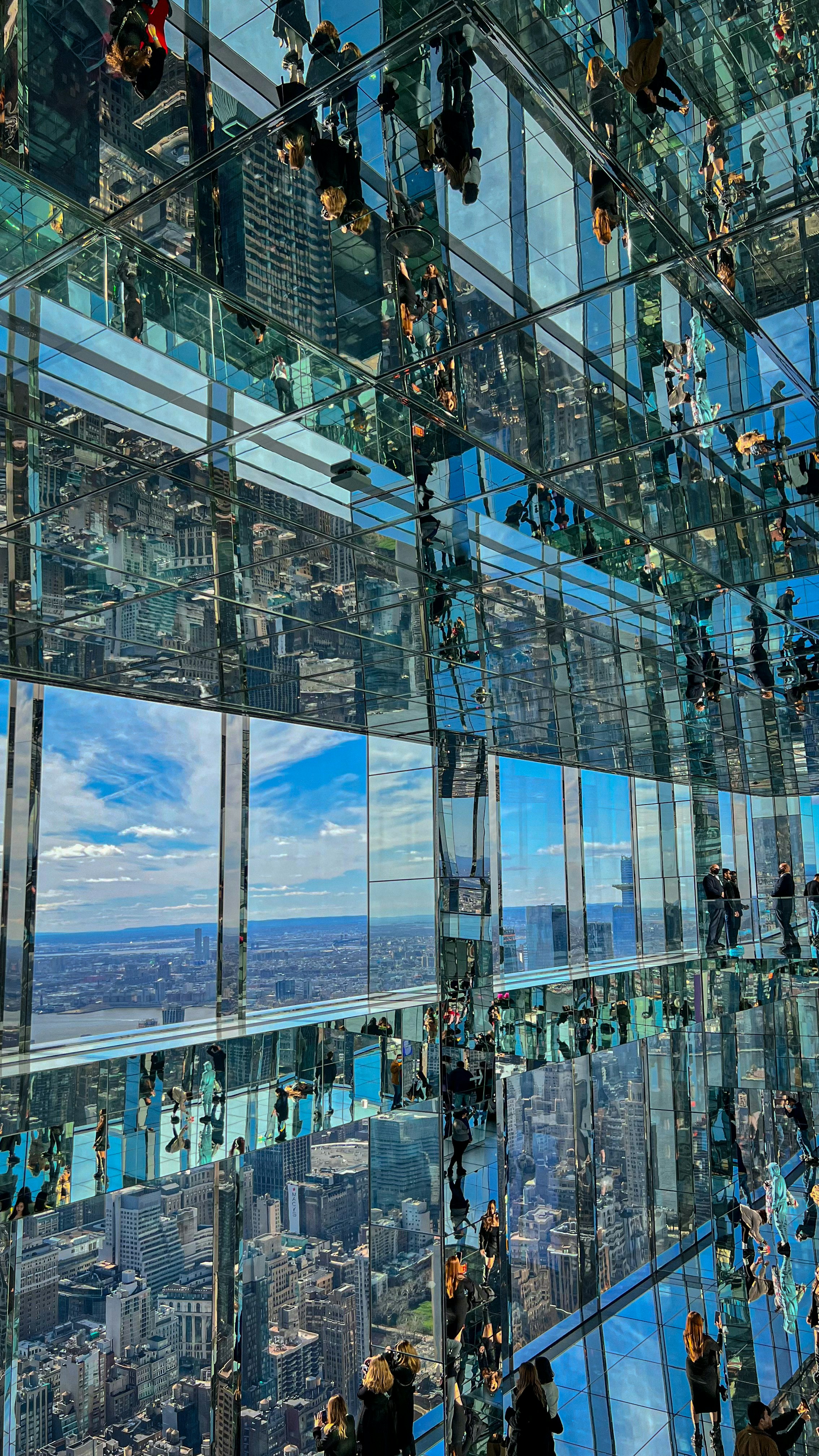
Summit One Vanderbilt
Summit
Summit One Vanderbilt is NYC's newest observation experience, opened in 2021 atop the One Vanderbilt tower (1,401 feet) next to Grand Central. It's an immersive art installation with mirrored rooms, glass floors, and outdoor glass ledges creating infinite reflections and vertigo-inducing perspectives of Midtown. It's Instagram-centric and experiential—part observation deck, part art museum. Very modern, very theatrical.
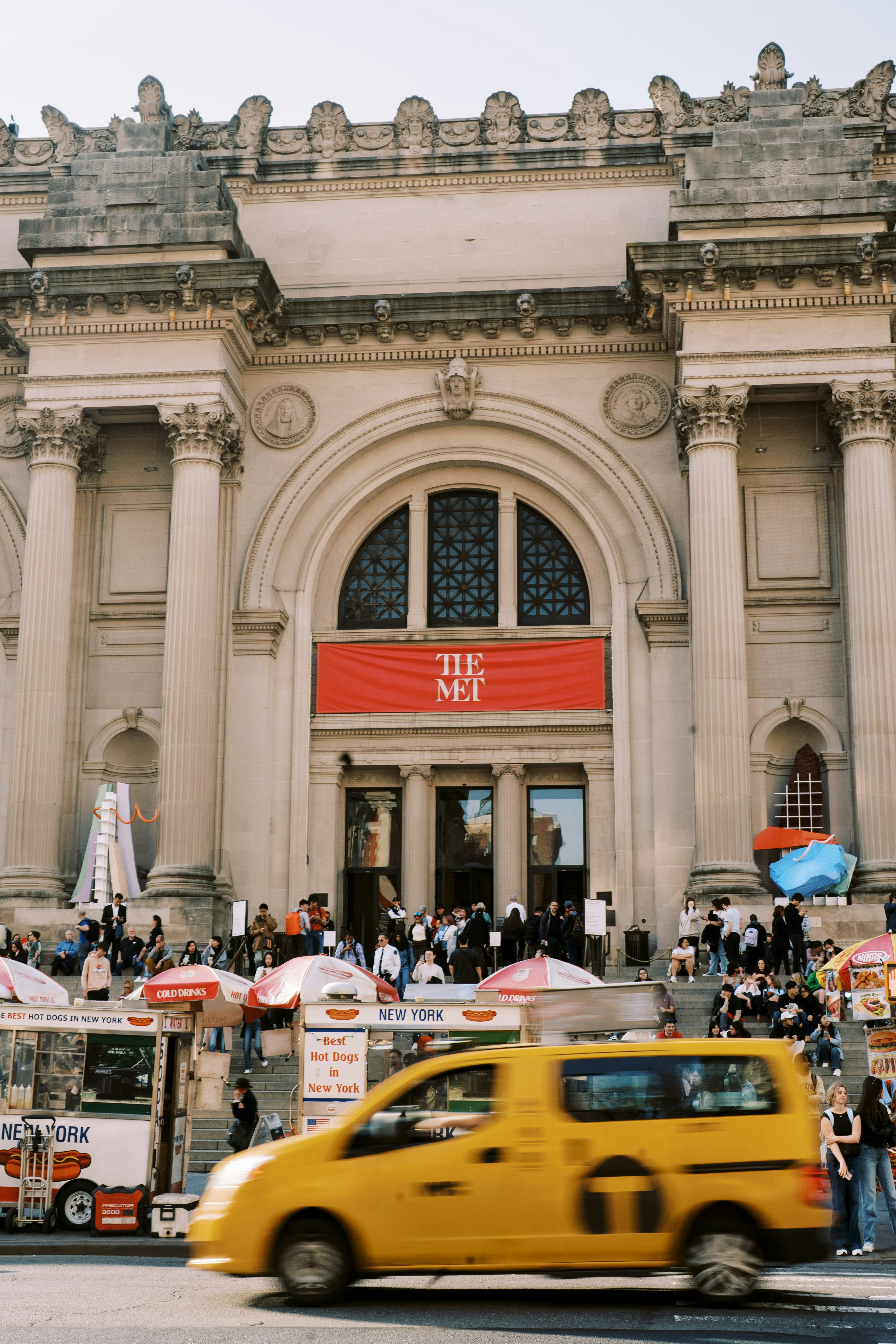
The Met
Metropolitan Museum
The Metropolitan Museum of Art (The Met) is one of the world's largest and greatest art museums, housing over 2 million works spanning 5,000 years of human history. The Beaux-Arts building (1880) on Fifth Avenue has 2 million square feet of gallery space. Highlights include the Temple of Dendur (Egyptian temple saved from the Nile), European paintings (Vermeer, Rembrandt), and the rooftop garden with city views. It's impossible to see everything in one visit.
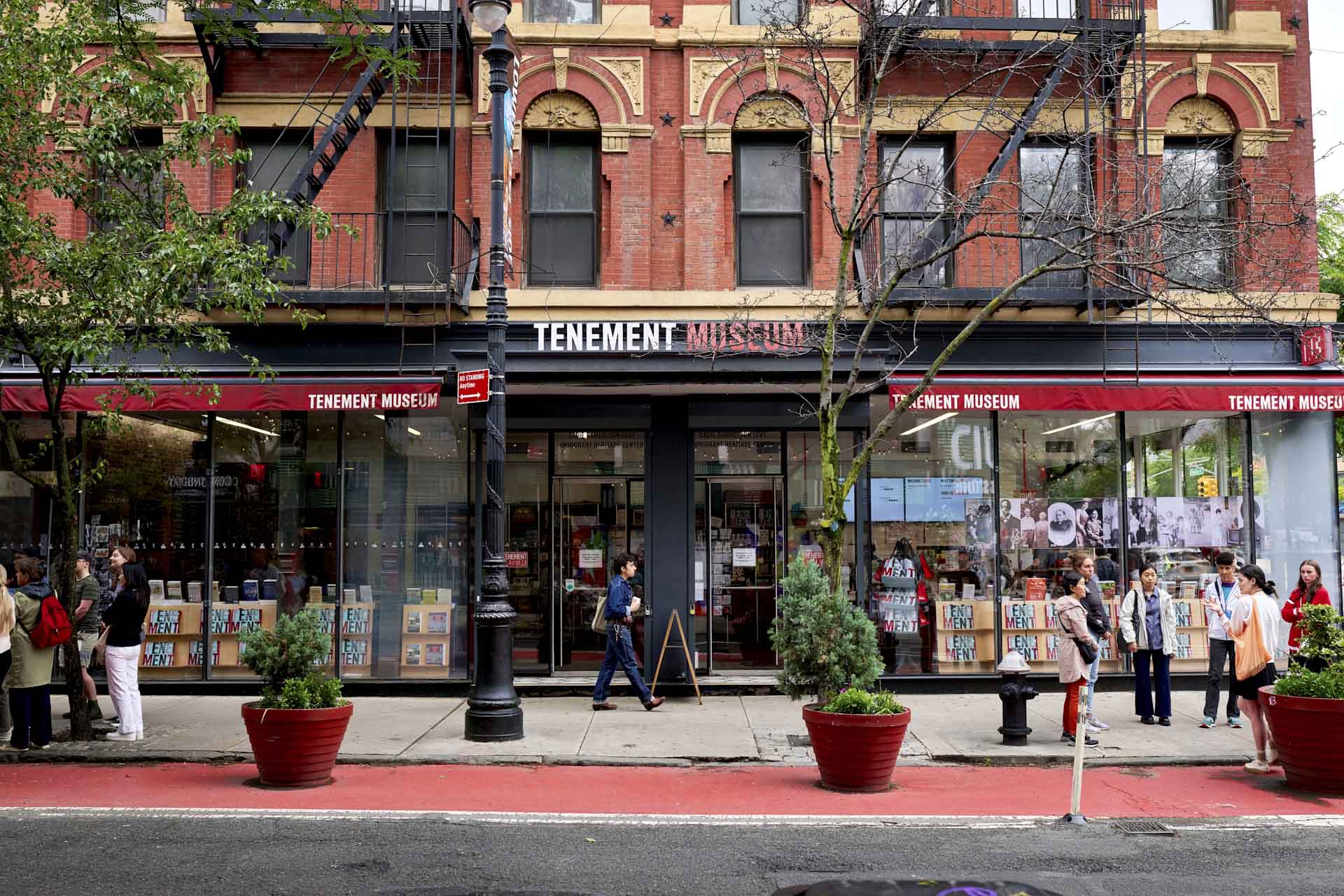
Tenement Museum
The Tenement Museum offers guided tours through preserved apartments at 97 Orchard Street (Lower East Side), where 7,000 working-class immigrants lived between 1863-1935. The museum recreates the cramped, difficult living conditions of German, Irish, Jewish, and Italian families. Tours focus on specific families' stories, bringing immigrant history to visceral life. It's deeply moving and historically essential. Advance reservations required.
🎒Travel Essentials for New York City
Curated gear recommended by locals to make your trip smoother.
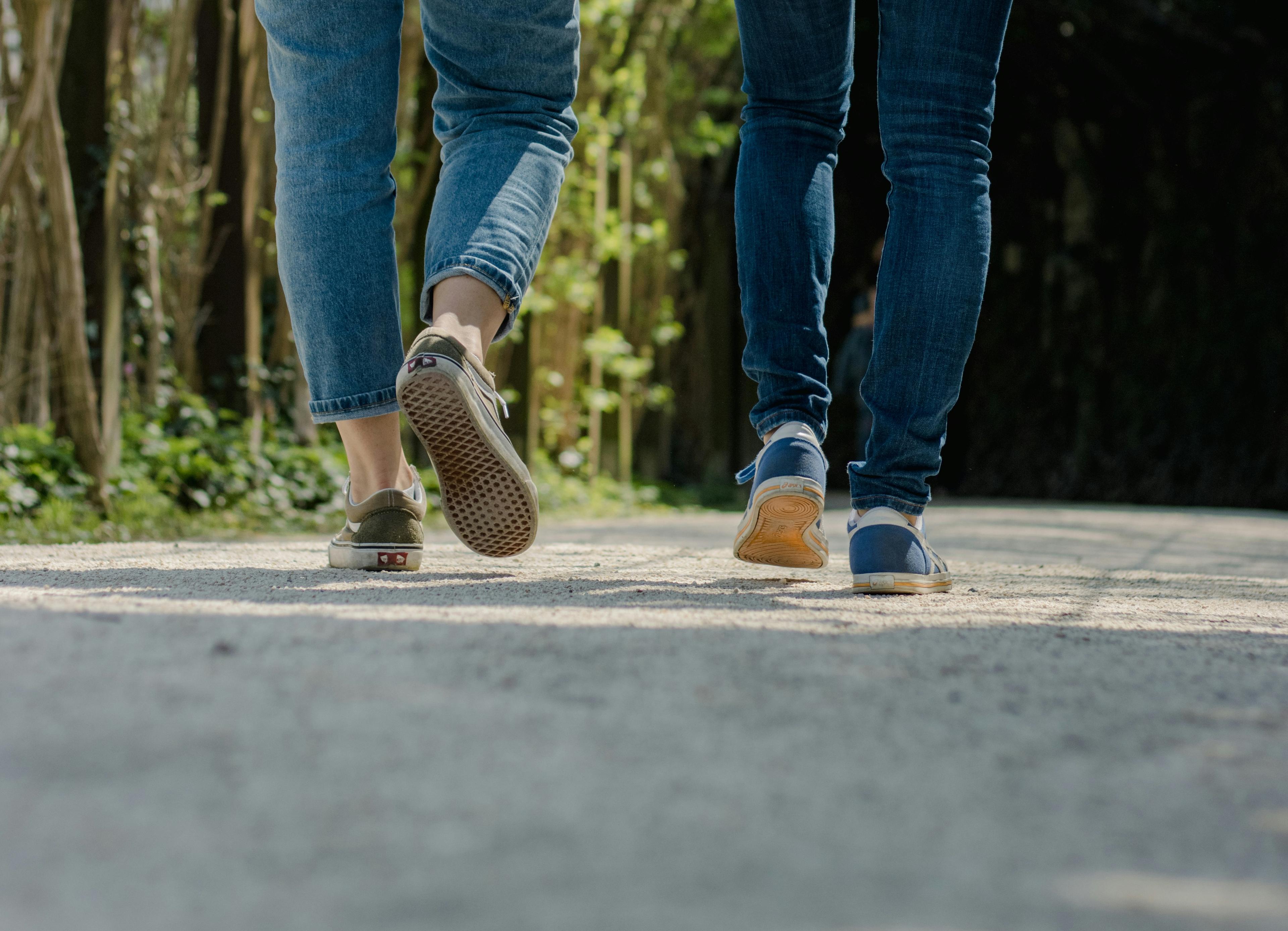
Walking Sneakers
Why you need it:You will walk 15,000 steps a day minimum. Do not wear heels or flip flops. Comfort is survival.
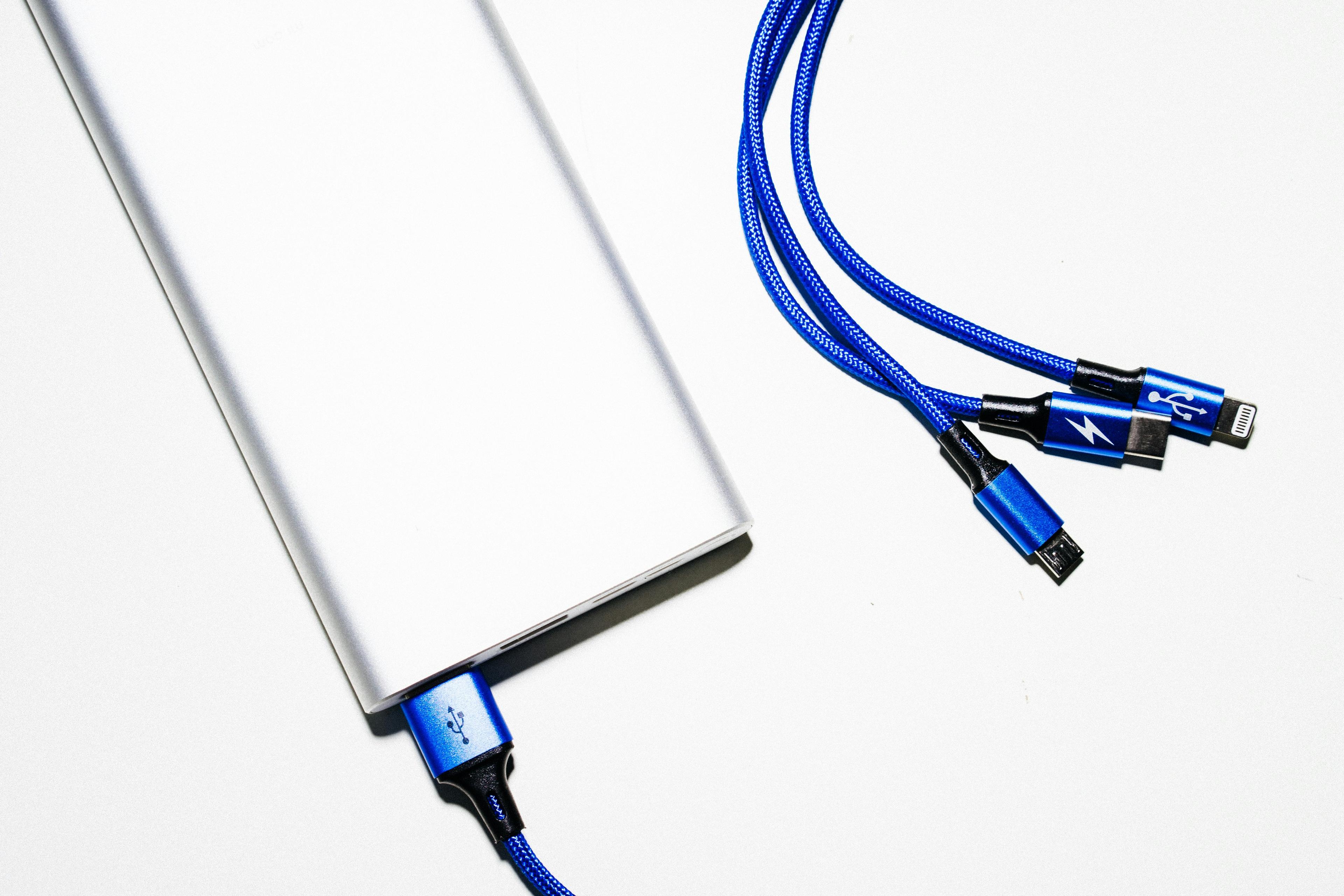
Portable Power Bank
Why you need it:Using maps and taking photos drains battery fast. You won't find outlets easily.
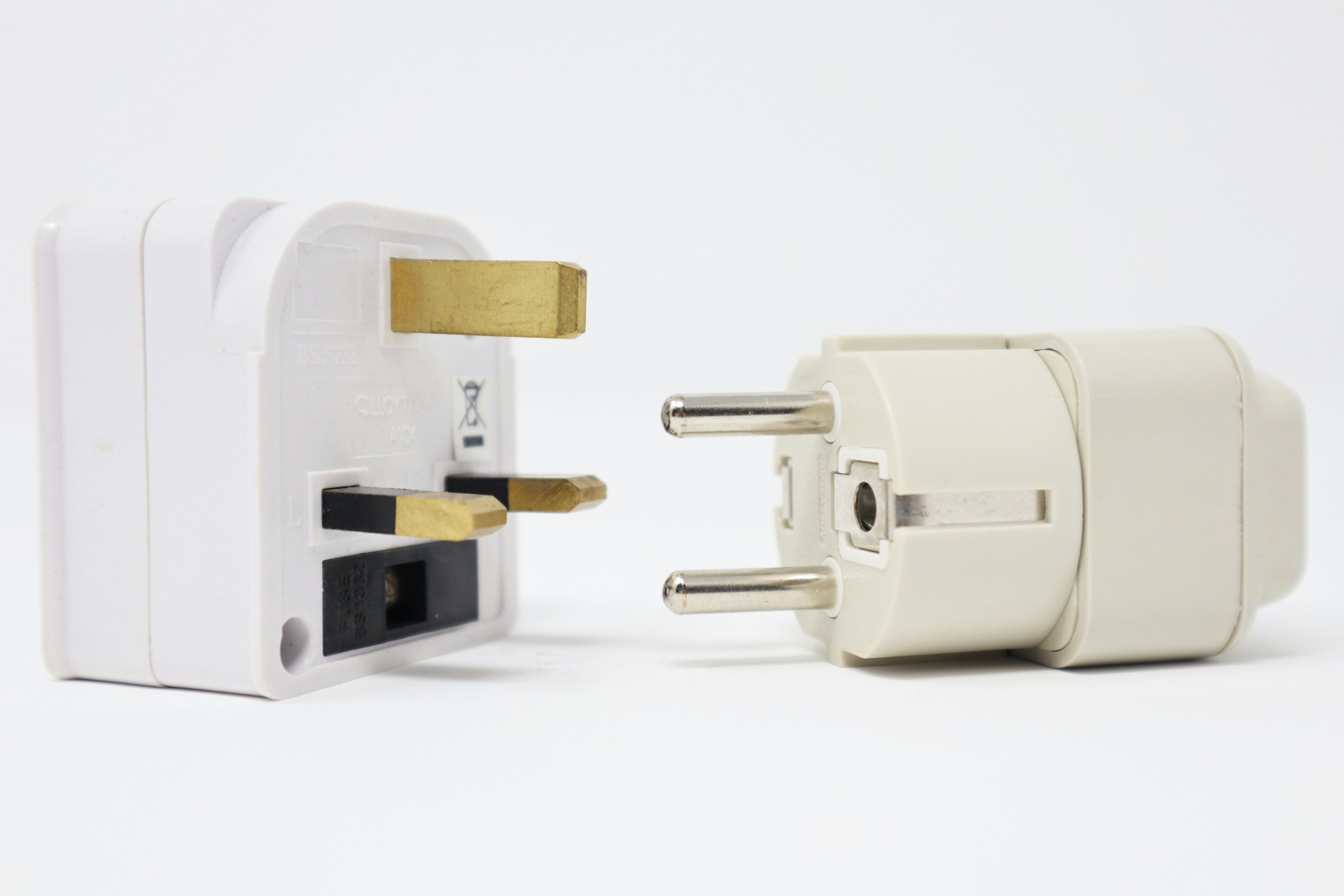
US Travel Adapter (Type A/B)
Why you need it:US plugs are flat pins. If you are from Europe/UK, you need this.
As an Amazon Associate, we earn from qualifying purchases.•Prices and availability subject to change.•Smart routing detects your region for the best shopping experience.
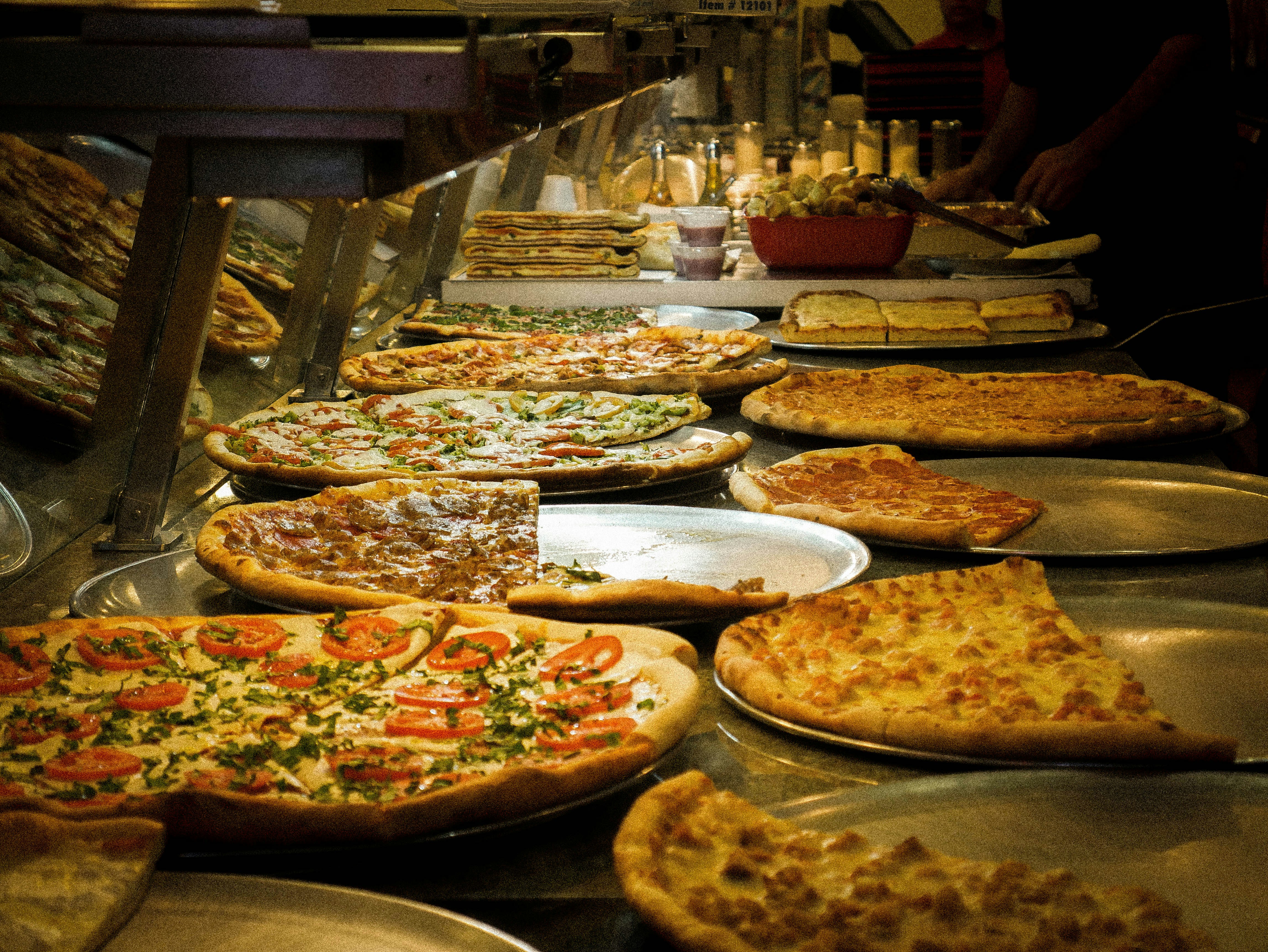
Dollar Slice ($1.50+)
A Slice
The 'Slice' is a distinct food category in NYC—different from a 'whole pie'—and serves as fast food for daily life. It's a thin-crust, greasy, triangular slice eaten standing up or while walking. The proper technique is to fold it lengthwise ('Libretto style') so the tip doesn't flop. Order a 'Regular' slice or 'Plain' slice, never 'cheese slice.' It's available 24/7 at pizzerias across all five boroughs.
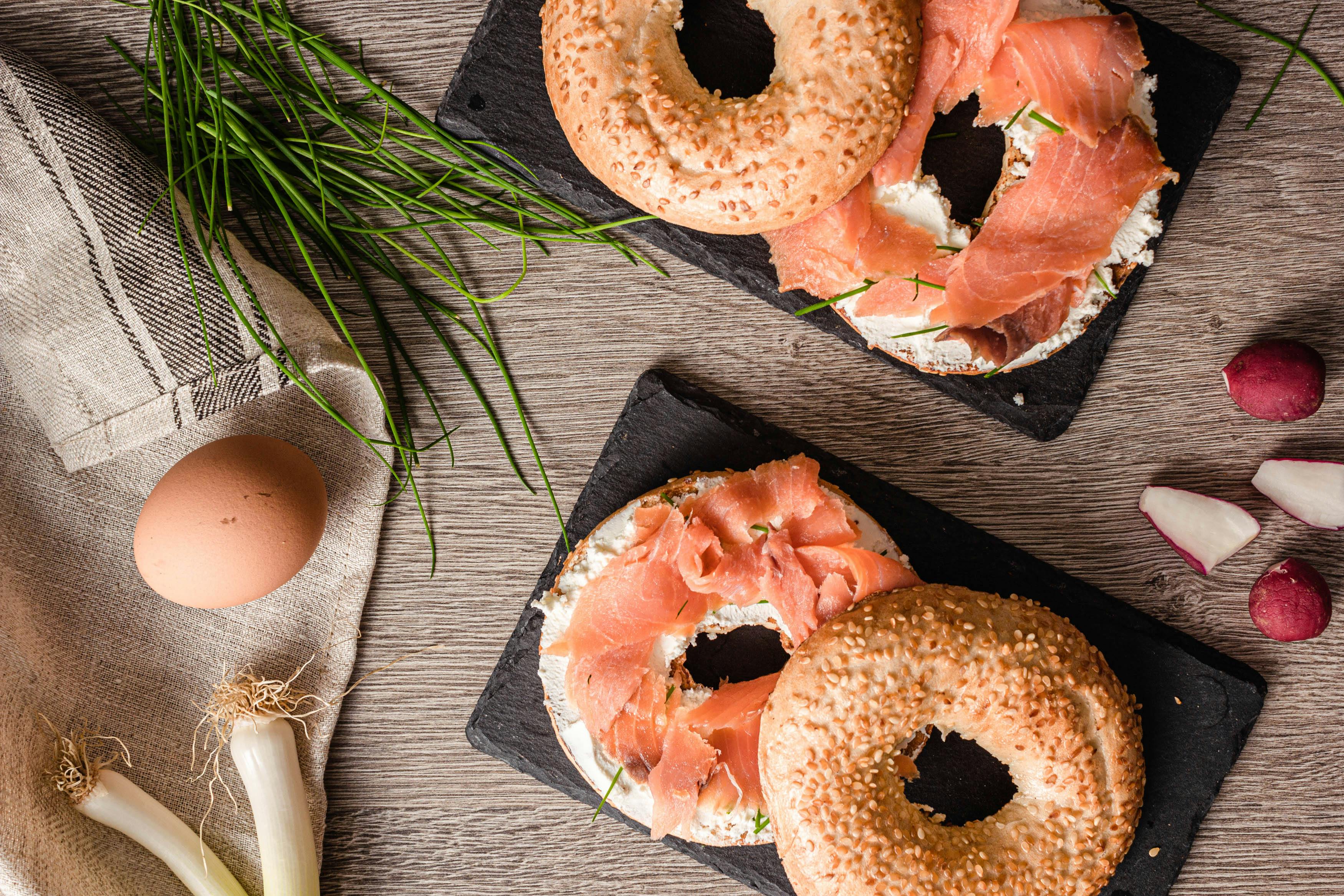
Bagel with Lox
Everything Bagel
A NYC bagel is a hand-rolled, boiled-then-baked bread ring with a dense, chewy interior and shiny crust. The 'Everything' bagel (topped with sesame seeds, poppy seeds, onion, garlic, salt) is the quintessential NYC order. Bagels are served with cream cheese ('schmear'), lox (cured salmon), tomato, onion, and capers. The 'Toasting Schism' divides purists (never toast fresh) from pragmatists (toast if not fresh).
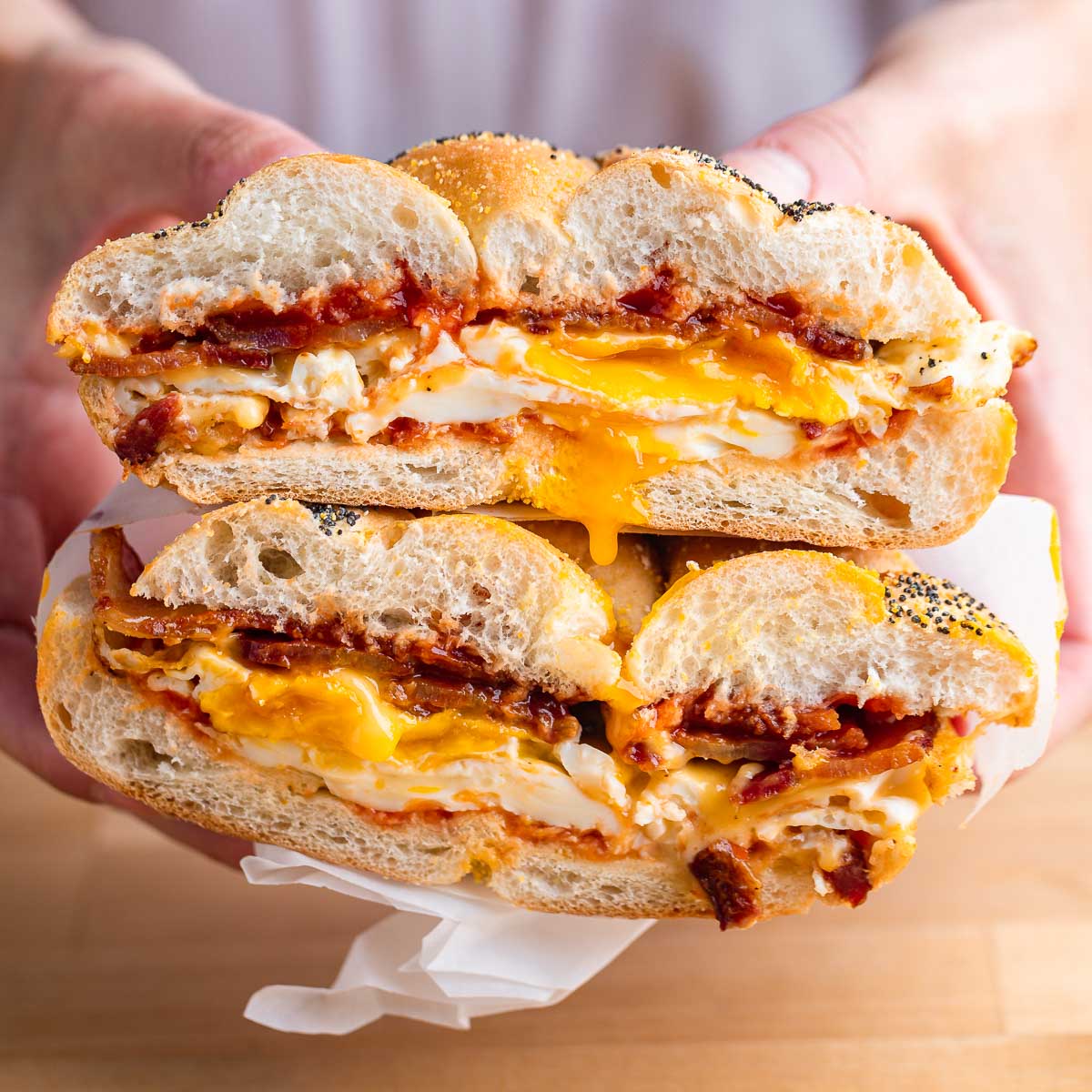
Bacon Egg and Cheese
BEC
The BEC (Bacon Egg and Cheese) is the quintessential bodega breakfast sandwich: fried eggs, bacon, and American cheese on a roll (never toast), wrapped in foil. It's efficient, greasy, salty, and cheap ($4-6). Order it as one rushed word at the bodega counter: 'Baconeggandcheese.' Add 'saltpepperketchup' (SPK) for the full working-class NYC experience.
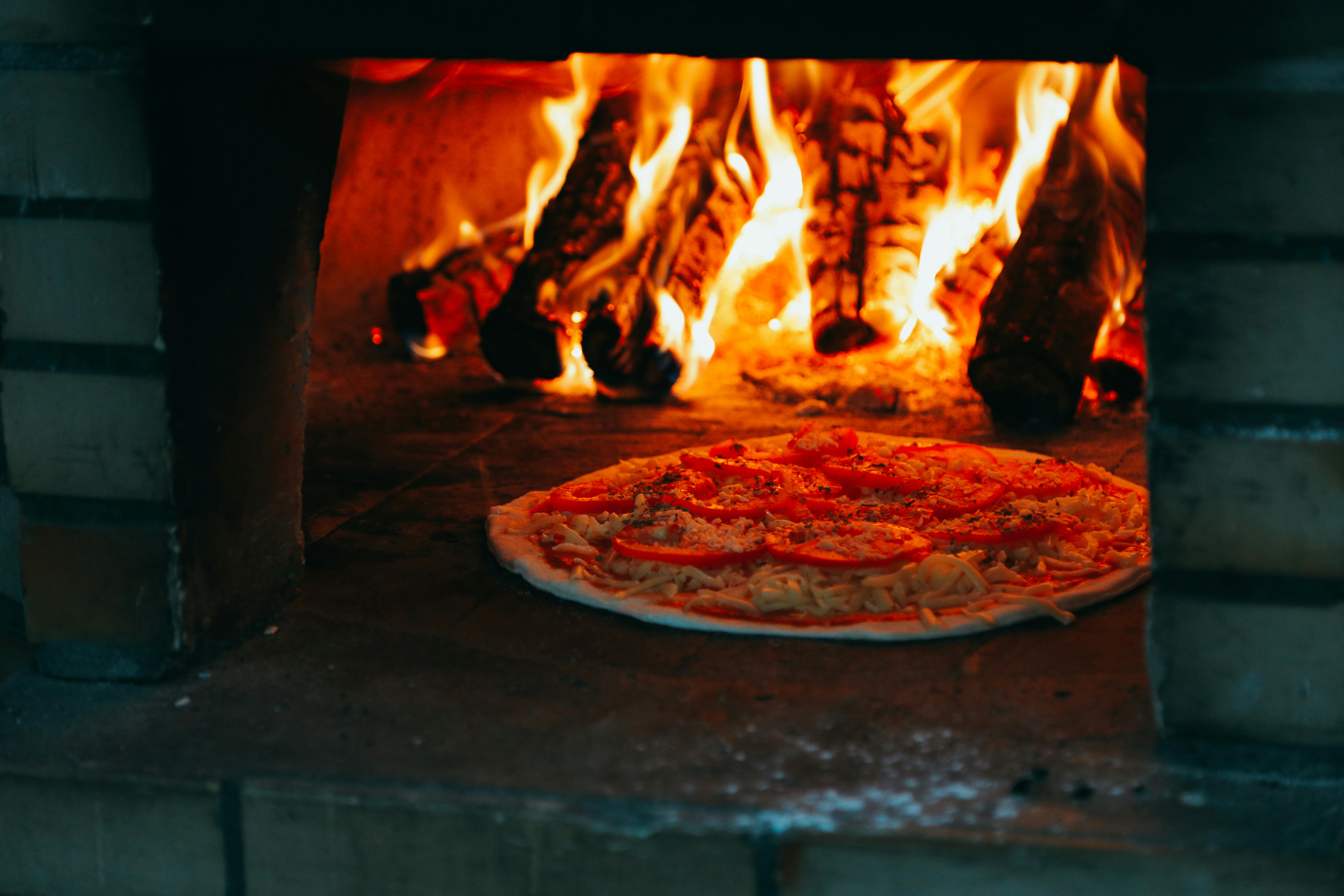
Coal Oven Pizza
Whole Pie
Coal oven pizza is a sit-down, destination meal cooked in 100-year-old anthracite coal ovens at 900°F (480°C), creating a charred, crispy, smoky crust in under 3 minutes. This is a 'whole pie' experience, not a slice—you sit down, wait in line, and order an entire pizza. The crust bubbles and chars ('leoparding'), and the center stays chewy. It's a social event requiring planning and patience.
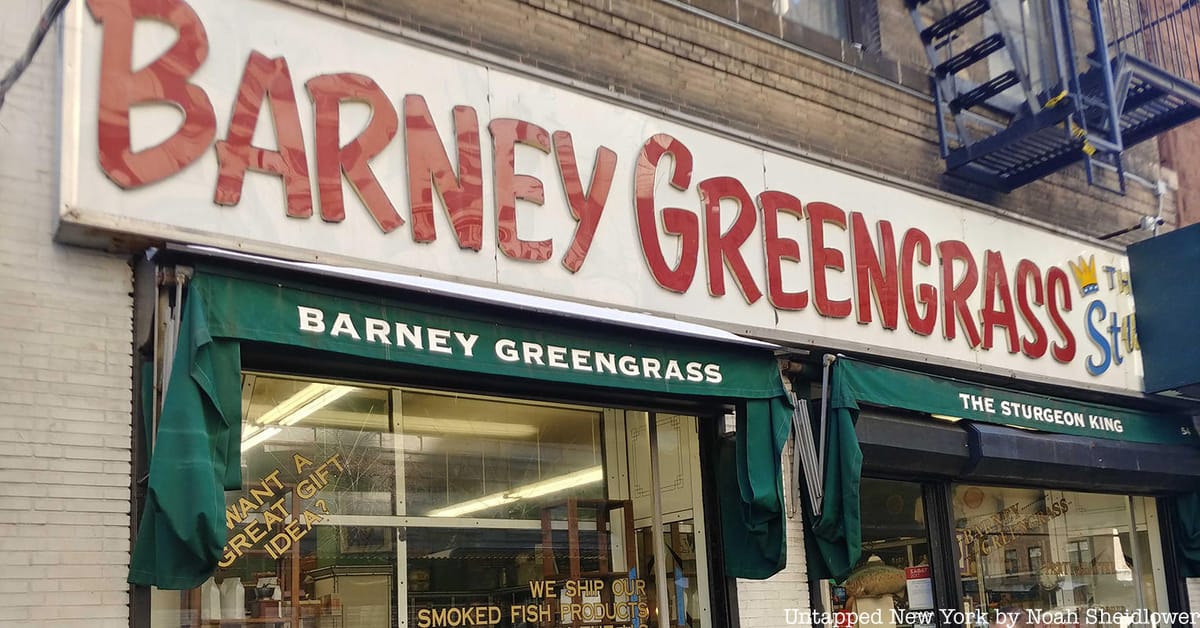
The Appetizing Counter
Bagel & Lox
An 'Appetizing Store' is distinct from a 'Deli' (which sells cured meats)—it specializes in smoked fish, dairy, and pickled vegetables. This is where you get lox, nova (cold-smoked salmon), sable (smoked black cod), whitefish salad, and scallion cream cheese. The ordering process is fast, loud, and uses numbered tickets. Staff shout orders and slice fish to order.
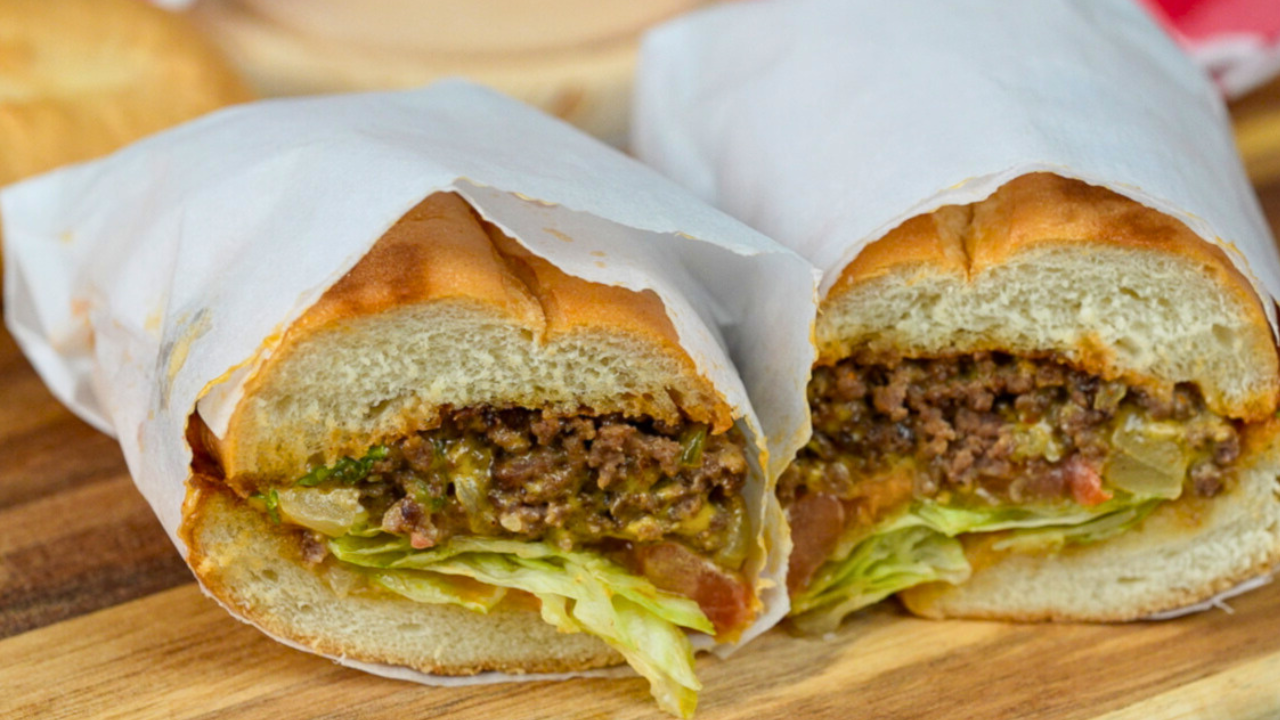
Chopped Cheese
The Chopped Cheese is a Harlem and Bronx icon: ground beef chopped and fried on a griddle with onions, mixed with melted American cheese until inseparable, then served on a hero roll with lettuce, tomato, and mayo. It's a working-class bodega staple, similar in spirit to a Philly cheesesteak. The authenticity check is that the cheese must be melted INTO the meat, not on top.
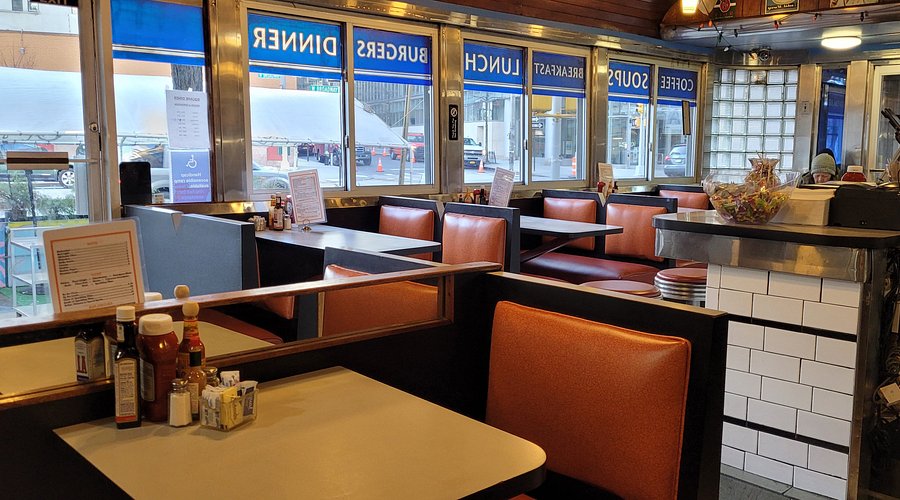
The Diner
Diner
The NYC diner is the cultural safety net of the city: usually Greek-owned, often open 24/7, with enormous laminated menus offering everything from Greek salads to matzoh ball soup to disco fries (cheese fries with gravy). It's not gourmet—it's comfort, consistency, and endlessly refilled coffee. You can order breakfast at 3pm, dinner at 7am. The diner accepts everyone at any hour without judgment.
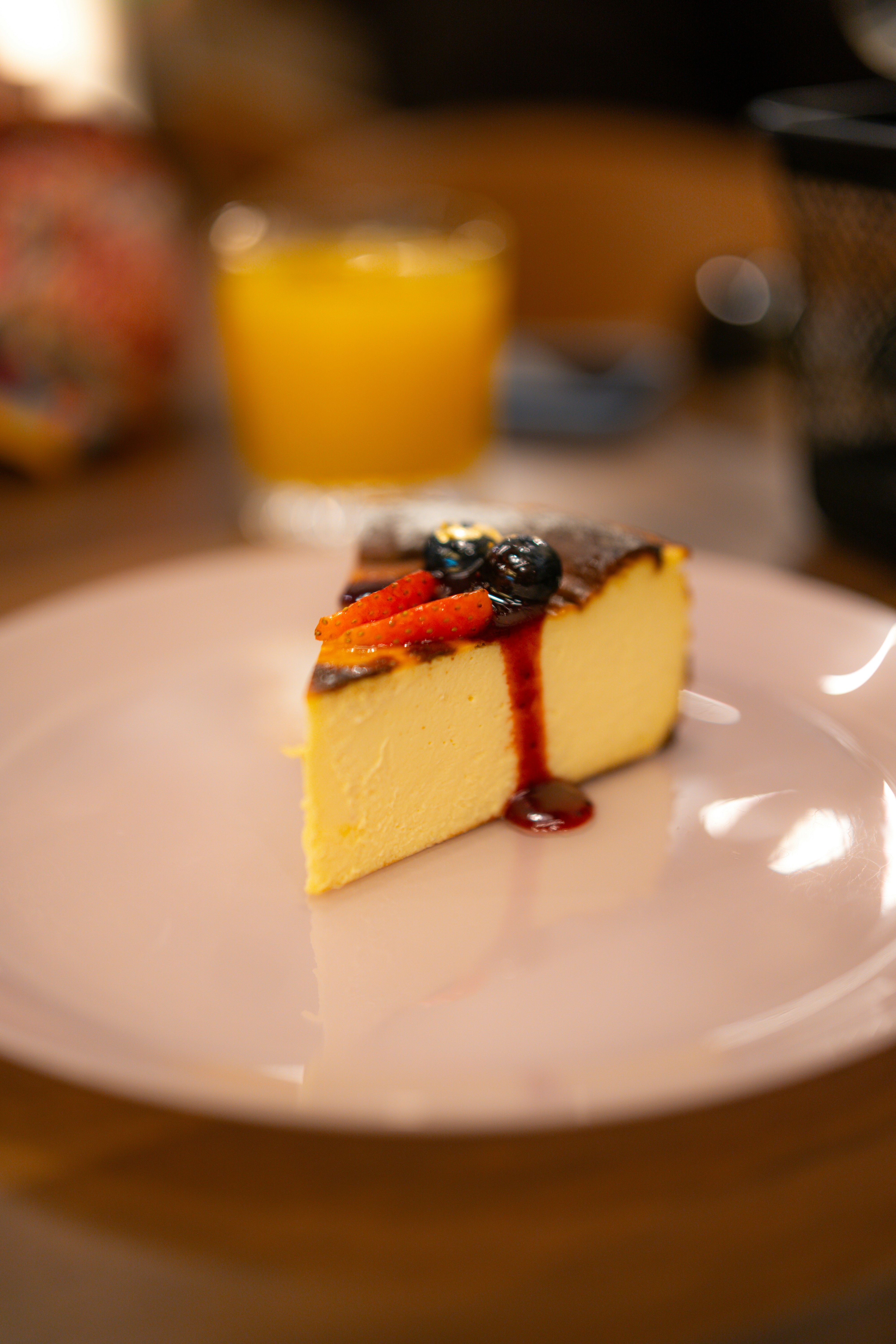
NY Cheesecake
Cheesecake
New York-style cheesecake is dense, rich, and baked—not fluffy. It's made with heavy cream, cream cheese (Philadelphia brand is canonical), eggs, and sugar on a graham cracker crust. The texture is firm and creamy, never airy. It's often served plain, without fruit toppings, though strawberry topping is acceptable. A slice is substantial enough to be a meal and requires a strategic eating approach.
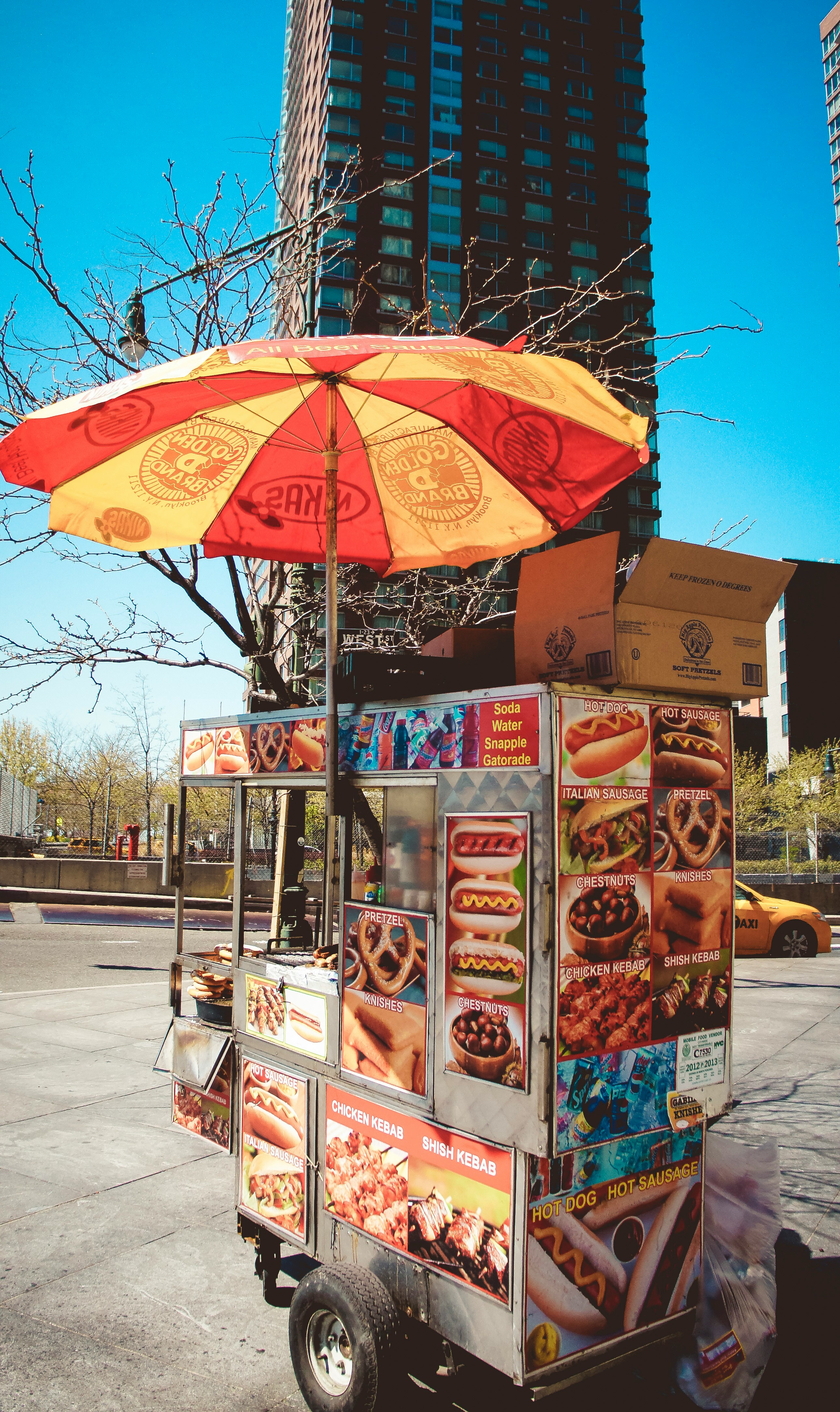
Street Hot Dogs
Dirty Water Dog
The NYC street hot dog (affectionately called a 'dirty water dog') is a beef or pork frank boiled in metal cart water, served on a steamed bun with optional toppings: mustard, sauerkraut, onions in tomato sauce, and relish. They're sold from iconic metal pushcarts by vendors with umbrellas. It's cheap ($2-4), fast, and eaten while walking. The 'dirty water' refers to the murky water that simmers the hot dogs all day.
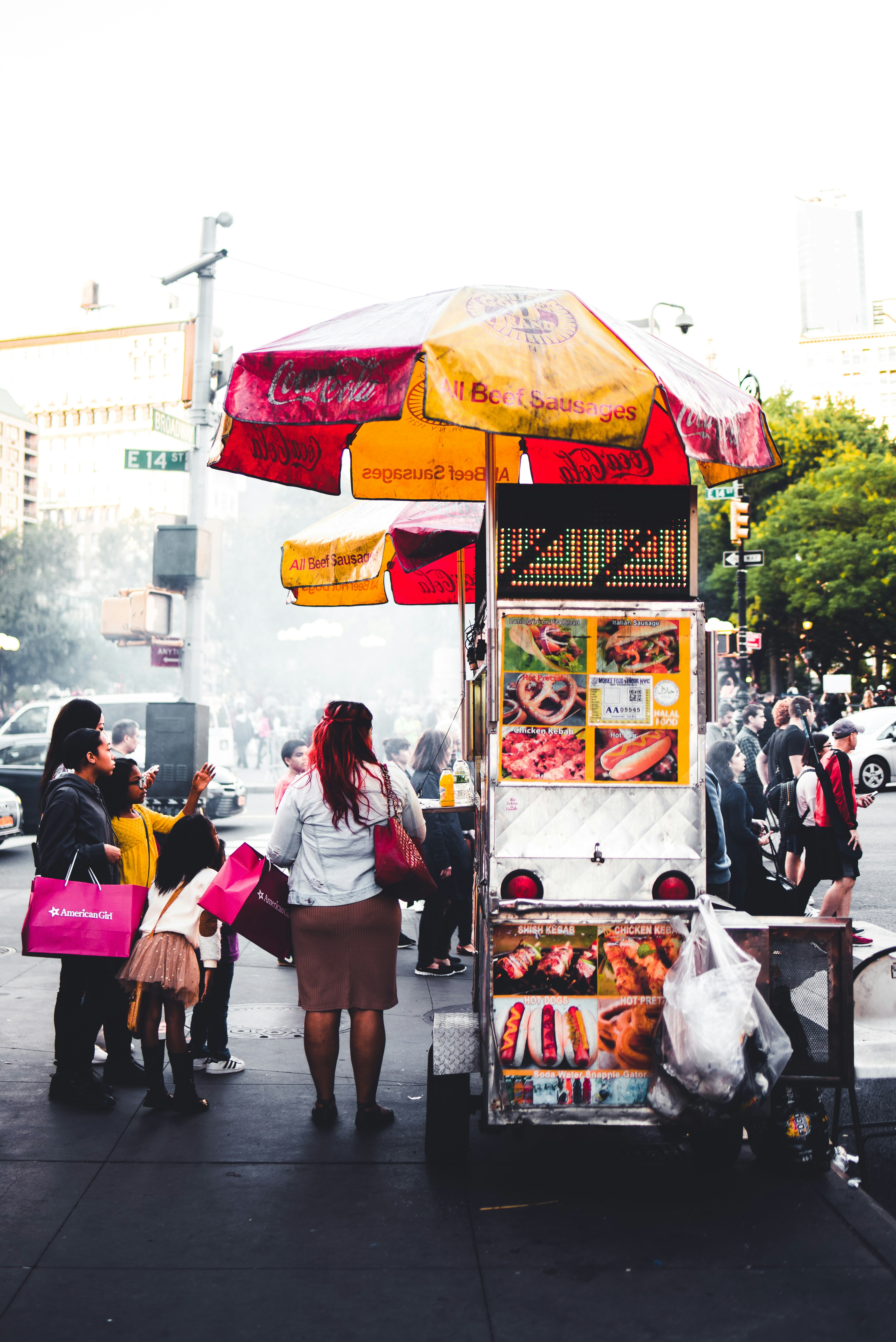
Street Pretzels & Nuts
Street Cart
Street carts sell hot soft pretzels (large, salty, chewy) with mustard, and roasted nuts (honey-roasted peanuts, cashews, almonds) roasted on-site in rotating drums. The smell of roasting nuts is the smell of NYC winter. They're cheap ($2-5), fast, and eaten while walking to the subway or between errands. The pretzels are dense and require serious jaw work.
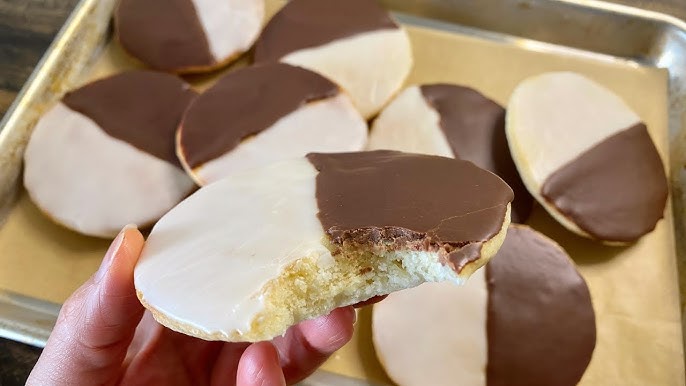
Black and White Cookie
Black and White
The Black and White Cookie is a soft, cake-like cookie (about 4 inches diameter) with a flat top covered in half chocolate icing and half vanilla icing. It's more cookie-shaped cake than actual cookie—tender and spongy. Despite the name, it's not truly a cookie (no crunch). It's sold at delis, bakeries, and bodegas across NYC and is eaten as a snack or dessert with coffee.
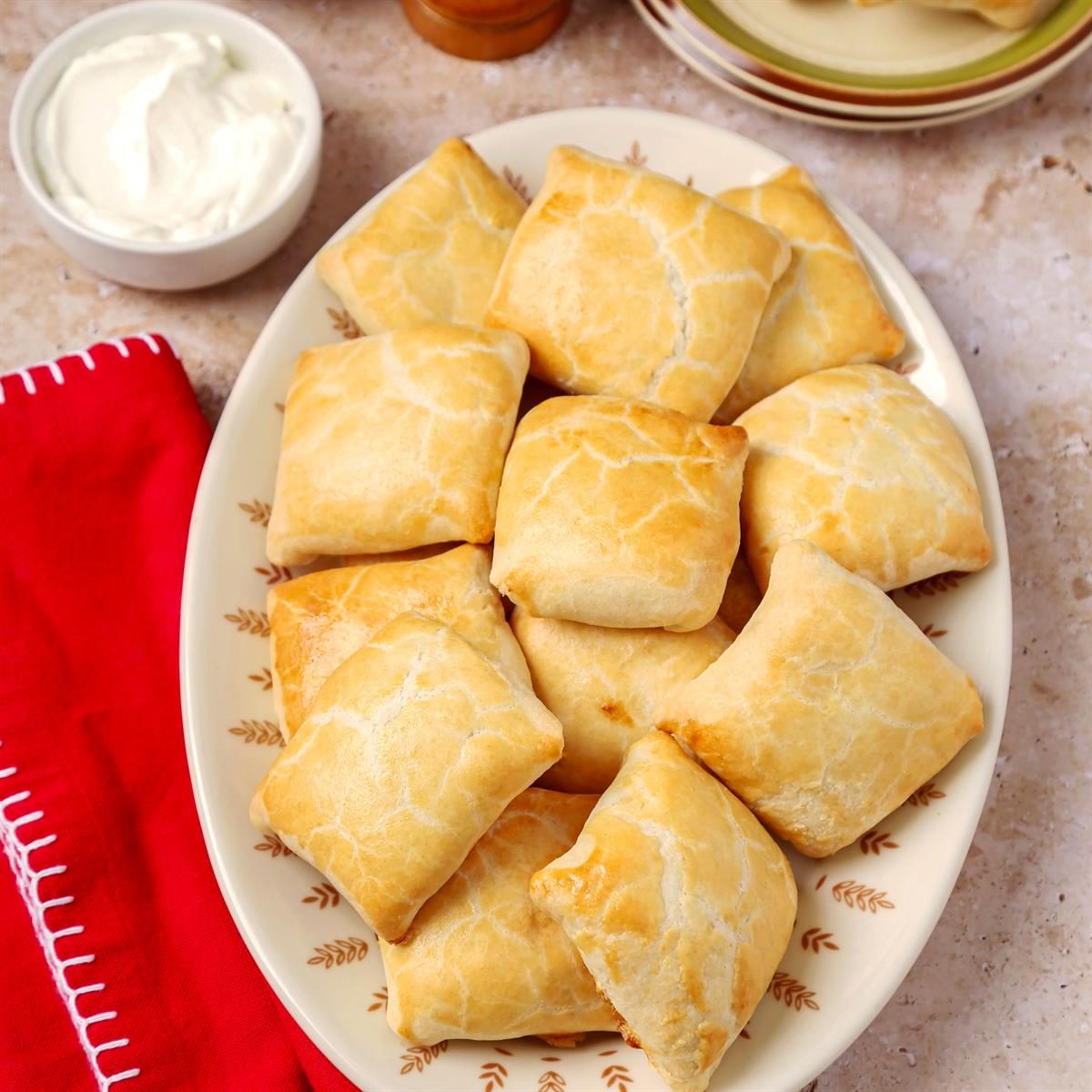
Knish
A knish is a baked or fried dumpling of Eastern European Jewish origin: a ball of mashed potato filling wrapped in dough, either round or square. Fillings vary (potato, kasha, spinach, cheese) but potato is the classic. It's dense, filling, cheap ($3-5), and served hot. You eat it with your hands, often with mustard. It's working-class fuel—a hot, portable meal in one package.
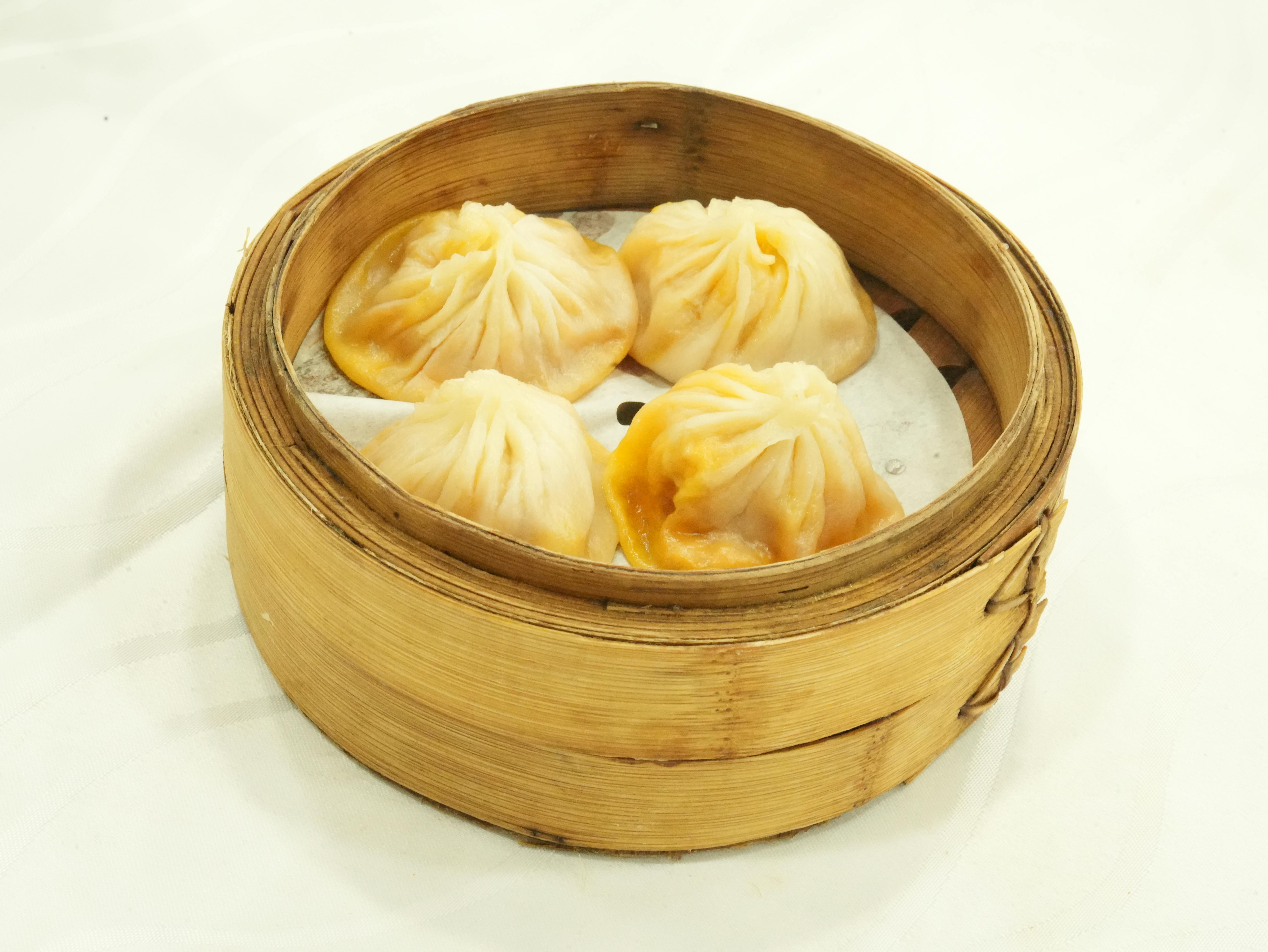
Dim Sum & Dumplings
Dim Sum
NYC's Chinese food scene is rooted in waves of immigration to Manhattan's Chinatown and later Flushing, Queens. Dim sum is a Cantonese tradition of small plates (dumplings, buns, rolls) served from rolling carts or ordered off menus, traditionally eaten for brunch. Soup dumplings (xiao long bao)—pork dumplings filled with hot broth—are the star. The dining experience is loud, communal, and fast-paced.
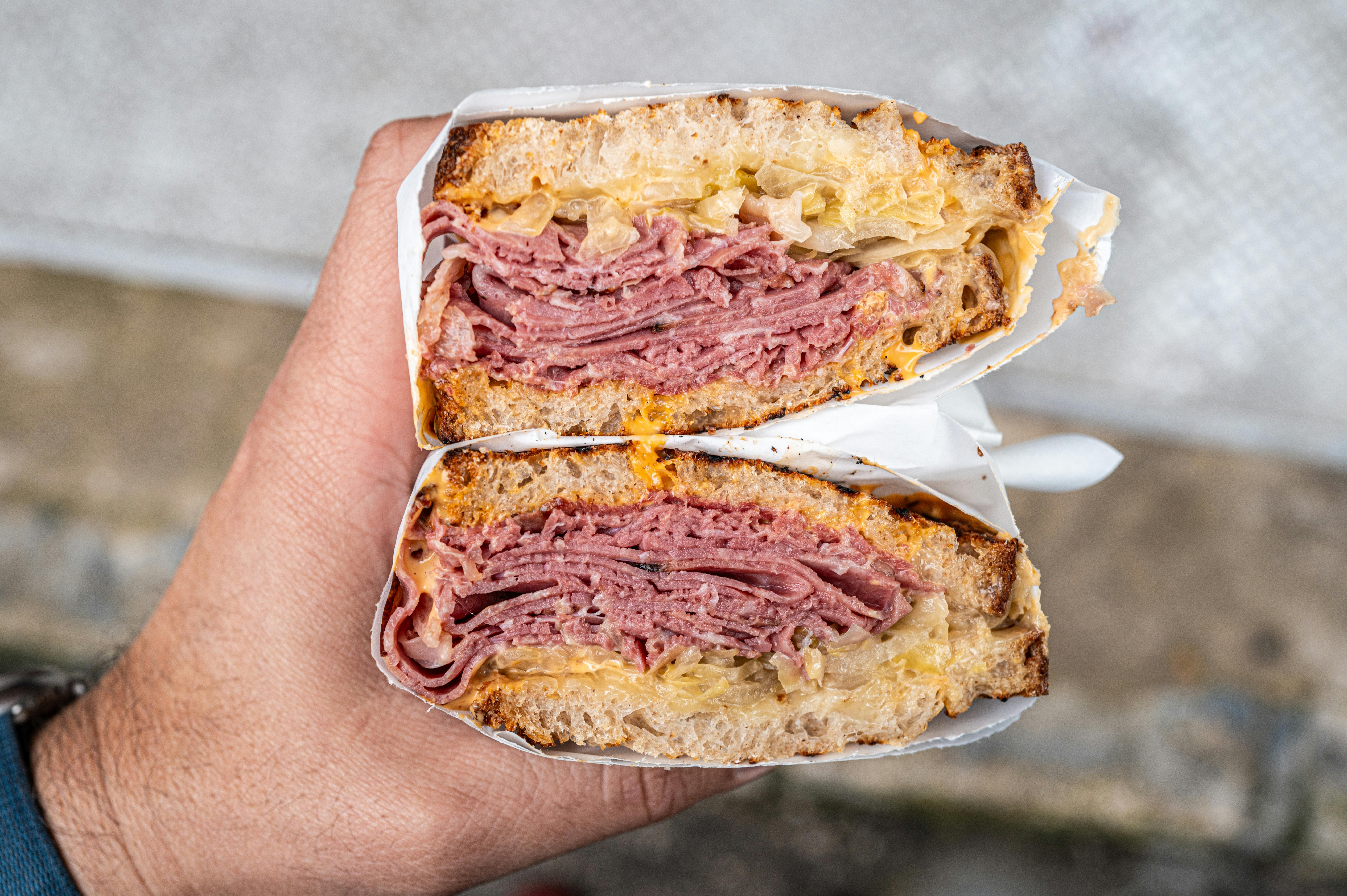
Pastrami on Rye
Pastrami Sandwich
Pastrami on rye is a Jewish deli icon: beef brisket brined in spices for weeks, rubbed with peppercorns and coriander, smoked for hours, then steamed until fork-tender. It's hand-carved into a towering pile (often 1 pound of meat) on rye bread with mustard—no mayo, no lettuce. Katz's Delicatessen (since 1888) on the Lower East Side is the historic standard-bearer. The sandwich is messy, massive, and requires two hands.
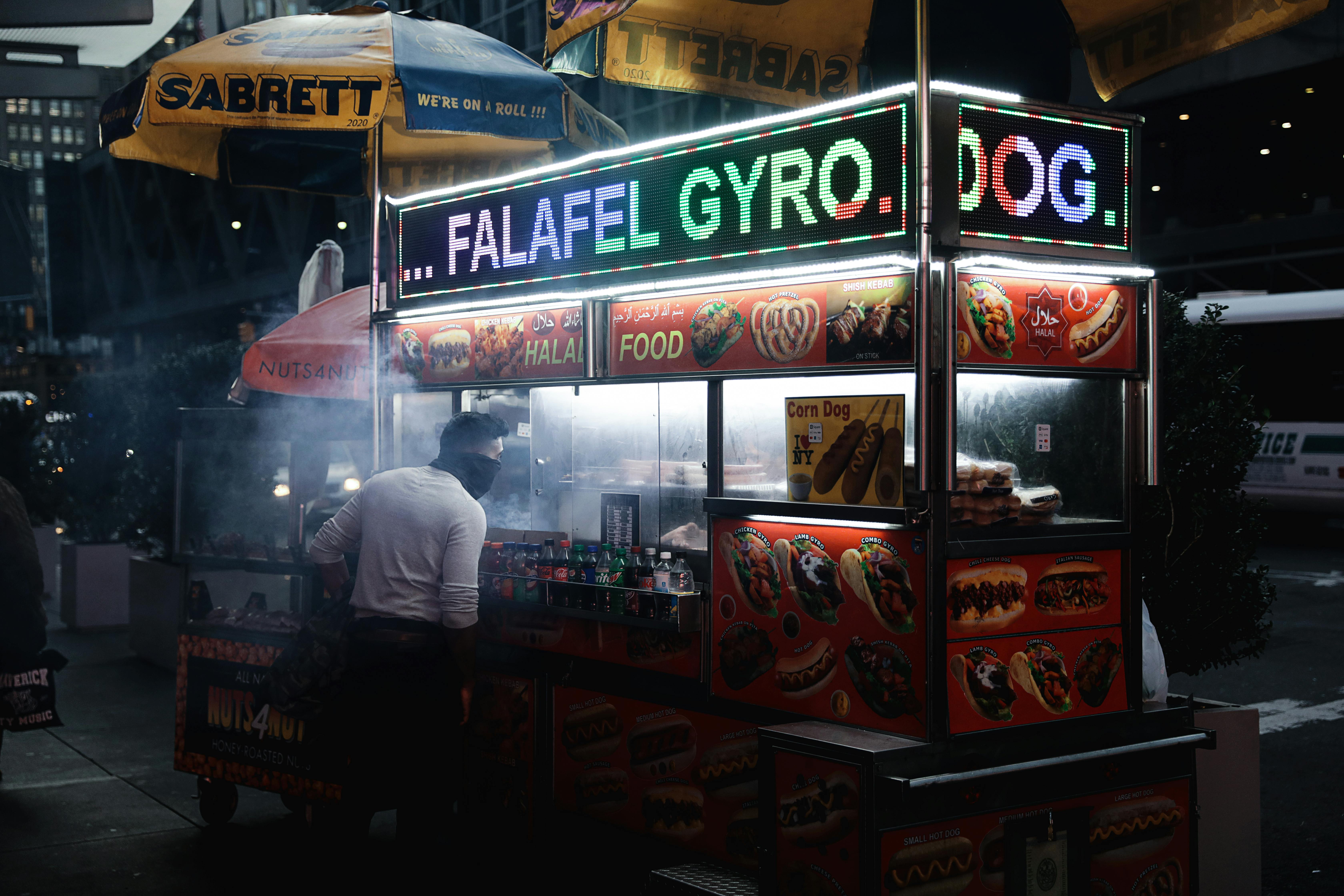
Chicken Over Rice
Halal Cart
Chicken Over Rice is NYC's modern street food king: chopped spiced chicken (or lamb) over yellow turmeric rice with lettuce, tomato, and the famous 'white sauce' (mayo-yogurt-based) and optional 'red sauce' (extremely spicy harissa-style chili). Served in Styrofoam containers from yellow metal carts. Originally created for Muslim taxi drivers needing quick halal meals, it's now ubiquitous across the city, available 24/7 at hundreds of carts.
The Perfect 24 Hours in New York City
Bagels & Schmear in the Lower East Side
Start at Russ & Daughters Cafe (opened 1914) for New York's quintessential breakfast. Order a bagel with lox (smoked salmon), cream cheese, tomato, onion, and capers. The bagels are hand-rolled, boiled, then baked—nothing like the bread circles elsewhere. Pair with coffee or fresh OJ. Then walk the LES streets where immigrant culture built New York. This neighborhood invented American bagels, pickles, and attitude.
Brooklyn Bridge Walk to DUMBO
Walk across the Brooklyn Bridge—built in 1883, it's still one of the world's most iconic spans. Start in Manhattan, walk toward Brooklyn for the best skyline views. The wooden pedestrian path sits above traffic. Arrive in DUMBO (Down Under the Manhattan Bridge Overpass) and snap the famous photo of the Empire State Building framed by the bridge. Then explore Brooklyn Bridge Park's waterfront piers. The contrast between industrial history and modern Brooklyn is striking.
Pizza at Juliana's or Grimaldi's
DUMBO sits between two legendary coal-oven pizzerias—Juliana's and Grimaldi's (long story involving a divorce and dueling restaurants). Both serve thin-crust pizza with slightly charred edges and fresh mozzarella. Order a margherita or the white pizza. No slices—whole pies only. The queue can stretch 45 minutes but moves fast. This is New York pizza at its finest: simple, perfect, no gimmicks.
Central Park: Bethesda Fountain to Bow Bridge
Take the subway to 72nd St and enter Central Park at Bethesda Terrace. The fountain is instantly recognizable from 1,000 movies. Walk north to the Bow Bridge—Central Park's most romantic spot. Then rent a rowboat on the lake ($20/hour) or just sit and people-watch. The park is 843 acres of designed nature in the middle of Manhattan. On weekends, you'll see musicians, dancers, and artists performing. This manufactured wilderness somehow feels essential.
Sunset from Top of the Rock
Head to Rockefeller Center's Top of the Rock observation deck (70th floor). Unlike the Empire State Building, this one has unobstructed views of Central Park, the Empire State Building itself, and all of Manhattan. Book the sunset time slot weeks ahead. As the city lights up, you understand why 8 million people choose to live on this tiny island. The outdoor deck means perfect photos with no glass glare. Stay through blue hour for the full experience.
Dinner & Broadway Show in Times Square
Grab dinner in Hell's Kitchen (9th Ave)—Joe Allen or Becco for pre-theater crowds. Then catch a Broadway show. TodayTix app offers same-day discounted tickets ($50-100). The lights of Times Square are overwhelming but you have to see them once. After the show, walk through the neon chaos—it's bright enough to read a book at midnight. New York's energy at night is electric. Grab a slice at 2 Bros Pizza or a hot dog from a cart. The city never actually sleeps.