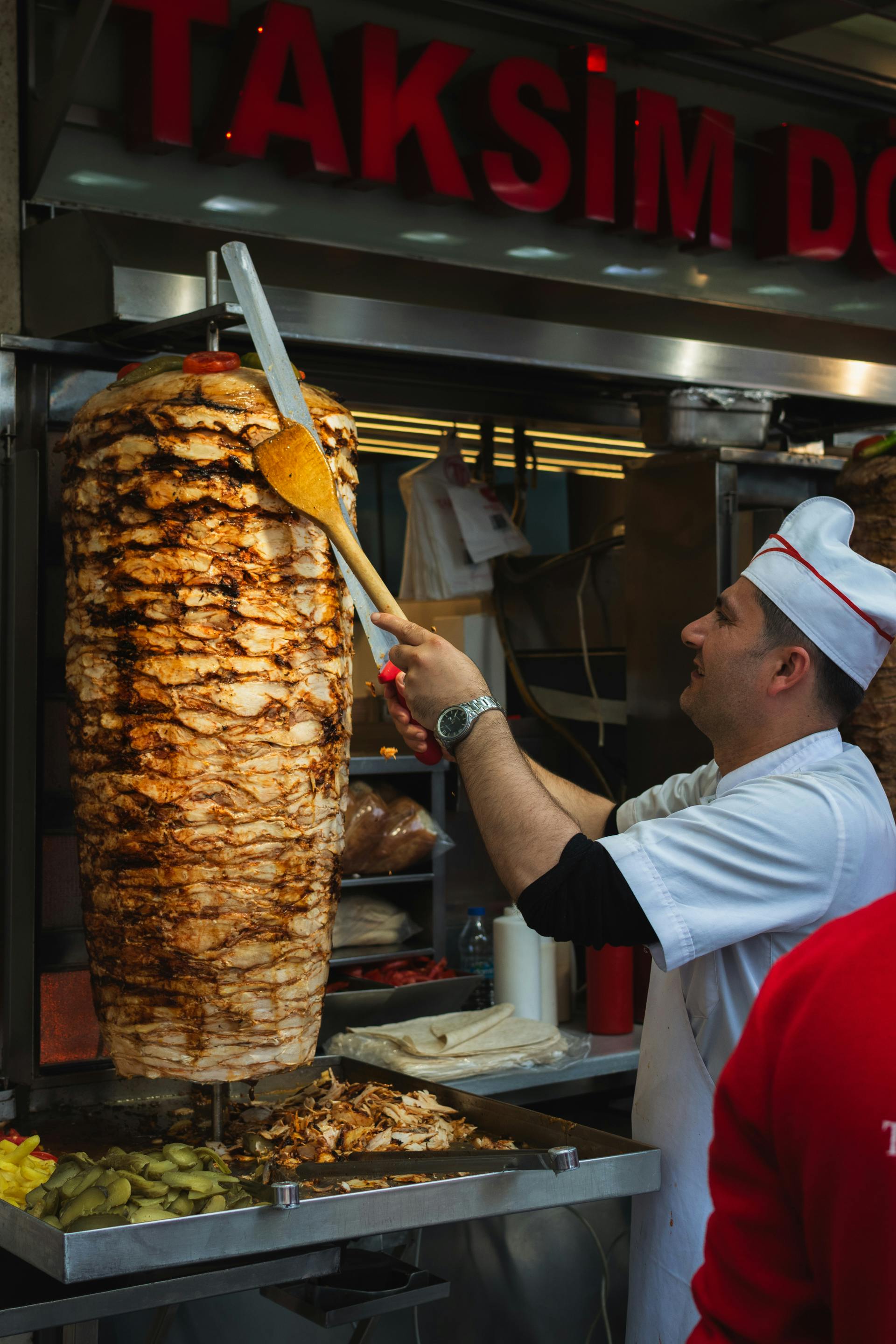
Döner Kebap
Döner
Döner Kebap is Berlin's #1 street food, invented here in the 1970s by Turkish immigrants. It's shaved rotisserie meat (lamb, chicken, or veal) stuffed into toasted flatbread with fresh salad, tomatoes, onions, cabbage, and garlic yogurt sauce. A 'Gemüse Kebap' (vegetable döner) adds grilled vegetables and feta cheese. It's fast, cheap (€4-6), and consumed at all hours—especially post-club at 4am.
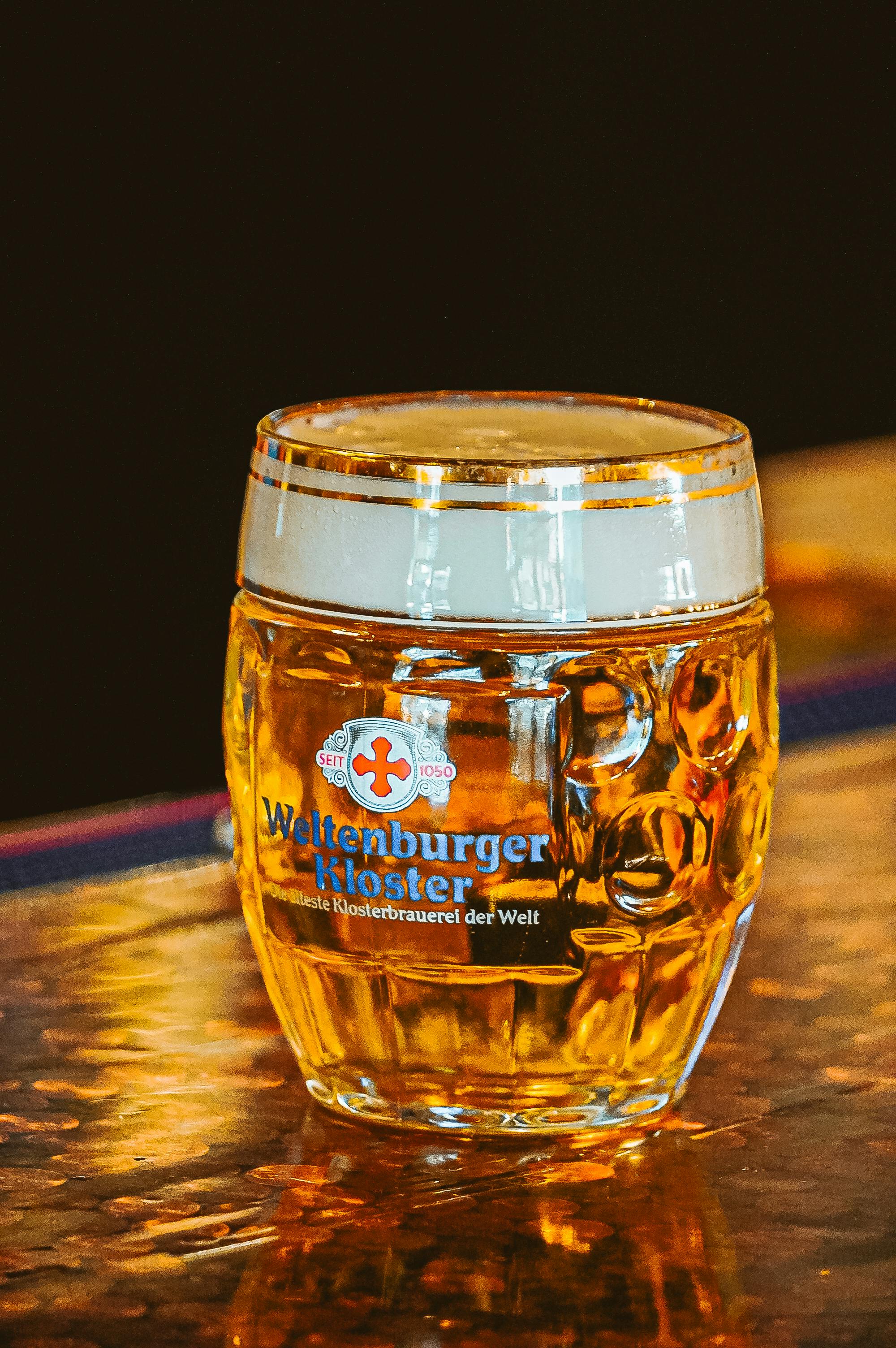
Berlin Beer Culture
Wegbier
Beer in Berlin is like coffee in Italy: cheap (€1-2 from Spätis), everywhere, and consumed casually at any time of day or night. It's not ceremonial or special—it's utilitarian. A 'Wegbier' (road beer) for the walk home or to the club is culturally normal and legal. Public drinking is accepted and common. The most popular local beers are Berliner Pilsner, Berliner Kindl, and Schultheiss.
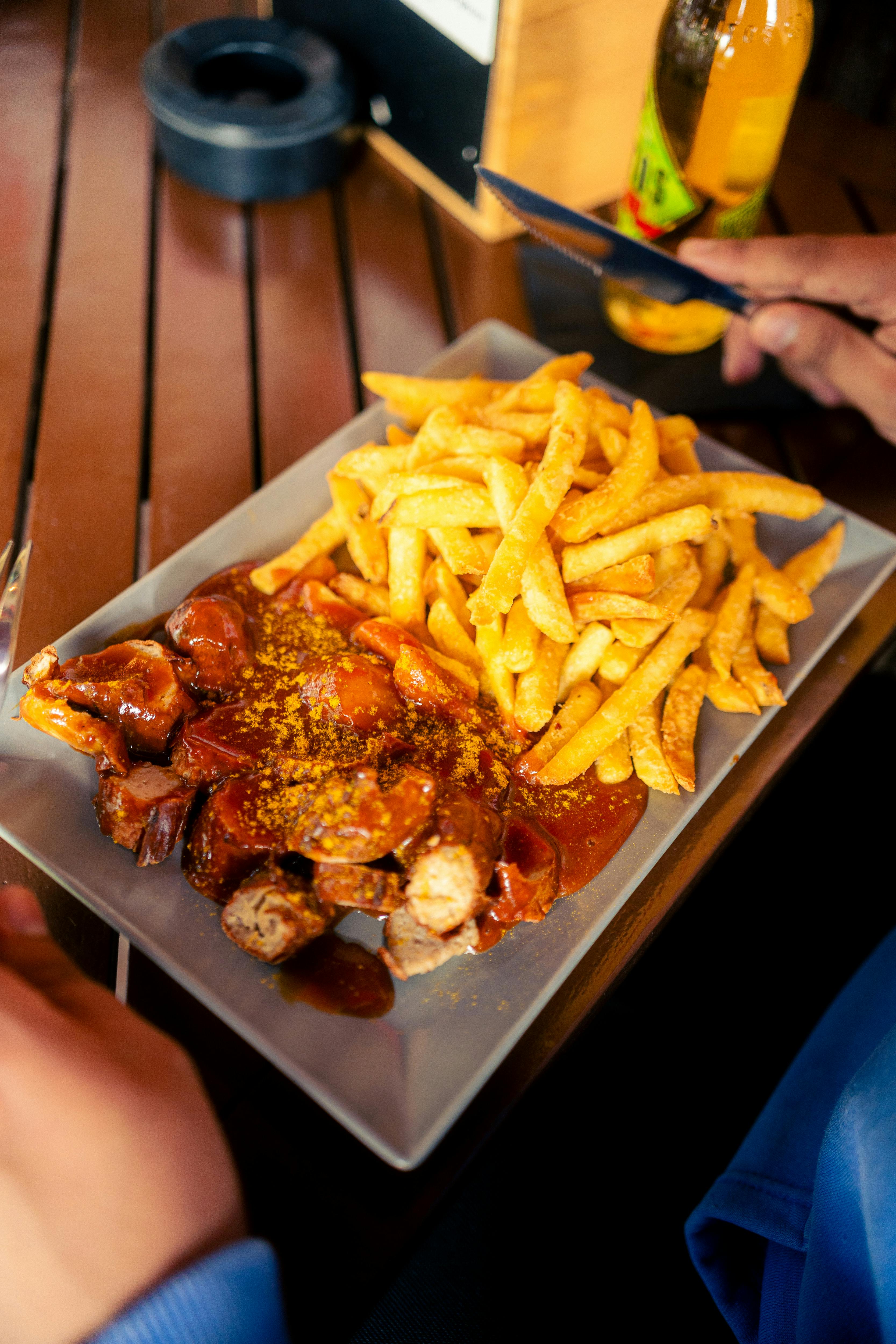
Currywurst
Currywurst is a Berlin icon: steamed then fried pork sausage cut into bite-sized slices, drowned in curry ketchup and sprinkled with curry powder. Served with fries or a bread roll. It's fast food, invented in post-war Berlin, and still a cult classic. The sauce is sweet, tangy, and mildly spiced. It's eaten at Imbiss stands (snack stalls) standing up at tall tables.
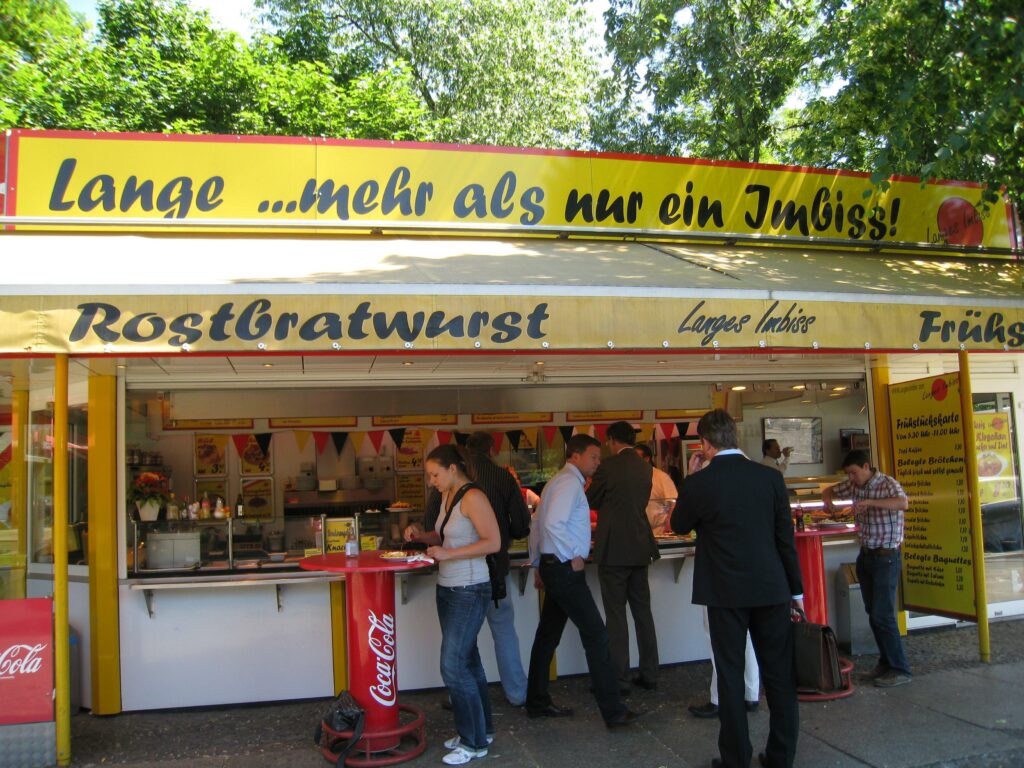
Imbiss Culture
Der Imbiss
The Imbiss is a German snack stand—not a restaurant—where you eat standing up at tall tables. It serves utilitarian, greasy, salty fast food: fries, sausages (bratwurst, currywurst), meatballs (Frikadellen), and schnitzel sandwiches. The goal is to keep you moving, not to sit and linger. It's fast, cheap (€3-6), and essential working-class infrastructure. You order at the window, eat quickly, and leave.
Späti Survival Food
Späti Essen
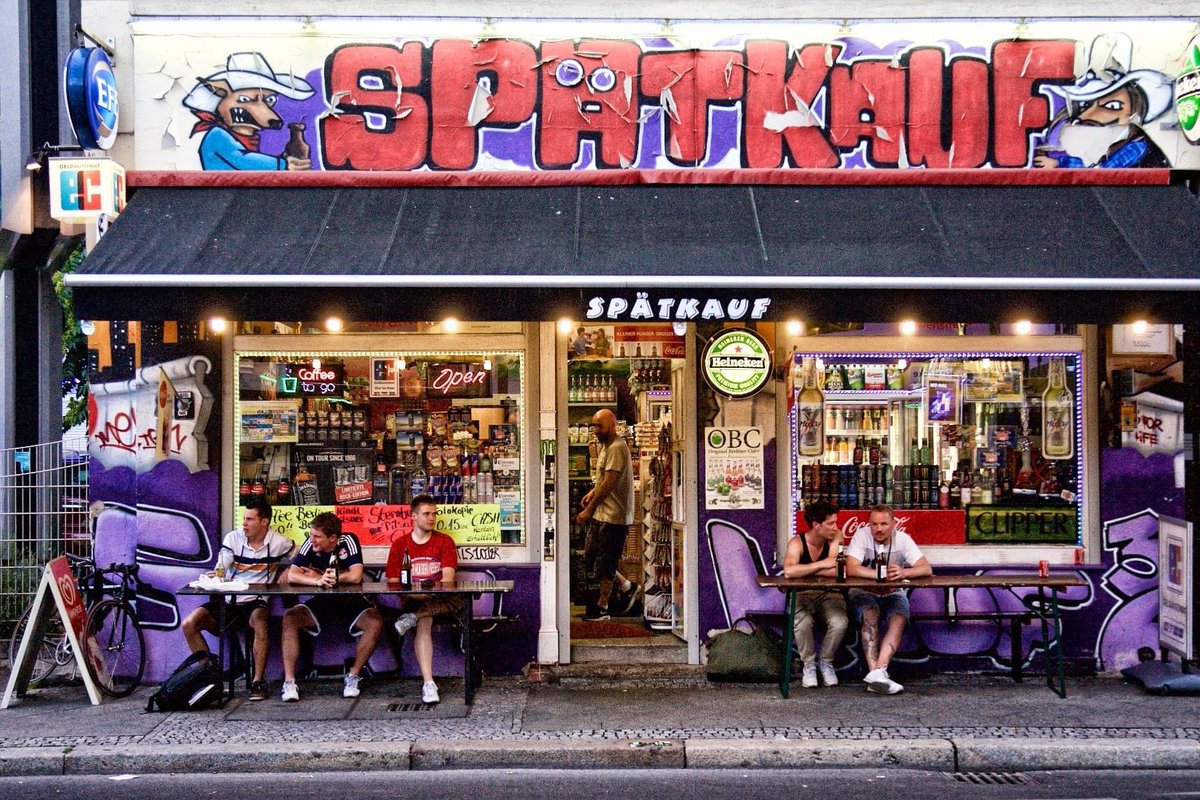
The Späti (Spätkauf) is a late-night corner store open until 2am or later, sustaining Berlin's nightlife economy with survival food: frozen pizzas, instant noodles, chips, chocolate bars, energy drinks, and cold beer. It's how you survive 4am when everything else is closed and you're too broke or lazy for a restaurant. Spätis are the social heart of neighborhoods—buy a beer and sit on the bench outside with locals.
Vegan Normalization
Vegan
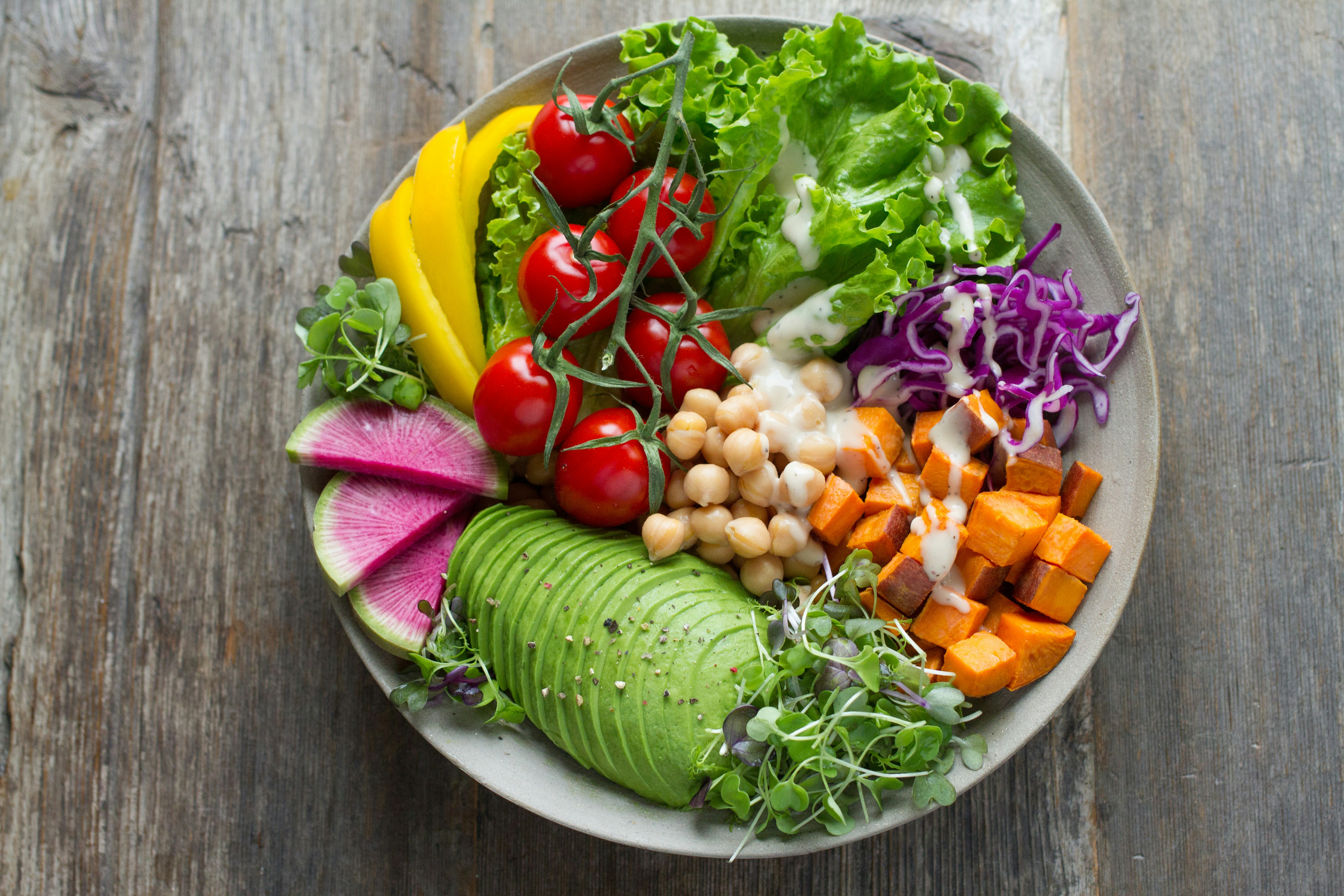
Berlin is the vegan capital of Europe—you don't need to hunt for vegan options, they're standard everywhere. From dirty punk bars to Michelin-starred restaurants, vegan dishes are clearly labeled, plentiful, and delicious. The city has dozens of fully vegan restaurants, vegan döner shops, vegan ice cream parlors, and vegan supermarkets. You never have to ask 'is there meat in this?'—it's always labeled.
Vietnamese Food
Vietnamesische Küche
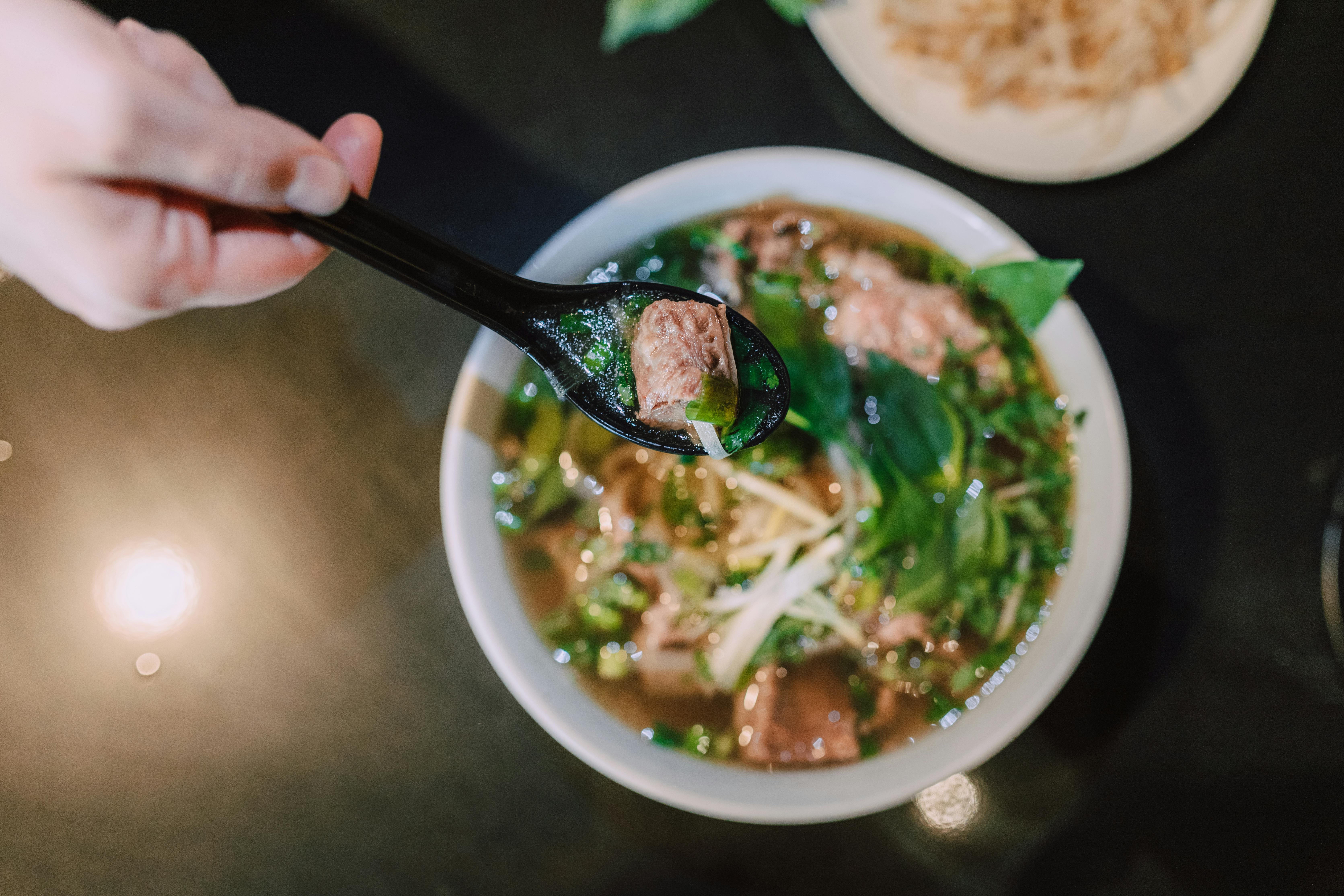
Berlin has a massive Vietnamese community (60,000+), making the Vietnamese food scene one of the best in Europe. Pho (noodle soup), Banh Mi (sandwiches), and Bun Cha (grilled pork with noodles) here rival what you'd find in Hanoi. The food is fresh, flavorful, and affordable (€7-12). Concentrated in Mitte, Prenzlauer Berg, and Lichtenberg, with both sit-down restaurants and quick takeaway spots.
Falafel Plate
Falafel Teller
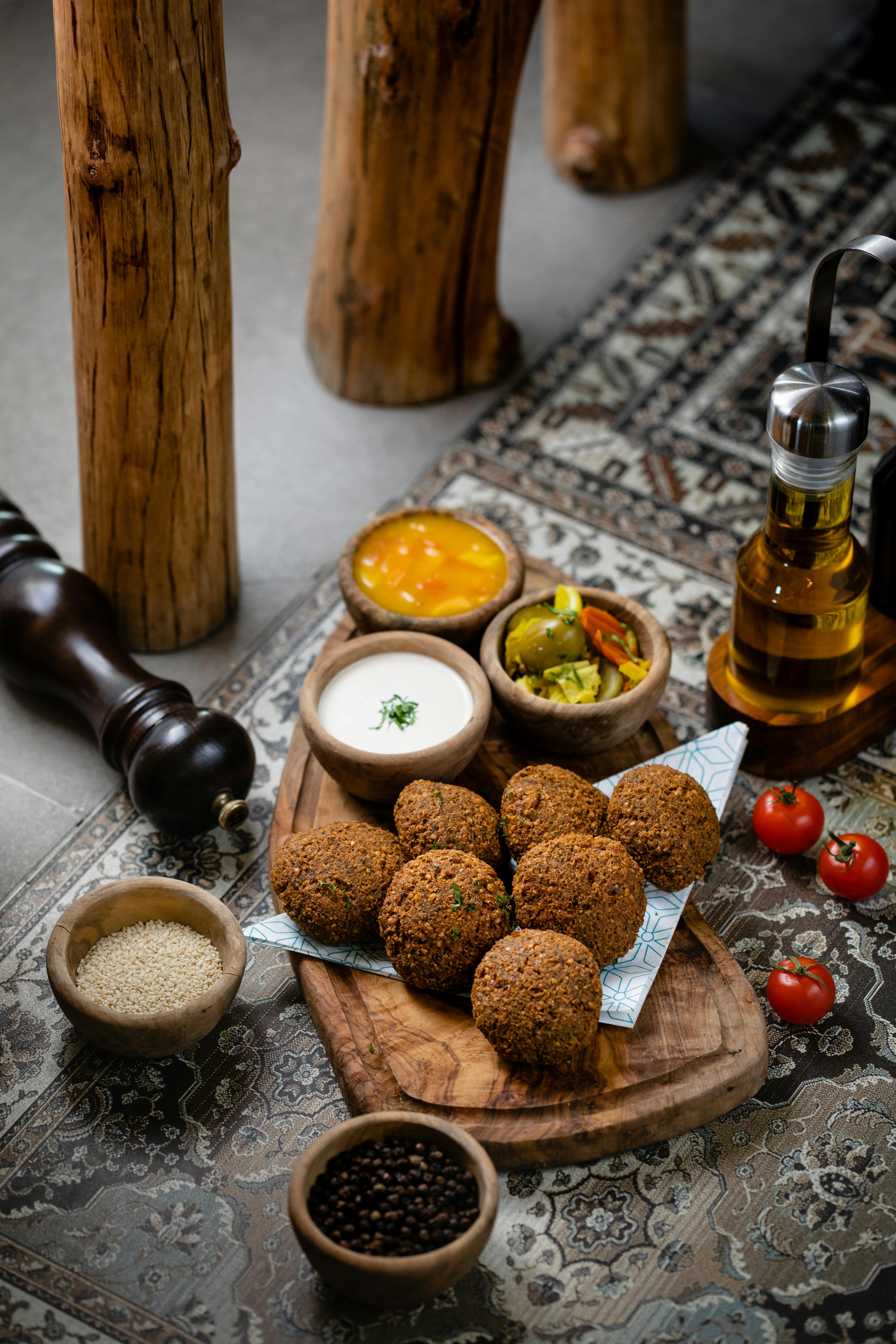
The Falafel Teller (falafel plate) is a staple of Berlin's Middle Eastern food scene: crispy fried chickpea falafel balls, creamy hummus, grilled halloumi cheese, roasted vegetables (eggplant, zucchini, peppers), tahini sauce, and fresh salad served over rice or with pita bread. It's huge, vegetarian, cheap (€7-10), filling, and delicious. Found everywhere in Kreuzberg and Neukölln.
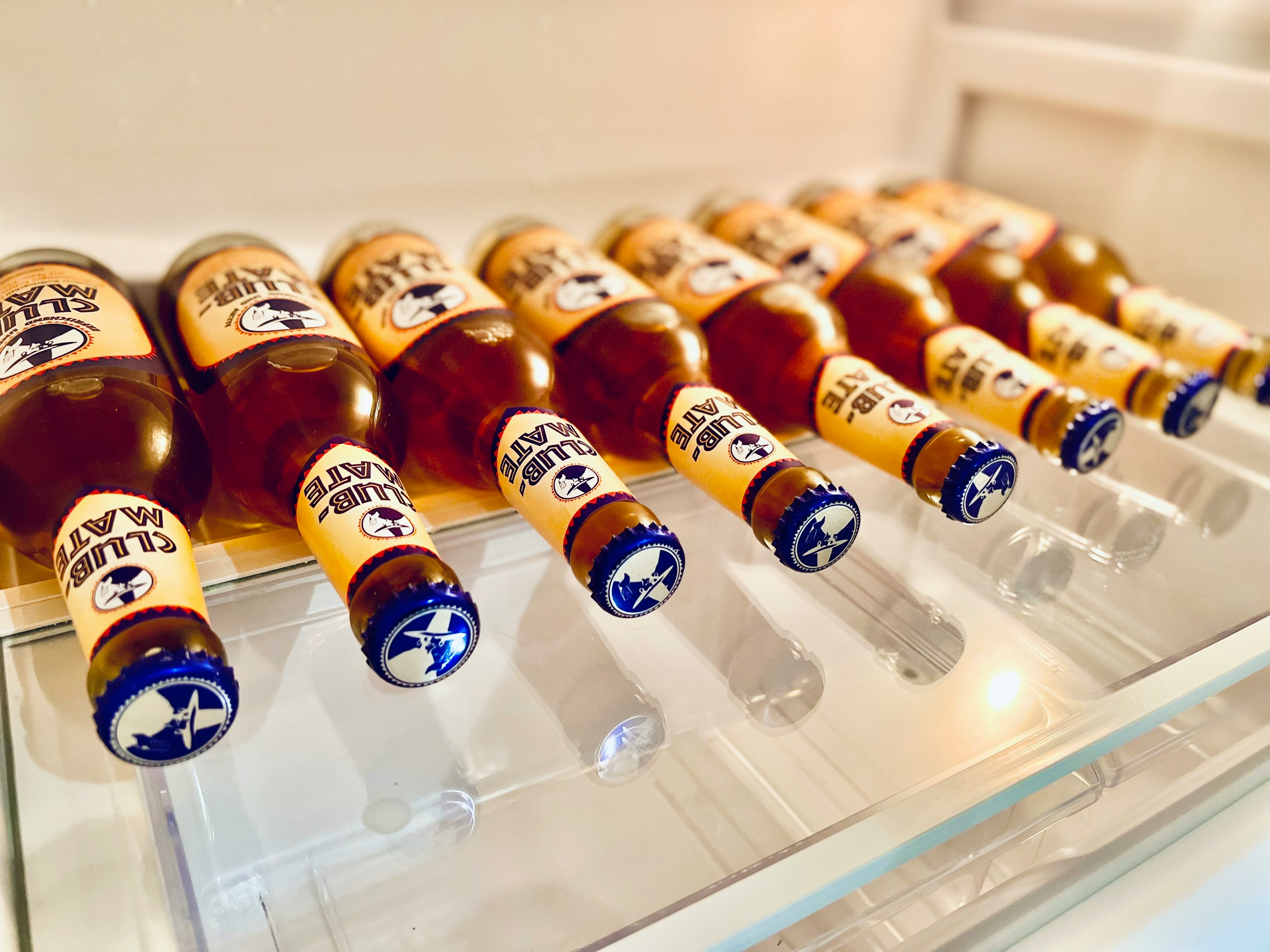
Club Mate
Club-Mate
Club Mate is Berlin's unofficial fuel: a carbonated, caffeinated iced tea made from yerba mate (South American herb). It's lightly sweet, tastes like 'cigarette ash' or 'dirty gym socks' on first sip (locals swear by it by the third bottle), and contains as much caffeine as Red Bull. It's everywhere—clubs, bars, Spätis, vending machines. It's the drink of hackers, artists, and clubbers who need to stay awake for 48-hour weekends.
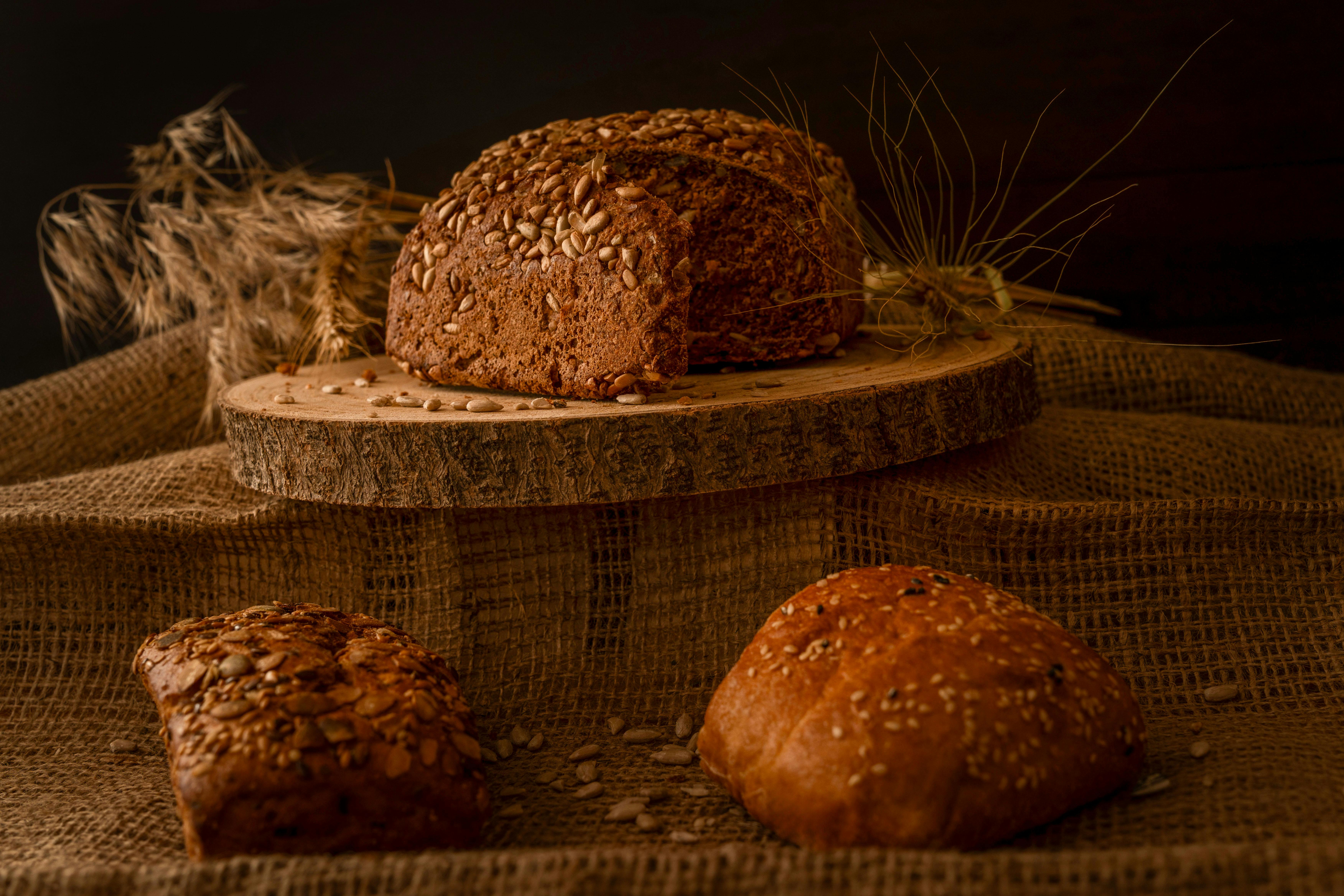
German Bakery
Bäckerei
German bakeries (Bäckerei) are world-class and everywhere in Berlin, offering dense, dark breads (rye, whole grain, sunflower seed), sandwiches (Belegtes Brötchen), pretzels (Laugenbrezel), and pastries. German breakfast is savory, not sweet—cold cuts, cheese, bread, not croissants. A fresh pretzel with butter or a sandwich for breakfast costs €2-4. Bakeries open early (6-7am) and are essential daily infrastructure.
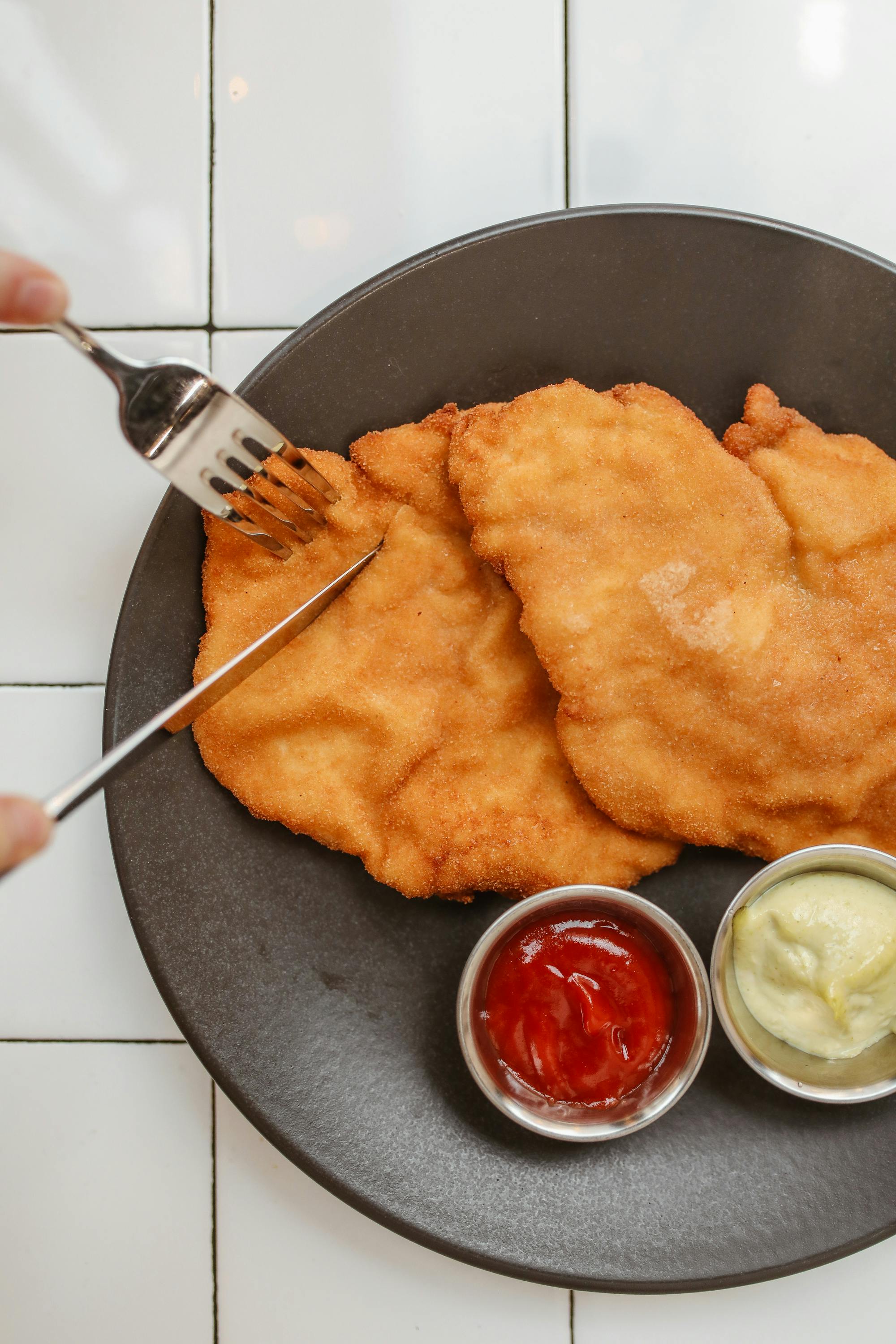
Schnitzel
Schnitzel is a breaded and fried cutlet (traditionally veal or pork), pounded thin, breaded in flour/egg/breadcrumbs, and fried until golden. Served with potato salad, fries, or lemon. It's a German staple eaten in traditional Wirtshaus (tavern) restaurants with a cold beer. The breading should be crispy and flaky, the meat tender. It's comfort food—simple, satisfying, and everywhere.
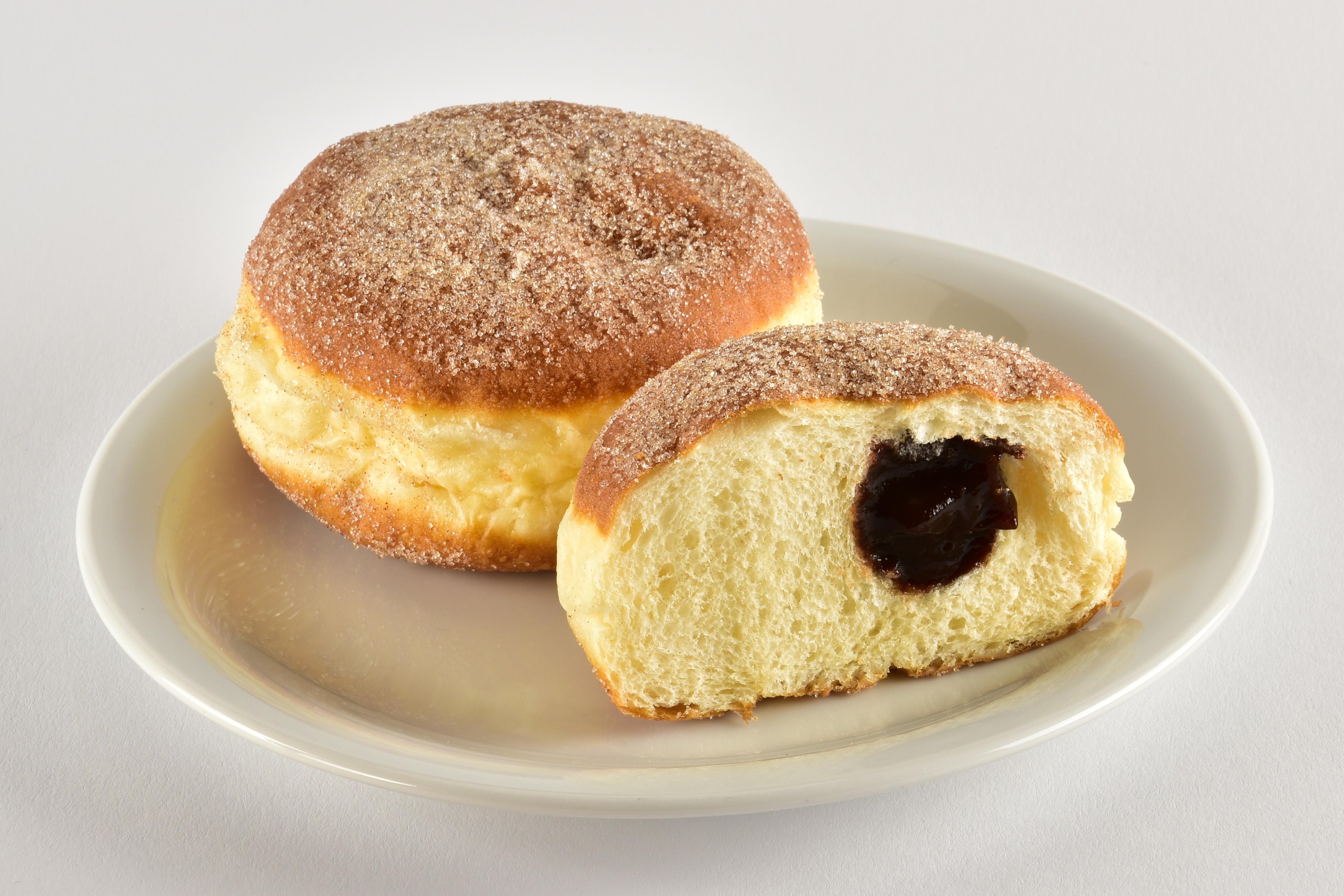
Berliner (Pfannkuchen)
Pfannkuchen / Berliner
The Berliner (called 'Pfannkuchen' in Berlin, confusingly) is a jelly-filled donut: deep-fried dough dusted with powdered sugar and filled with jam (usually raspberry or plum). It's soft, sweet, and iconic. Famous from JFK's 1963 speech ('Ich bin ein Berliner') which technically translates to 'I am a jelly donut' though this interpretation is debated. Sold at bakeries year-round but especially popular during Fasching (carnival season).