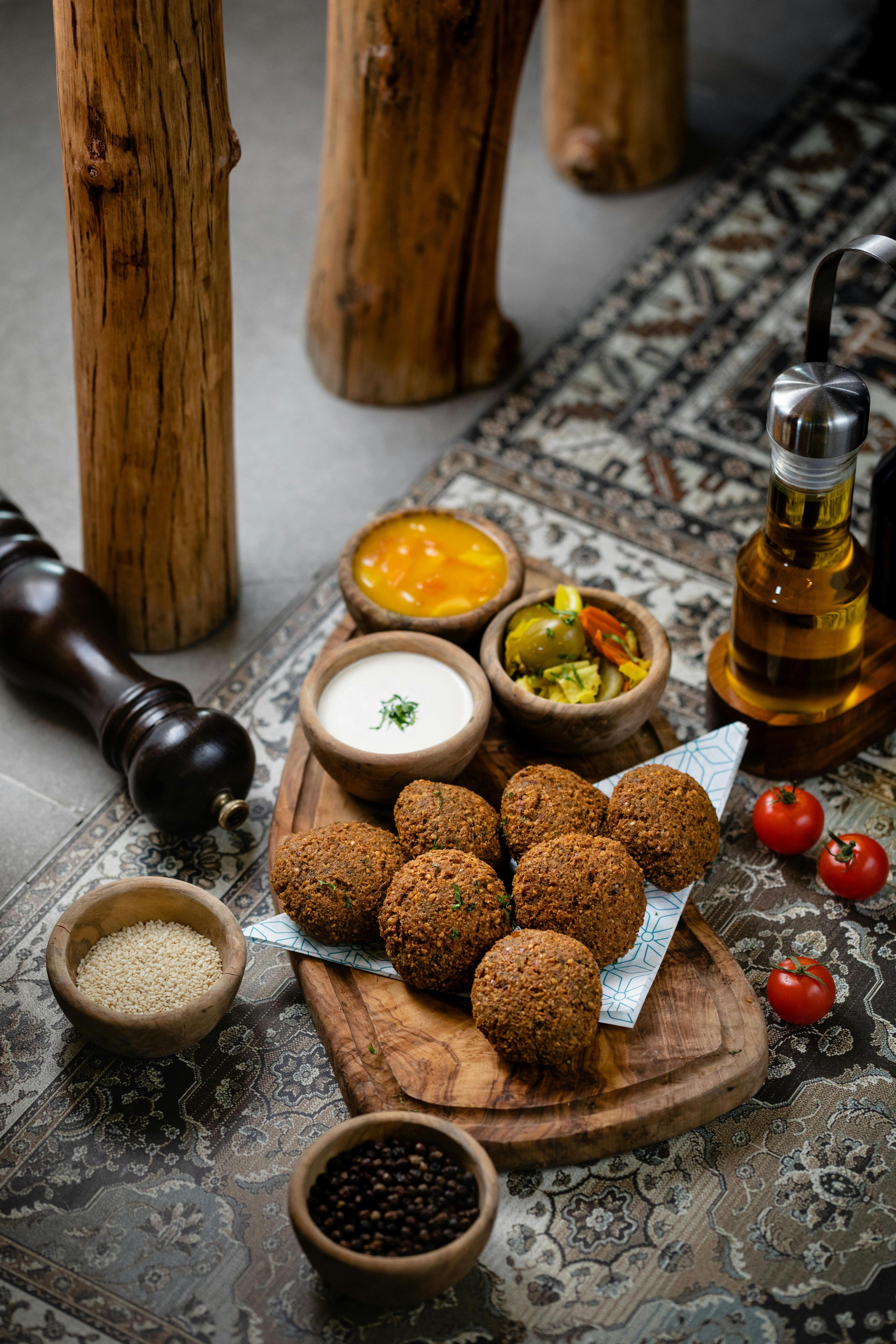
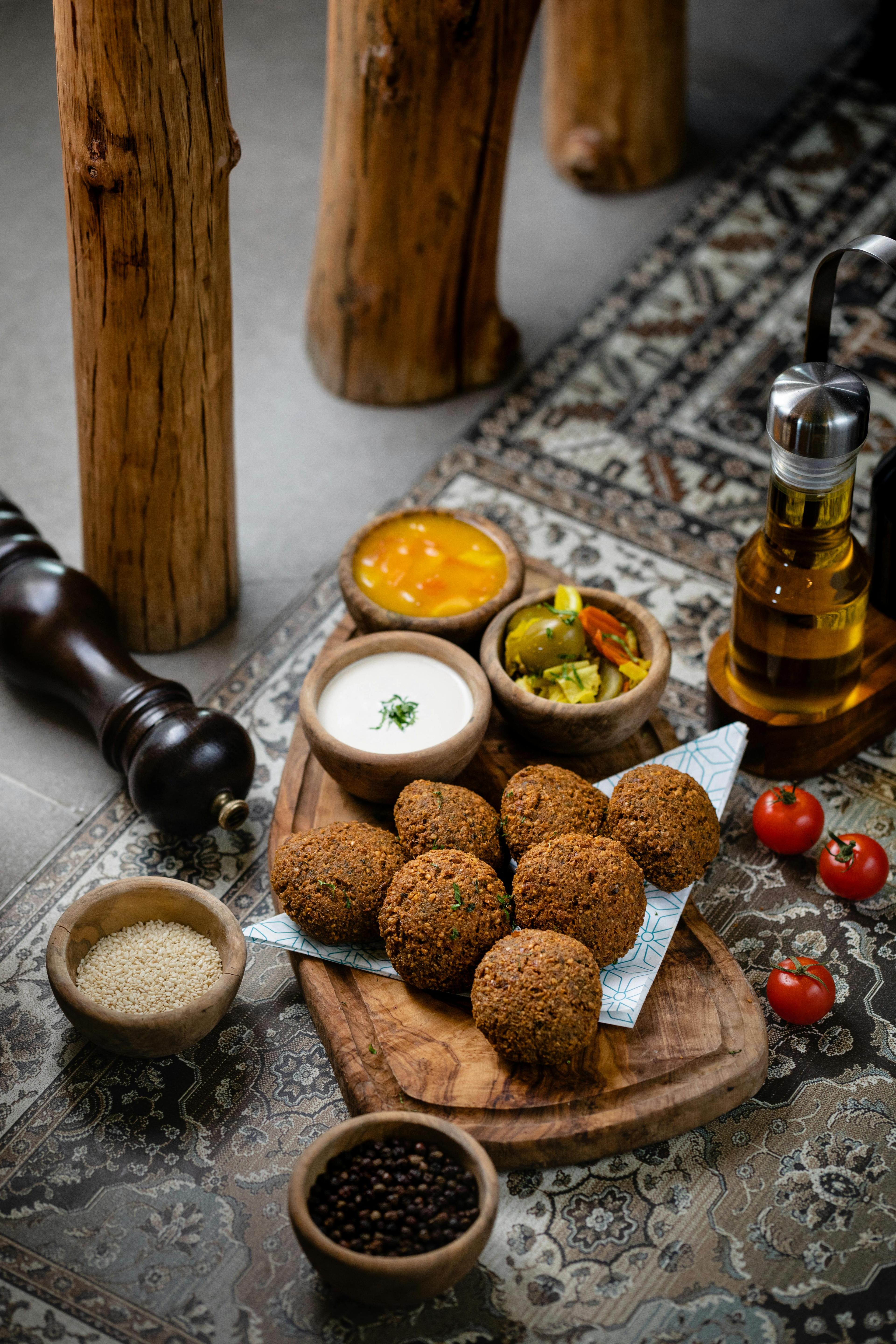
Falafel Plate
"The Falafel Teller (falafel plate) is a staple of Berlin's Middle Eastern food scene: crispy fried chickpea falafel balls, creamy hummus, grilled halloumi cheese, roasted vegetables (eggplant, zucchini, peppers), tahini sauce, and fresh salad served over rice or with pita bread. It's huge, vegetarian, cheap (€7-10), filling, and delicious. Found everywhere in Kreuzberg and Neukölln."
Logistics
Affordable
Vibe
Hearty, satisfying
Duration
30 minutes
Best For
Vegetarians
The Backstory
Middle Eastern immigrants (Lebanese, Syrian, Palestinian, Egyptian) brought falafel culture to Berlin in the 1970s-80s. It became a vegetarian staple in the alternative Kreuzberg scene. The 'teller' (plate) format—as opposed to a wrap—became the Berlin standard. It's now as common as döner.
Local Secret
"Order extra tahini sauce—it makes everything better. The falafel should be crispy outside, fluffy inside—if it's dense and heavy, the restaurant cut corners. Halloumi (grilled cheese) is a premium add-on worth getting. Kreuzberg and Neukölln have the best and cheapest spots. Pair with fresh mint tea."
Gallery
You Might Also Like
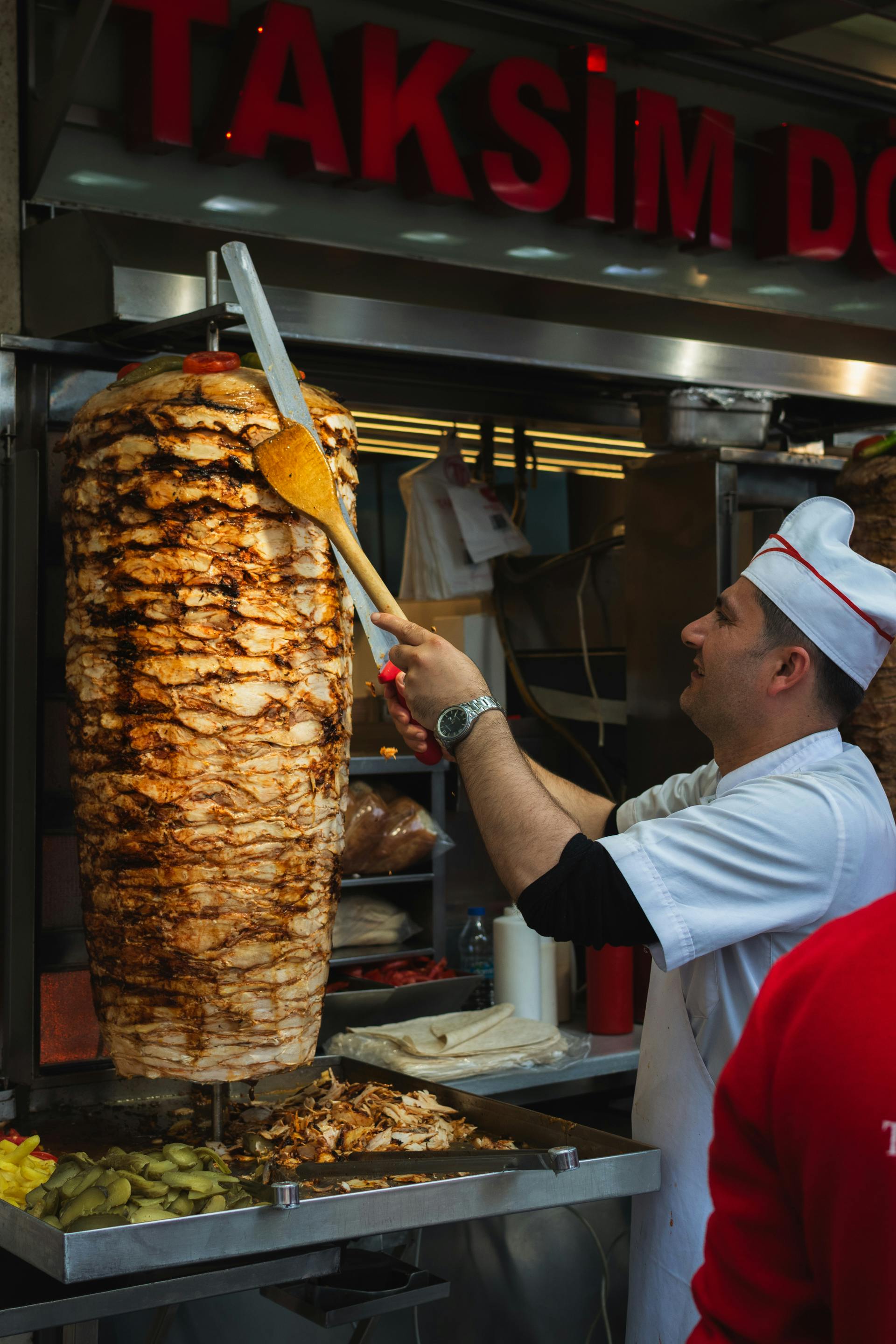
Döner Kebap
Döner
Döner Kebap is Berlin's #1 street food, invented here in the 1970s by Turkish immigrants. It's shaved rotisserie meat (lamb, chicken, or veal) stuffed into toasted flatbread with fresh salad, tomatoes, onions, cabbage, and garlic yogurt sauce. A 'Gemüse Kebap' (vegetable döner) adds grilled vegetables and feta cheese. It's fast, cheap (€4-6), and consumed at all hours—especially post-club at 4am.
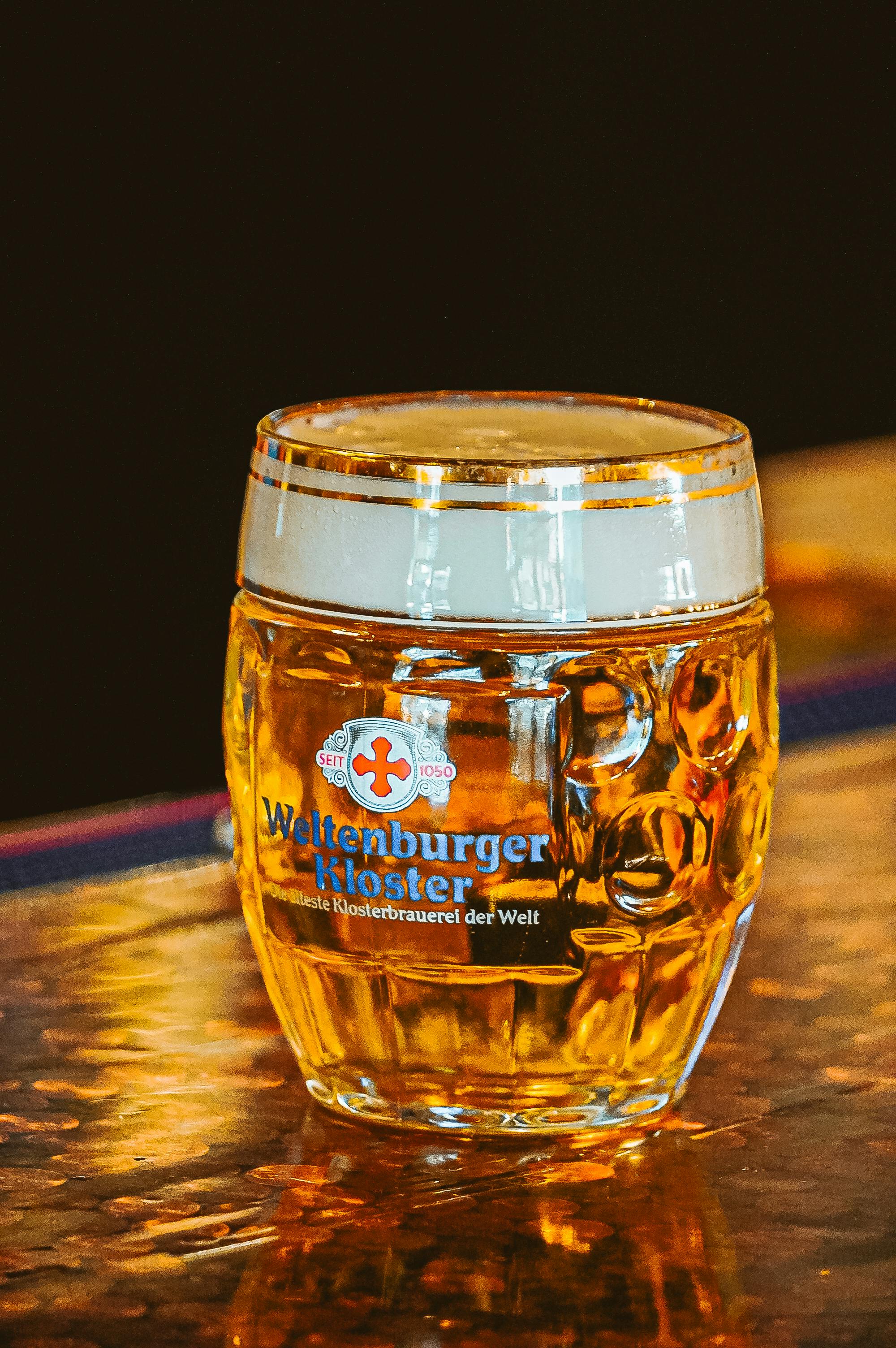
Berlin Beer Culture
Wegbier
Beer in Berlin is like coffee in Italy: cheap (€1-2 from Spätis), everywhere, and consumed casually at any time of day or night. It's not ceremonial or special—it's utilitarian. A 'Wegbier' (road beer) for the walk home or to the club is culturally normal and legal. Public drinking is accepted and common. The most popular local beers are Berliner Pilsner, Berliner Kindl, and Schultheiss.
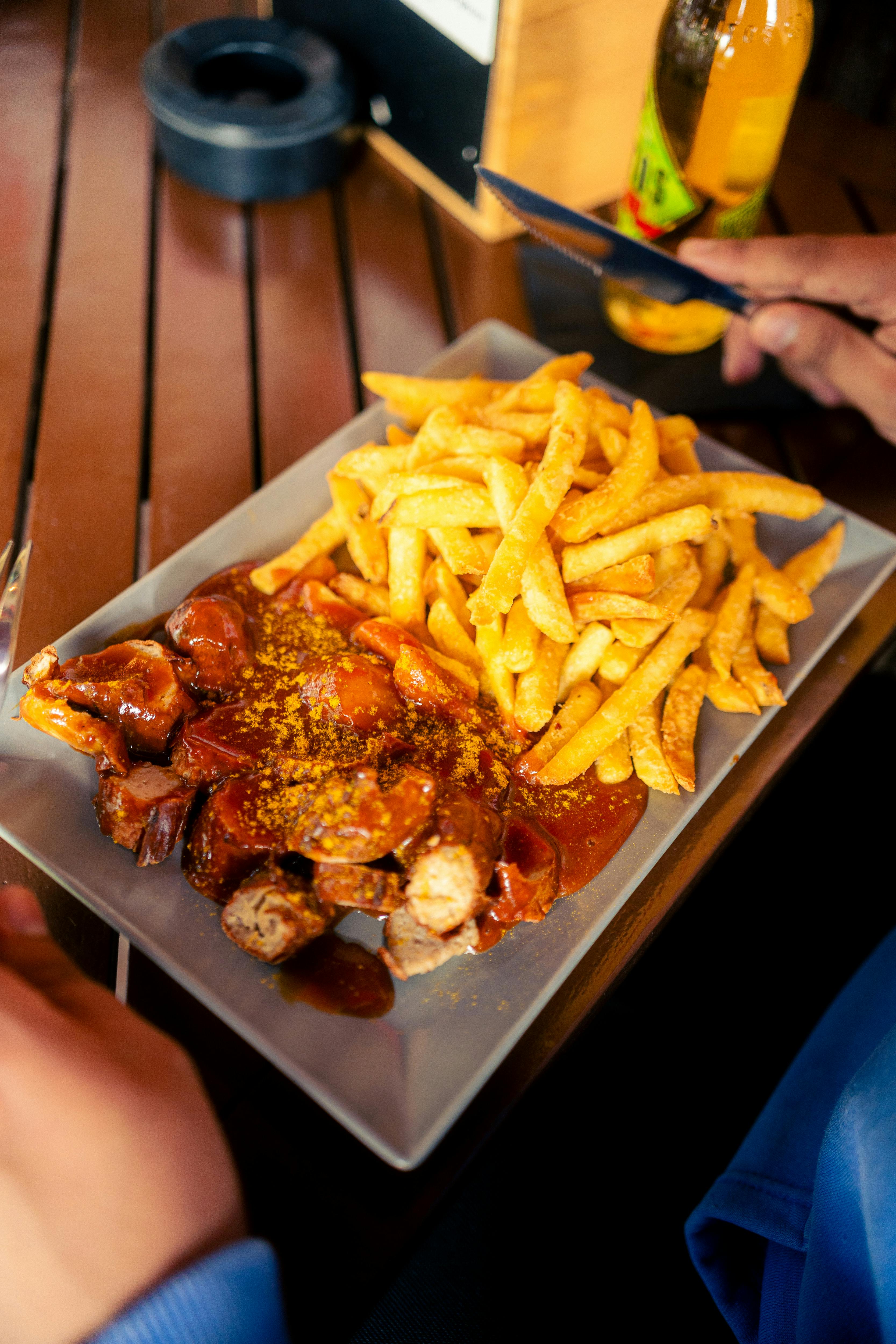
Currywurst
Currywurst is a Berlin icon: steamed then fried pork sausage cut into bite-sized slices, drowned in curry ketchup and sprinkled with curry powder. Served with fries or a bread roll. It's fast food, invented in post-war Berlin, and still a cult classic. The sauce is sweet, tangy, and mildly spiced. It's eaten at Imbiss stands (snack stalls) standing up at tall tables.